


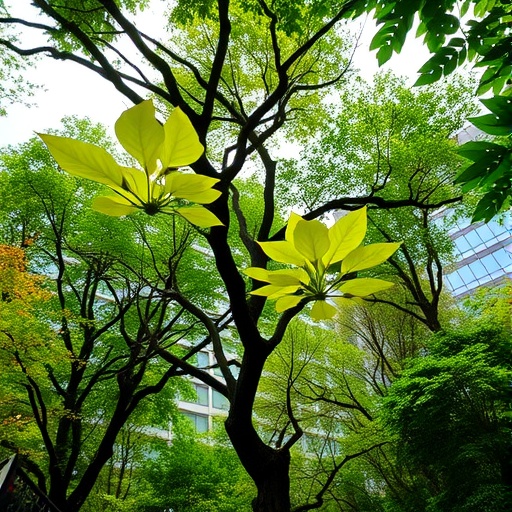
In the face of accelerating climate emergencies and the growing imperative for sustainable urban development, a groundbreaking essay published in PLOS Climate redefines urban forests not merely as patches of greenery but as essential infrastructure that underpins climate resilience, ecological biodiversity, and public health. This study, authored by an expansive consortium of international researchers, delivers a critical perspective on how urban forestry must be integrated into global and local policymaking to confront the escalating threats posed by climate change. Their collaborative analysis brings into focus the multifaceted roles urban trees play in safeguarding urban populations, enhancing biodiversity, and confronting the disproportionate environmental burdens borne by marginalized communities.
Urban forests serve as natural buffers against the intensifying impacts of climate change, offering robust mechanisms for mitigating urban heat island effects, sequestering atmospheric carbon dioxide, and managing stormwater. Trees in urban landscapes attenuate the extremes of temperature, reducing peak summer heat by shading impervious surfaces and cooling the air through evapotranspiration. This natural cooling effect is invaluable for enhancing thermal comfort, lowering energy demands for air conditioning, and ultimately reducing urban greenhouse gas emissions. Moreover, the carbon sequestration capacity of urban trees plays a supportive role in global carbon cycles, supplementing more extensive forest ecosystems in the fight against climate change.
The biodiversity housed within urban forests represents a critical reservoir of species and genetic diversity often overlooked in city planning. Urban green spaces provide habitats for an array of organisms—from pollinators to birds, mammals, and microbial communities—that contribute to the ecological complexity and functioning of metropolitan landscapes. Preserving and expanding urban forests is thus fundamental to maintaining ecosystem services such as pollination, pest control, and nutrient cycling, which directly and indirectly benefit human populations by supporting food production and maintaining clean air and water.
Public health benefits are among the most immediate and tangible advantages provided by urban forests. Exposure to green spaces has been strongly linked to psychological well-being, stress reduction, and physical health improvements. Studies have documented reductions in cardiovascular diseases, respiratory problems, and mental health disorders among populations with greater access to trees and parks. These effects underscore the urgent need to ensure equitable distribution of urban green infrastructure to combat health disparities widespread in densely populated, economically disadvantaged neighborhoods.
The scholarly consortium emphasizes that these benefits cannot be fully realized without embedding urban forestry within a comprehensive policy framework prioritizing equity, resilience, and biodiversity conservation. This entails revising urban planning guidelines, zoning laws, and budget allocations to recognize urban forests as critical infrastructure alongside roads, water, and energy systems. Such recognition must be accompanied by robust monitoring, community engagement, and scientifically informed management practices to maximize the health and ecological benefits provided.
One barrier the essay highlights is the historical marginalization of urban forests in urban policy fora, often regarded as aesthetic or recreational spaces rather than essential infrastructure. This paradigm shift to acknowledging trees as vital urban assets compels policymakers to rethink funding mechanisms, maintenance regimes, and long-term strategic planning. Integrating urban forests into climate adaptation and mitigation strategies unlocks synergies across multiple sustainability goals, from reducing heat-related mortality to enhancing urban biodiversity corridors that facilitate species migration and gene flow.
Community involvement emerges as a pivotal factor in the success and longevity of urban forestry initiatives. The essay outlines that effective tree planting, stewardship, and protection depend heavily on local residents’ participation and ownership. By fostering inclusive processes that integrate diverse community perspectives, urban forestry projects can better address social and cultural dimensions, ensuring that green spaces meet the needs and preferences of all city dwellers. Moreover, community-based approaches enhance monitoring and safeguard against the risks of tree loss due to neglect or development pressures.
Technological innovations also play an increasing role in advancing urban forestry science and practice. From remote sensing and geographic information systems (GIS) for high-resolution urban canopy mapping to predictive models simulating tree growth and ecosystem service provision under varied climate scenarios, these tools provide critical data to guide evidence-based management. The authors advocate leveraging such technologies alongside traditional ecological knowledge to optimize planting locations, species selection, and maintenance strategies for maximal environmental and social returns.
The essay also discusses the necessity of addressing urban forest vulnerability to emerging threats such as invasive species, diseases, and extreme weather events. Climate change not only intensifies environmental stressors but can also alter pest dynamics and the phenology of urban tree species, complicating management efforts. Adaptive management frameworks that integrate ongoing research, monitoring, and flexible policy responses are essential to sustaining urban forest resilience in this volatile context.
Importantly, the researchers call for transdisciplinary approaches to urban forestry, uniting experts from ecology, climatology, public health, social sciences, and urban planning. Such collaboration ensures that the multifaceted functions and values of urban trees are comprehensively addressed and embedded in holistic urban sustainability efforts. Bridging scientific understanding with policy mechanisms and community engagement forms the backbone of successful urban forest integration in our rapidly changing world.
Ultimately, reframing urban forests as indispensable infrastructure marks a paradigm shift that elevates their importance at the nexus of global environmental and social challenges. The essay urges governments, planners, and communities worldwide to embrace this perspective, fostering urban landscapes where trees support thriving ecosystems, resilient cities, and healthier populations. As climate change accelerates and urbanization intensifies, recognizing and investing in urban forests will be pivotal for safeguarding our collective future.
News Publication Date: 1-Jul-2026
Web References: http://dx.doi.org/10.1371/journal.pclm.0000953
Cite Scienmag News
Sloane Callahan. (July 1, 2026). Urban Forests: Vital Infrastructure for Climate Resilience, Biodiversity, and Public Health. Scienmag. https://scienmag.com/urban-forests-vital-infrastructure-for-climate-resilience-biodiversity-and-public-health/
Sloane Callahan. "Urban Forests: Vital Infrastructure for Climate Resilience, Biodiversity, and Public Health." Scienmag, 1 July 2026, https://scienmag.com/urban-forests-vital-infrastructure-for-climate-resilience-biodiversity-and-public-health/. Accessed 1 September 2026.
Sloane Callahan. "Urban Forests: Vital Infrastructure for Climate Resilience, Biodiversity, and Public Health." Scienmag. July 1, 2026. https://scienmag.com/urban-forests-vital-infrastructure-for-climate-resilience-biodiversity-and-public-health/


