


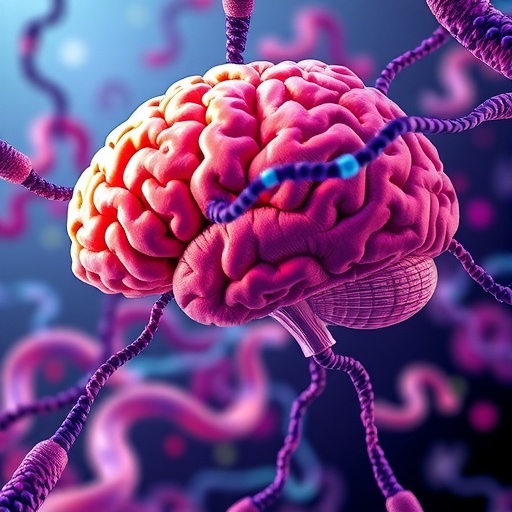
In a groundbreaking study poised to revolutionize our understanding of the interplay between mental and physical health, researchers have uncovered a shared genetic architecture linking cognitive functions and immune response. This pivotal discovery, presented in a comprehensive genome-wide pleiotropic analysis, illuminates the intricate biological nexus that connects the brain and the immune system at a fundamental genetic level. The implications reach far beyond traditional neurobiology, heralding a new era in which mental health and immunology intersect more deeply than previously imagined.
At the heart of this investigation lies the concept of pleiotropy — the phenomenon whereby a single gene influences multiple phenotypic traits. By conducting a meticulous genome-wide scan, the researchers identified key genetic variants that simultaneously affect cognitive abilities and immune system regulation. These shared genetic factors provide compelling evidence that cognitive function and immune processes are not isolated biological domains but are entwined within a complex genetic framework.
The study leveraged extensive genomic datasets encompassing diverse populations to map the pleiotropic loci with remarkable precision. Using advanced statistical genetics methodologies and rigorous replication strategies, the research team ensured robust findings that withstand the challenges of genetic heterogeneity and linkage disequilibrium. The breadth and depth of data analyzed underscore the study’s comprehensive nature and enhance its potential to inform future research trajectories.
One of the most striking revelations of the study is the identification of specific genetic pathways implicated in neuroimmune communication. These pathways appear to orchestrate a bidirectional dialogue between central nervous system circuits underlying cognition and peripheral immune signaling cascades. Such dual functionality of genetic elements suggests evolutionary conservation of mechanisms that balance brain and immune system homeostasis in response to environmental stimuli and internal physiological changes.
This insight into genetic crosstalk has profound clinical ramifications. Cognitive decline and neurodegenerative diseases such as Alzheimer’s have shown strong correlations with inflammatory processes, yet the underlying genetic basis remained elusive. By pinpointing shared genetic regulators, this research paves the way for novel therapeutic approaches that simultaneously target neural dysfunction and immune dysregulation. Future drug development could focus on multilayered pathways that modulate both systems, offering promising avenues for integrated treatments.
Beyond implications for neurodegeneration, the findings deepen our understanding of psychiatric disorders with immune components, including depression, schizophrenia, and bipolar disorder. The overlapping genetic architecture suggests that immune system perturbations may contribute causally to cognitive impairments seen across these conditions. Consequently, immune-based biomarkers could emerge as predictive tools for cognitive resilience or vulnerability, boosting personalized medicine initiatives.
Technologically, the study illustrates the power of integrative genomics in deciphering complex biological traits that transcend organ systems. The team employed cutting-edge bioinformatics pipelines to amalgamate genome-wide association studies (GWAS), expression quantitative trait locus (eQTL) analyses, and protein interaction networks. By synthesizing multi-omic data, they uncovered subtle but meaningful genetic correlations that individual datasets alone could not reveal, showcasing the necessity of holistic genomic approaches.
Moreover, this research challenges prevailing conceptual boundaries within biomedical science. Historically, cognition and immunity have been studied in relative isolation, often in distinct academic and clinical silos. The revelation of a shared genetic substrate advocates for an interdisciplinary paradigm, fostering collaborations among neuroscientists, immunologists, geneticists, and clinicians. Such convergence will be essential to translate these foundational insights into tangible health outcomes.
Environmental factors and lifestyle elements are anticipated to interact with the identified genetic architecture, influencing the dynamic regulation of the cognition–immune interface. Epigenetic modifications, microbiome composition, stress exposure, and nutrition are likely modulators that either exacerbate or mitigate genetic predispositions. Future longitudinal studies integrating environmental data will be critical to unravel these complex interactions and tailor interventions accordingly.
From an evolutionary perspective, the discovery aligns with hypotheses that cognitive and immune functions co-evolved to enhance survival. A finely tuned immune response protects neural integrity from pathogens and injury, while cognitive faculties guide behaviors that reduce exposure to immune challenges. The shared genetic framework may reflect adaptive strategies where brain and immune resilience are genetically coupled to optimize organismal fitness.
In terms of methodology, the study exemplifies rigorous experimental design, combining large-scale population genetics with functional genomics validation. Functional assays in cellular and animal models further elucidated how candidate pleiotropic genes affect neuroimmune pathways in vivo. This translational approach strengthens the biological plausibility of statistical associations, ensuring the findings are grounded in mechanistic reality rather than mere correlation.
The implications extend into public health policy and disease prevention strategies. Recognizing the genetic interplay between cognition and immunity underscores the importance of holistic health assessments. Screening for immunogenetic profiles could become part of cognitive health evaluations, particularly in aging populations predisposed to neurocognitive disorders. Similarly, immune challenges might be reconsidered in the context of their long-term cognitive impact.
Ethical considerations emerge from the potential to manipulate pleiotropic genes for therapeutic benefit. While targeting shared genetic pathways offers powerful opportunities, it also raises challenges related to unintended effects on either cognitive or immune functions. Striking a careful balance will require thorough preclinical investigations and vigilant clinical monitoring to minimize risks while maximizing therapeutic gains.
In conclusion, this landmark genome-wide pleiotropic analysis not only elucidates the shared genetic underpinnings of cognition and immunity but also sets the stage for transformative advances in neuroscience, immunology, and medicine. As the intricate genetic dance between mind and immune system comes into clearer focus, the promise of innovative, integrated interventions to enhance mental and physical health is closer than ever. This study marks a monumental step forward in unraveling the biological fabric that interweaves cognitive prowess and immune defense.
Cite Scienmag News
Juliet Wilcox. (July 1, 2026). Shared Genetics Link Cognition and Immune Systems. Scienmag. https://scienmag.com/shared-genetics-link-cognition-and-immune-systems/
Juliet Wilcox. "Shared Genetics Link Cognition and Immune Systems." Scienmag, 1 July 2026, https://scienmag.com/shared-genetics-link-cognition-and-immune-systems/. Accessed 1 September 2026.
Juliet Wilcox. "Shared Genetics Link Cognition and Immune Systems." Scienmag. July 1, 2026. https://scienmag.com/shared-genetics-link-cognition-and-immune-systems/


