


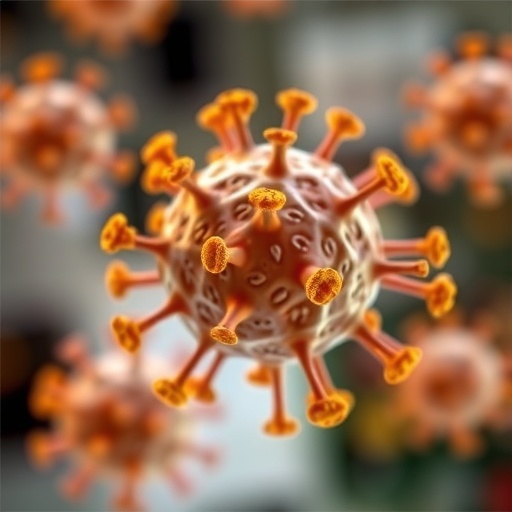
In a landmark study poised to advance HIV-1 vaccine development, researchers have unveiled a breakthrough in the induction of broadly neutralizing antibodies (bNAbs) targeting the V2 apex of the HIV-1 envelope glycoprotein. The efficient priming of B cell precursors capable of evolving into such potent bNAbs has long been a formidable barrier in the field, but this new work promises to surmount that challenge with a novel immunogen and multi-platform delivery strategy.
Central to the study is the design of a germline-targeted HIV-1 Env variant named CAP256.OPT4, which demonstrates an extraordinary capacity to initiate B cell responses against the V2 apex epitope. Compared to wild-type HIV-1 Env proteins, CAP256.OPT4 boosts the efficiency of bNAb precursor priming by an astonishing 30- to 400-fold. This enhancement not only accelerates the timeline of immune responses but also dramatically increases the probability of generating neutralization breadth in vaccinated subjects.
Using a rigorous in vivo model involving rhesus macaques, the researchers show that CAP256.OPT4 elicits neutralizing antibodies capable of recognizing a diverse array of HIV-1 strains, including those harboring the notoriously challenging N130 glycan. Remarkably, over 90% of macaques immunized with CAP256.OPT4-derived constructs developed plasma neutralization breadth within as little as 12 weeks. This rapid onset of broad antibody activity offers hope for a vaccine that can confer protection on timescales relevant to human immunization.
A hallmark of the investigation is the versatile delivery platforms employed to administer the CAP256.OPT4 immunogen. Persistently replicating simian human immunodeficiency viruses (SHIVs), protein nanoparticles, and mRNA-based vaccines each demonstrated the ability to prime bNAb precursors efficaciously. This parallel exploration across delivery methodologies provides a robust validation of the immunogen’s potential, revealing neutralization responses as early as 4 weeks post-infection or vaccination.
Notably, in a cohort of 14 SHIV-infected macaques, the induced neutralizing antibodies displayed extraordinary potency and breadth, neutralizing up to 90% of a curated 21-virus panel. The potency reached titers as high as 1:20,000 in terms of 50% inhibitory dilution (ID50), surpassing many previous vaccine candidates and natural infection responses. These results underscore the improved immunogenic profile created by CAP256.OPT4 relative to prior HIV-1 Env-based immunogens.
At the monoclonal antibody level, isolated bNAbs reaffirmed the broad and potent neutralization capabilities observed in plasma. Cryogenic electron microscopy (cryo-EM) structural determination revealed that these bNAbs employed needle-like heavy chain complementarity-determining region 3 (HCDR3) loops to engage their epitopes, consistent with canonical V2 apex bNAbs. The ability to structurally delineate multiple distinct antibody lineages advances our molecular understanding of vaccine-induced antibody maturation pathways.
The study’s deep dive into antibody-Env coevolution and structural selection pressures yielded new insights into viral adaptation during immune evasion. Five specific residues and loop features within the Env glycoprotein emerged as hotspots for positive selection, temporally correlating with the acquisition of neutralization breadth. This reciprocal shaping of immune and viral landscapes highlights the intricacy of eliciting effective bNAbs and opens avenues for rational immunogen design.
Capitalizing on these findings, the research team designed prime-boost immunization regimens incorporating Env modifications that emphasize these key positively selected residues and structural motifs. These advanced immunogens successfully elicited extended neutralization breadth and potency against globally circulating HIV-1 variants, notably including those with the glycan shield modifications such as the N130 glycan, which have historically impeded antibody recognition.
A significant conceptual advance is the demonstration that rhesus macaque bNAb responses to the V2 apex are not confined to particular immunoglobulin heavy chain gene alleles, such as IGHD3-15*01, thus broadening the applicability of this animal model. This finding alleviates concerns regarding genetic restrictions in macaque antibody repertoires and underscores the utility of rhesus macaques as a translational model for human vaccine research.
This study redefines the landscape of HIV-1 vaccine design by providing a molecular blueprint for the induction of V2 apex bNAbs. It balances advanced structural biology, immunogen engineering, and innovative delivery technologies to achieve rapid and broad neutralization responses. The implications extend beyond HIV, offering a paradigm for rational vaccine development targeting difficult immunodominant epitopes in variable pathogens.
By bridging the gap from immunogen design to in vivo efficacy, this work galvanizes future efforts toward a safe, effective, and globally relevant HIV vaccine. It elevates the potential for achieving sterilizing immunity and durable protection by harnessing the humoral immune system’s most elusive and powerful weaponry—broadly neutralizing antibodies directed against conserved viral epitopes.
As the HIV epidemic persists worldwide despite antiretroviral advances, the introduction of vaccines capable of priming broadly neutralizing antibodies stands as a beacon of hope. The innovations reported here could accelerate the timeline for finally realizing vaccines that not only prevent infection but also thwart the virus’s notorious ability to rapidly mutate and escape immune surveillance.
Looking forward, the versatility of the CAP256.OPT4 platform across multiple delivery vehicles invites the exploration of combinatorial immunization strategies and iterative boosting protocols. Such approaches could further refine immune responses to maximize breadth, potency, and longevity—critical parameters for the eventual deployment of global immunization campaigns against HIV-1.
In sum, this seminal study marks a turning point in HIV vaccine research, offering a blueprint rooted in enhanced B cell priming, structural and evolutionary insights, and translational animal modeling. It represents an inspiring stride toward a world where HIV-1 broad neutralization is not confined to rare natural infection but is a readily inducible response, achievable through expertly engineered immunogens and innovative delivery systems.
Cite Scienmag News
Kristina Jarvis. (June 30, 2026). Boosted B Cell Priming Yields Broad HIV Antibodies. Scienmag. https://scienmag.com/boosted-b-cell-priming-yields-broad-hiv-antibodies/
Kristina Jarvis. "Boosted B Cell Priming Yields Broad HIV Antibodies." Scienmag, 30 June 2026, https://scienmag.com/boosted-b-cell-priming-yields-broad-hiv-antibodies/. Accessed 31 August 2026.
Kristina Jarvis. "Boosted B Cell Priming Yields Broad HIV Antibodies." Scienmag. June 30, 2026. https://scienmag.com/boosted-b-cell-priming-yields-broad-hiv-antibodies/


