

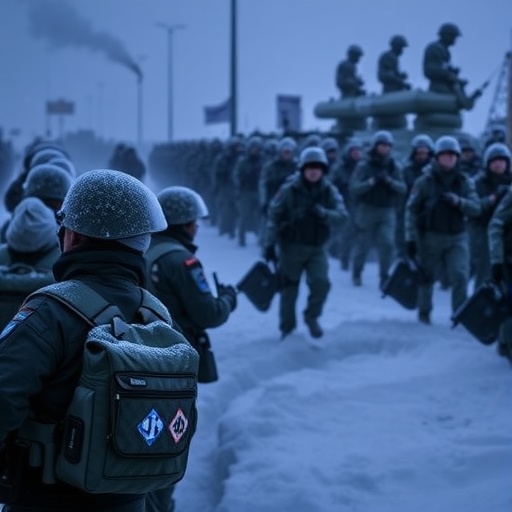
In the wake of Russia’s full-scale invasion of Ukraine in 2022, voluntary participation in national defence has assumed a new and critical significance in Finland. Historically entrenched as part of Finnish civil society since the nation’s independence, voluntary national defence organizations and the reservists who form their backbone have remained an underexplored domain outside of military circles. However, recent academic inquiry at the University of Eastern Finland has brought renewed attention to this vital facet of national security, unveiling the complex motivations driving active reservists to engage voluntarily in national defence activities.
This pioneering study sheds light on the multifaceted nature of reservists’ engagement, revealing that the strongest impulse towards participation stems from a profound sense of community. Unlike typical military enlistment driven primarily by duty or obligation, Finnish reserves find their motivation deeply rooted in social bonds that foster camaraderie and collective identity. These interpersonal connections, often transcending socioeconomic divides, create networks of solidarity that are essential to sustaining volunteer defence activities under peacetime as well as crisis conditions.
Beyond the social dimension, the research identifies a layered motivational framework. The perceived external threat posed by Russia plays a pivotal role in galvanizing reservists. This threat perception activates both personal and collective defensive instincts, prompting servicemen and women to reflect on their military skills and the practical ways they can contribute to the nation’s preparedness. This is complemented by an ingrained sense of duty not only to the armed forces but to Finnish society at large — a moral imperative to bolster the resilience and security of their homeland.
Moreover, a significant driver is the aspirational component linked to social influence and values transmission. Participants express a desire to actively shape the broader societal landscape through their contributions to national defence. Grounded in the values imparted during upbringing, reservists seek to ensure that these foundational principles—honor, responsibility, and patriotism—are preserved and conveyed to succeeding generations. This intergenerational stewardship underscores voluntary defence as a conduit for cultural continuity and social cohesion within Finland.
Utilizing semi-structured interviews with active reservists, the study delineates twelve distinct motivational elements which coalesce around four salient first-person narratives. These narratives effectively capture the holistic experience of participation: from the calculated recognition of external threat and skill application, to the ethical commitment embraced as a societal contribution; from the nurturing of inclusive community bonds to the filial respect for ancestral sacrifices and familial protection. Collectively, they reveal the intertwined psychological and societal underpinnings influencing individual decisions to volunteer.
Intriguingly, approximately 80% of those interviewed reported forming new meaningful relationships through their involvement in voluntary national defence. This phenomenon not only enhances personal well-being but fortifies communal resilience by cultivating a shared identity and mutual trust. The expectation that fellow citizens are equally committed to national defence further reinforces an emergent collective security dynamic. Reservists’ understanding that they are part of a larger, unified community enhances confidence in societal readiness and deterrence capabilities.
At the societal level, the dynamics of Finland’s comprehensive security model provide a critical contextual framework that legitimizes and magnifies the role of reservists. This model operates on the principle that security is a shared responsibility distributed across diverse sectors of society, ranging from government institutions to ordinary citizens. Within this construct, the reservist’s duty is amplified, as their voluntary participation is not seen as peripheral but rather as integral to the nation’s wartime operational capacity.
The study also highlights the organizational structure and local embeddedness of voluntary national defence. Although operating primarily through NGOs and associations, these entities are systematically integrated into the Finnish Defence Forces’ wartime troops. This structural alignment fosters a special sense of belonging among reservists who identify closely with their assigned troop and its operational locales. Such localization is particularly pronounced in border regions, where proximity to Russia heightens security awareness and tangible engagement.
Geographical proximity to the Russian border emerges as a notable factor influencing volunteer engagement. Reservists situated closer to this frontier frequently express heightened vigilance and a more immediate connection to defence imperatives. Conversely, those residing further inland may experience different motivational emphases, reflecting varied threat perceptions and local community dynamics. This spatial variation underscores the importance of contextual factors in shaping motivational profiles and participation patterns.
The diversity of motivating factors captured in this research reflects the broad spectrum of personal values, social dynamics, and political realities that frame voluntary national defence in Finland. The predominance of the community dimension suggests that this form of militarism transcends mere preparedness, encapsulating a meaningful social project that reinforces bonds, transmits heritage, and galvanizes collective action. These findings challenge monolithic notions of military engagement by revealing its social and cultural embeddedness.
Doctoral Researcher Antti Tiilikainen, lead author of the study, emphasizes this complexity: “The motives and the underlying societal factors reflect the breadth and diversity of voluntary national defence. The most widely shared motivator was feeling a sense of community. This indicates that reservists have diverse reasons to participate.” His insights spotlight the vital role that social sciences can play in unpacking the motivations behind citizen participation in security, thereby informing policy and public discourse.
The implications of this research extend beyond academic interest. As Finland continues to navigate a tense security environment in Northern Europe, understanding the reservoirs of motivation among reservists can inform recruitment strategies, training programs, and civil-military relations. Recognizing and fostering the social and cultural dimensions of voluntary defence could prove pivotal in sustaining an agile and committed reserve force.
In summary, voluntary national defence participation among Finnish reservists is a multifaceted phenomenon shaped by intertwined psychological, social, and geopolitical factors. The study’s nuanced exploration reveals an active citizenry motivated not only by external threats and a sense of duty but also by deep-rooted community ties and intergenerational values. This holistic understanding offers a valuable template for comprehending similar defence mobilizations in other small nations facing comparable security challenges.
News Publication Date: 16-Jun-2026


