

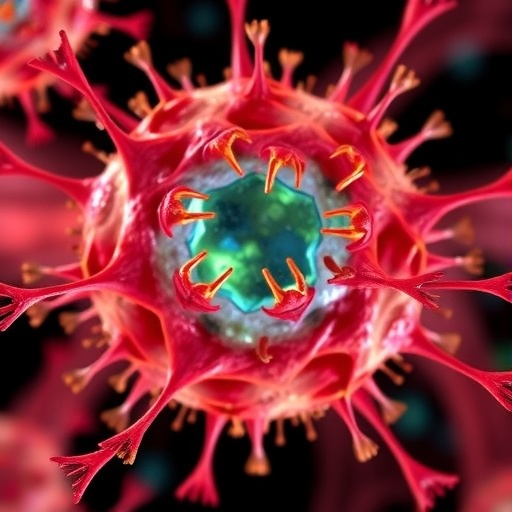
In the intricate orchestra of multicellular life, every human cell must seamlessly coordinate with its neighbors to sustain tissue function. This cellular symphony involves cells sensing their surroundings, interpreting chemical, physical, and electrical signals, and responding appropriately to maintain tissue health. These interactions dictate essential biological processes such as cell growth, tissue repair, immune response, and quiescence, underscoring the critical importance of precise cellular communication. Disruptions or miscommunications in this network can lead to pathological conditions, transforming harmonious cellular interaction into disarray.
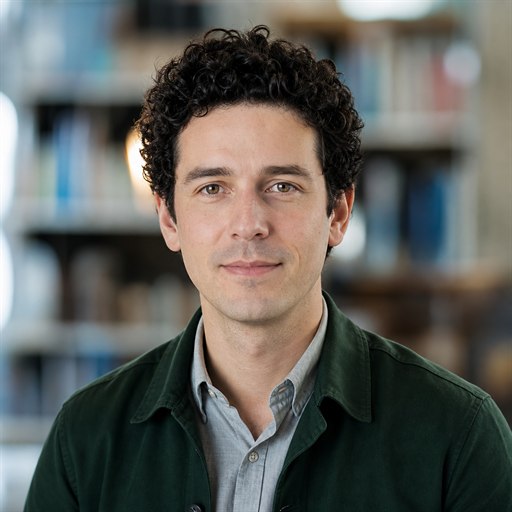
Dr. Dino Di Carlo, Chair of Bioengineering at UCLA’s Samueli School of Engineering, eloquently describes this phenomenon by emphasizing the necessity of coordination among diverse cell types. “A healthy tissue emerges when those parts are coordinated — when cells listen and respond to one another in the right way,” he notes. However, when cellular dialogue goes awry, it triggers diseases like fibrosis, where excessive scar tissue stiffens vital organs such as the lungs, heart, and kidneys. Similarly, cancer cells manipulate signaling pathways to evade immune detection, highlighting the devastating consequences of faulty cell-to-cell communication.
Addressing these challenges, Dr. Di Carlo and collaborators from UCLA, USC, and Caltech have unveiled a visionary initiative detailed in a recent Nature Biotechnology perspective. Their call to action centers on the Billion Cell×Cell Project, an ambitious endeavor to systematically decode the vast and complex network of interactions between individual pairs of human cells. Rather than relying on conventional methods that aggregate signals across multiple cells, this project seeks to unravel the fundamental “duet”—a precisely controlled interaction between two cells—to reveal how one cell influences the behavior of another.
This dyadic approach represents a paradigm shift in single-cell biology and cellular interaction mapping. Traditional single-cell sequencing and spatial profiling have revolutionized the ability to catalog diverse cell types and their gene expression profiles within tissues. Yet these static “snapshots” do not capture the causative relationships or temporal dynamics of interaction. As Di Carlo explains, understanding which cell initiates a change, the timing of that influence, and the resulting biological consequences remains elusive without isolating individual cellular pairs.
Enabling this groundbreaking research is a groundbreaking technology called nanovials, developed collaboratively in part by Di Carlo’s laboratory. Nanovials are microscopic, bowl-shaped hydrogel containers that serve as “labs-on-a-particle,” capable of capturing single cells or defined pairs within precise, self-contained microenvironments. This platform facilitates the controlled initiation of cellular contact, allowing researchers to monitor secreted molecules and gene expression changes triggered by the interaction while using established techniques like flow cytometry, cell sorting, and single-cell sequencing.
What sets nanovials apart is their compatibility with widely used laboratory tools, making large-scale experiments feasible for many research groups. This inclusivity lies at the heart of the Billion Cell×Cell Project’s design, which aims to democratize the study of cellular dialogues and foster collaborative growth. Participating labs equipped with standard instruments can contribute valuable data, forming a collective scientific effort with unprecedented resolution and depth.
The project’s execution will unfold in a series of stages. Initially, researchers plan to delineate how defined cell pairs influence each other’s gene expression patterns. Subsequent phases will introduce genetic and biochemical perturbations designed to identify critical molecules and signaling pathways responsible for these effects. Ultimately, the project aspires to link these molecular interactions to functional outcomes in tissues, providing a comprehensive understanding of cell communication networks.
Such insights hold powerful implications for medical science, particularly in advancing therapeutic strategies that manipulate cellular interactions. Many of today’s cutting-edge treatments, including CAR T cell therapy, bispecific antibodies, engineered T cell receptors, and immune checkpoint inhibitors, operate by modulating how cells recognize and act upon others. As Dr. Owen Witte, founding director emeritus of UCLA’s Broad Center, points out, a deeper map of these interactions will enable the design of therapies with enhanced precision and efficacy, ushering in a new era of cell-based medicine.
Beyond therapeutic innovation, the Billion Cell×Cell Project envisions creating sophisticated computational models that simulate cellular behavior within tissues. These “virtual cells” and “virtual tissues” would serve as powerful platforms for in silico experimentation, allowing scientists to predict how cells respond to various genetic or environmental changes before conducting costly and time-consuming laboratory studies. This approach promises to accelerate drug discovery pipelines, reduce reliance on animal models, and refine personalized medicine.
To realize this transformative vision, the scientific community must unite across disciplines—biologists, engineers, computational scientists, clinicians, and industry leaders all play essential roles. The project has established cellxcell.org as a central hub, inviting researchers worldwide to engage with updates and collaborative opportunities. This initiative marks a pivotal moment in biology: a shift from studying cells in isolation to decoding the rich tapestry of their communications.
Dr. Di Carlo captures this shift poignantly, “For years we have been listening to cells play their lone melodies. Now we want to understand how cells play off one another to create the whole symphony.” By meticulously charting billions of cell pair interactions, this ambitious endeavor aspires to transform our understanding of life, health, and disease—one duet at a time.
Additional contributors to this perspective include Heather J. Wright, Mohamad Abedi, Sean Yamada-Hunter, Jason Zhang, Keriann Backus, Thomas Rando, John K. Lee, and Owen Witte from UCLA; Leonardo Morsut, Megan L. McCain, Eunji Chung, and Yingxiao Wang from USC; and Long Cai, Matt Thomson, and Michael Elowitz from Caltech. This work receives support from the Chan Zuckerberg Initiative and benefited from collaborative activities and a symposium held at UCLA in April 2025.
Notably, Dino Di Carlo and the Regents of the University of California have disclosed financial interests in companies commercializing technologies relevant to the Billion Cell×Cell Project, underscoring the translational potential of this pioneering research.
Keywords
Cell-cell communication, single-cell sequencing, nanotechnology, nanovials, cell interaction mapping, bioengineering, tissue health, fibrosis, cancer immunotherapy, cellular symphony, computational modeling, therapeutic innovation
Cite Scienmag News
Gregory Coleman. (June 23, 2026). UCLA-Led Team Strives to Decode the Language of Cells. Scienmag. https://scienmag.com/ucla-led-team-strives-to-decode-the-language-of-cells/
Gregory Coleman. "UCLA-Led Team Strives to Decode the Language of Cells." Scienmag, 23 June 2026, https://scienmag.com/ucla-led-team-strives-to-decode-the-language-of-cells/. Accessed 3 September 2026.
Gregory Coleman. "UCLA-Led Team Strives to Decode the Language of Cells." Scienmag. June 23, 2026. https://scienmag.com/ucla-led-team-strives-to-decode-the-language-of-cells/


