


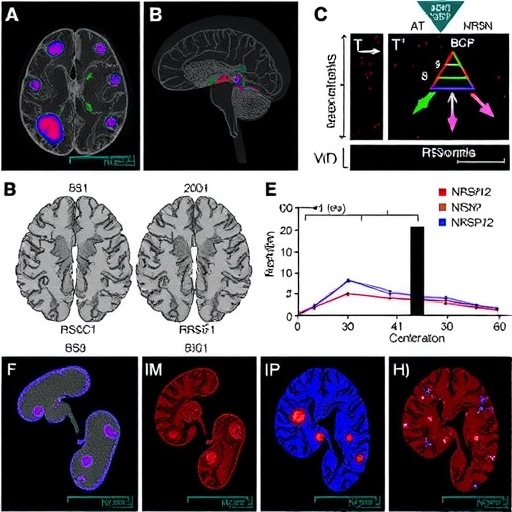
In a groundbreaking study soon to redefine neuroscientific understanding of memory mechanisms, researchers have uncovered the pivotal role played by Neurensin-2 (NRSN2) in regulating hippocampal synaptic plasticity and memory functionality. This newly published research reveals how deficiency in NRSN2 leads to profound impairments in memory, traced back to disrupted excitatory synaptic transmission and weakened long-term potentiation (LTP) within the hippocampus, a brain region critically involved in memory formation and cognitive processing.
The hippocampus serves as the brain’s memory hub, integrating myriad neuronal signals to encode and retrieve information efficiently. Central to this integration is the function of excitatory synapses that employ glutamate receptors, especially the N-methyl-D-aspartate (NMDA) receptor, which plays an essential role in synaptic plasticity—the ability of synapses to strengthen or weaken over time. This plasticity underlies learning and memory. The study elucidates how NRSN2 exerts a regulatory influence on the expression of NMDA receptor subunits, with deficiency in NRSN2 tipping the balance unfavorably and compromising synaptic efficacy.
Utilizing advanced genetic models, the investigators engineered mice lacking NRSN2 to dissect its functional contributions. Behavioral assays showcased a marked decline in memory performance, particularly in spatial and recognition tasks reliant on hippocampal circuits. These deficits were not attributed to developmental anomalies but to disrupted synaptic physiology, signaling a direct role for NRSN2 in maintaining synaptic integrity and plasticity during adult cognition.
At the molecular scale, the absence of NRSN2 triggered a significant downregulation of key NMDA receptor subunits, notably NR1, NR2A, and NR2B. These subunits orchestrate receptor assembly and gating properties critical for calcium influx, a signal cascade necessary for potentiation of synaptic strength. The reduction in their expression correlated tightly with the inhibition of LTP induction, a process considered the cellular analog of memory encoding, confirming the hypothesis that NRSN2 deficiency impairs memory by hampering core synaptic mechanisms.
Electrophysiological recordings from hippocampal slices further substantiated the disrupted synaptic function. In control animals, robust LTP was readily induced by theta burst stimulation—a protocol mimicking physiological neuronal firing during learning. Conversely, hippocampi from NRSN2-deficient mice exhibited significantly weakened potentiation, underscoring the protein’s critical role in modulating synaptic responsiveness. This impairment was not a general defect of synaptic transmission but selectively impacted excitatory plasticity mediated through NMDA receptors.
Delving deeper, the team explored the intracellular cascades influenced by NRSN2, discovering that its absence perturbed the trafficking and surface expression of NMDA receptor complexes. NRSN2 appears to act as a chaperone or scaffold protein, ensuring proper receptor assembly and synaptic localization. Without it, receptor subunits fail to achieve adequate membrane insertion, resulting in diminished postsynaptic sensitivity to glutamate and compromised signal transduction.
This mechanistic insight offers a fresh perspective on how synaptic architecture and molecular composition govern cognition. The study’s integration of molecular biology, electrophysiology, and behavioral neuroscience draws a comprehensive picture of how a single protein’s deficit can destabilize the neural substrates of memory. Such findings not only enrich fundamental neuroscience but also hint at novel targets for cognitive-enhancing therapies.
Intriguingly, alterations in NRSN2 expression and NMDA receptor dysfunction have been implicated in various neuropsychiatric disorders, including schizophrenia and major depressive disorder. By illuminating this molecular nexus within the hippocampus, the research opens doors to understanding disease pathophysiology at a finer scale and may spur development of precision interventions aimed at restoring synaptic balance in affected individuals.
The investigators also examined compensatory mechanisms that might mitigate NRSN2 absence. While some plasticity-related proteins showed upregulation, these changes failed to rescue the deficits in NMDA receptor expression and synaptic potentiation. This highlights the non-redundant and indispensable nature of NRSN2 in maintaining synaptic homeostasis and cognitive function.
Beyond the laboratory findings, the study raises fascinating questions about how synaptic proteins coordinate to sustain the dynamic range of neural connectivity required for adaptive learning. The delicate equilibrium modulated by NRSN2 and NMDA receptors underscores the complexity of neuronal networks and their vulnerability when key molecular elements are compromised—insights that are pivotal as the field seeks to decode the neural basis of memory disorders.
Future research directions spawned by this work include investigating how NRSN2 interacts with other synaptic scaffold proteins and cytoskeletal elements, potentially shaping the three-dimensional organization of the postsynaptic density. Additionally, exploring the developmental timeline of NRSN2 expression could reveal critical periods during which intervention might prevent or reverse memory impairments.
From a translational perspective, the study’s revelations beckon the clinical neuroscience community to consider NRSN2 and its pathways as therapeutic candidates. Pharmacological strategies aimed at upregulating NRSN2 or mimicking its stabilizing effects on NMDA receptors could hold promise for enhancing cognition or slowing neurodegenerative progression in disorders marked by synaptic decline.
In sum, this landmark research defines NRSN2 as a vital regulator of excitatory synaptic plasticity and memory formation. Its deficiency causes a cascade of molecular disturbances culminating in impaired NMDA receptor expression and disrupted LTP, ultimately compromising hippocampal-dependent memory functions. This work not only advances our understanding of the molecular machinery underlying memory but also charts new territory in the quest to ameliorate cognitive dysfunction.
As neuroscience inches closer to mapping the intricate cellular and molecular landscape of cognition, findings such as these underscore the profound impact a single synaptic protein can have on brain function. The compelling evidence presented lays a robust foundation for future explorations into synaptic plasticity and memory, promising strides in both basic science and clinical applications that may soon transform lives burdened by memory loss.
Cite Scienmag News
Glenn Wilkins. (June 21, 2026). NRSN2 Deficiency Disrupts Memory via NMDA Impairment. Scienmag. https://scienmag.com/nrsn2-deficiency-disrupts-memory-via-nmda-impairment/
Glenn Wilkins. "NRSN2 Deficiency Disrupts Memory via NMDA Impairment." Scienmag, 21 June 2026, https://scienmag.com/nrsn2-deficiency-disrupts-memory-via-nmda-impairment/. Accessed 4 September 2026.
Glenn Wilkins. "NRSN2 Deficiency Disrupts Memory via NMDA Impairment." Scienmag. June 21, 2026. https://scienmag.com/nrsn2-deficiency-disrupts-memory-via-nmda-impairment/


