


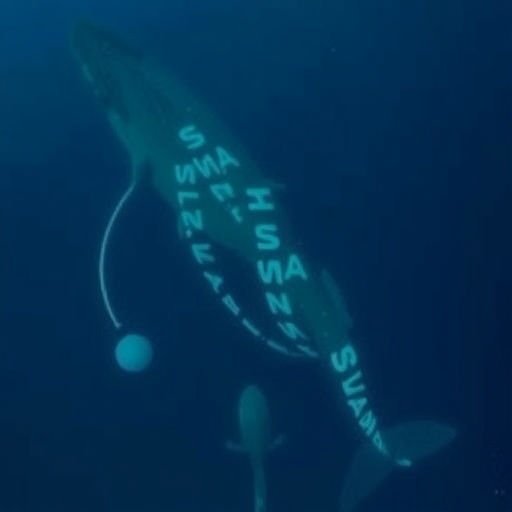
In recent years, the coastal waters of Vancouver have witnessed an unprecedented resurgence of whale activity, captivating marine biologists and local observers alike. This renewed presence, not merely anecdotal, stems from a culmination of seasonal patterns, thriving ecosystems, and impactful conservation measures. A comprehensive study led by researchers at the University of British Columbia’s Institute for the Oceans and Fisheries (IOF) has quantitatively confirmed that transient killer whales now inhabit the Salish Sea for more than two-thirds of the year. Alongside these apex predators, humpback and grey whales are increasingly frequenting these waters, signaling a dynamic shift in regional marine biodiversity.
Transient killer whales, known for their elusive nature and specialized diet of marine mammals, particularly seals and sea lions, are now commonly sighted along Vancouver’s shoreline and within the surrounding straits and harbors. Data collected from 2016 to 2023 underscores not only their presence but also their routine exploitation of these rich feeding grounds. This expanded usage correlates strongly with the rebound of pinniped populations, themselves benefiting from decades-old protections that halted their severe culling. The recovery has thus created a robust trophic cascade, enabling transient killer whales to establish a near year-round residency within the inside waters of Vancouver Island.
Humpback whales represent another remarkable comeback story in this region. Historically decimated by intense commercial whaling in the early 20th century, these baleen giants were completely extirpated from British Columbia waters by 1910. Without older generations to transmit migratory and feeding knowledge, their return to ancestral feeding grounds was lost for nearly a century. However, conservation efforts since the 1960s, including international bans on whaling and improved fisheries management, have facilitated a population recovery that now sees substantial numbers of humpbacks returning each summer to feast on abundant krill, herring, and other prey.
The presence of grey whales in areas around Vancouver is comparatively anomalous but increasingly documented. These whales typically forage offshore near Alaska, subsisting on amphipods—small crustaceans dependent on nutrient-rich algae associated with Arctic sea ice. The drastic loss of sea ice due to climate change directly undermines this fundamental food source, causing nutritional stress especially among pregnant and lactating females who must meet extraordinarily high energetic demands during migration and calf-rearing periods. Consequently, some grey whales are observed making unscheduled stops in the Salish Sea, an adaptation that reflects their deteriorating foraging options rather than traditional migratory behavior.
Studies estimate that pregnant grey whales require a daily intake of approximately 1,600 to 1,900 kilograms of prey to sustain both fetal development and energy reserves critical for postnatal care during their long migrations. Following calving, lactating females continue to consume between 1,300 and 1,600 kilograms of prey daily to nourish their calves for several months. Disruptions in prey availability, driven by climate-induced changes in sea ice and associated ecosystem dynamics, are thus placing immense physiological strain on these populations. The unfortunate consequence has been an observed increase in mortality rates, with malnourished grey whales occasionally stranding along the coastline.
This resurgence of whale activity near Vancouver not only highlights the success of targeted conservation policies but also underscores emerging challenges. Increased interactions between humans and whales necessitate rigorous adherence to safe viewing practices. Researchers advocate for maintaining substantial distances from whales—minimum thresholds are typically 200 meters for most killer whales and extend to 1,000 meters for the endangered southern resident killer whales. The regulations also stipulate 100 meters for other cetaceans, increasing to 200 meters when whales are resting or accompanied by calves. These guidelines are critical in minimizing disturbances and preventing collisions, which pose significant risks to these vulnerable animals.
Furthermore, the role of public awareness and responsible recreational boating cannot be overstated. Boaters, kayakers, and paddleboarders are urged to stay vigilant and reduce speeds when whale blowholes are sighted. The unpredictability of whale movements demands a precautionary approach to navigation within whale habitats. Educational initiatives, such as free online whale-safe boating courses offered by organizations like the Marine Education & Research Society (MERS), have proven effective tools in promoting safer human-wildlife coexistence in marine environments.
The broader implications of these findings extend into the realm of ecosystem health and global climate resilience. Whales function as keystone species, their feeding and migratory behaviors facilitating nutrient transport and productivity within marine systems. The return of diverse whale populations to coastal waters symbolizes not just ecological recovery but offers hope for restoring complex marine food webs fractured by human exploitation. Yet, the acute vulnerability of species such as grey whales to climate-driven habitat changes serves as a stark reminder of ongoing environmental threats.
Simultaneously, the study’s revelations about transient killer whales reveal a nuanced predator-prey dynamic finely attuned to regional ecosystem changes over recent decades. The resurgence of pinniped populations has provided these cetaceans with ample sustenance, allowing for sustained presence in traditionally seasonal zones. This trophic realignment invites further studies into the long-term evolutionary and behavioral adaptations of marine mammals in a rapidly changing oceanic milieu.
Whale conservation is, thus, at a critical juncture. While success stories abound, exemplified by humpback recovery, emerging stressors including climate change, ship traffic, and underwater noise pollution complicate the ecological narrative. The scientific community and policymakers must continue fostering adaptive management strategies that address these multifaceted challenges while engaging public participation for effective stewardship.
In conclusion, the intensifying presence of transient killer whales, humpbacks, and grey whales in Vancouver’s coastal waters offers a vivid testament to both nature’s resilience and the pressing need for sustained conservation vigilance. These marine mammals, emblematic of wider ocean health, depend on intact habitats, thoughtful human behaviors, and responsive environmental policies. As our understanding deepens through ongoing research, so too must our commitment to coexistence with these ocean giants, ensuring their survival amidst an era of rapid ecological transformation.
News Publication Date: Not specified in the provided content.
Web References:
- https://onlinelibrary.wiley.com/doi/epdf/10.1111/mms.70205
- https://onlinelibrary.wiley.com/doi/10.1111/mms.70119
- https://courses.mersociety.org/courses/whale-safe-boating
References:
- Taryn Scarff et al., “Transient killer whales in the Salish Sea,” Marine Mammal Science
- Grey whale energetics and climate impact study, Marine Mammal Science
Cite Scienmag News
Margaret Porter. (June 17, 2026). Why Are So Many Whales in Vancouver Waters? A Guide to Legally Spotting Them. Scienmag. https://scienmag.com/why-are-so-many-whales-in-vancouver-waters-a-guide-to-legally-spotting-them/
Margaret Porter. "Why Are So Many Whales in Vancouver Waters? A Guide to Legally Spotting Them." Scienmag, 17 June 2026, https://scienmag.com/why-are-so-many-whales-in-vancouver-waters-a-guide-to-legally-spotting-them/. Accessed 3 September 2026.
Margaret Porter. "Why Are So Many Whales in Vancouver Waters? A Guide to Legally Spotting Them." Scienmag. June 17, 2026. https://scienmag.com/why-are-so-many-whales-in-vancouver-waters-a-guide-to-legally-spotting-them/


