


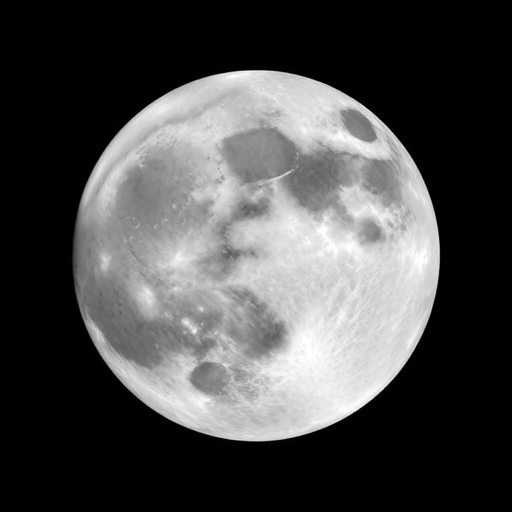
In a groundbreaking new study poised to reshape our understanding of lunar geology, an international team of researchers has revealed complex processes that have fundamentally altered both the crust and mantle of the Moon’s enigmatic South Pole-Aitken (SPA) basin. Published in Communications Earth & Environment, this research uncovers evidence that challenges long-standing assumptions about the Moon’s interior dynamics and its geological evolution. The SPA basin, one of the largest and oldest impact structures in the solar system, has long attracted scientific interest due to its unique composition and profound insights into planetary formation. Yet, this latest investigation opens a fresh perspective on how impact-driven and magmatic processes have collaboratively modified the deep lunar crust and mantle regions beneath the basin’s surface.
The South Pole-Aitken basin is an ancient impact crater that measures approximately 2,500 kilometers in diameter and plunges up to 13 kilometers in depth. Its immense size and age—estimated at around 4 billion years—make it a natural laboratory for studying the Moon’s early history. Traditionally viewed as a relatively static and pristine feature, this new study reveals a surprisingly dynamic geological history marked by repeated crustal reworking and mantle melting episodes. By integrating sophisticated geochemical analyses with cutting-edge remote sensing data, the research team mapped compositional modifications that suggest a series of transformative events significantly redefined the structure of the underlying mantle.
Central to the investigation were drill core samples analyzed for isotopic and elemental signatures indicative of both intrusive and extrusive magmatic activity. These samples, obtained from several locations across the SPA basin, display an intriguing mix of ancient mantle materials and younger volcanic intrusions, challenging the previously held notion of a homogenized lunar interior. Isotopic ratios of elements such as neodymium, strontium, and lead reveal episodic mantle melting, likely triggered by colossal impacts and mantle convection processes driven by radiogenic heating. This mantle dynamics, coupled with localized crustal melting, points to a complex interplay between impact-induced deformation and mantle plume activity beneath the basin.
The geophysical data acquired through orbital spectral surveys further corroborate the geochemical findings. Variations in seismic velocities and gravity anomalies across the SPA region imply heterogeneities in crustal thickness and mantle composition. Notably, these anomalies correspond to areas enriched in ferroan anorthosite and noritic lithologies, indicating substantial crustal differentiation post-impact. Moreover, the identification of unexpected highland materials at varying depths suggests that the traditional dichotomy between lunar crust and mantle is more nuanced than previously assumed. This blend of rock types speaks to the prolonged magmatic and tectonic evolution that has remolded the lunar lithosphere beneath the basin.
Beyond enhancing our understanding of lunar geology, these discoveries offer intriguing parallels to terrestrial planetary processes. The evidence for mantle modification via impact events and internal heating mechanisms on the Moon aligns with models of early Earth differentiation during its own tumultuous formative years. Such comparative planetology underscores the Moon’s role not only as a record of solar system history but also as a key to unlocking the thermal and chemical evolution of rocky planets. The implications extend to interpreting data from other planetary bodies, such as Mars and Mercury, where large impact basins may have similarly driven deep mantle alterations.
The study also touches on the potential implications for future lunar exploration and resource utilization. Understanding the compositional diversity and thermal state of the SPA basin’s mantle could inform strategies for tapping the Moon’s indigenous resources, particularly rare earth elements and volatiles concentrated during magmatic differentiation. This information is invaluable for designing sustainable lunar bases and for planning missions that intend to leverage in-situ materials for prolonged human presence on the Moon. Furthermore, the insights into the subsurface geological structure can improve the targeting of scientific landers and rovers set to explore the South Pole-Aitken region in upcoming lunar exploration campaigns.
Technologically, the research showcases the remarkable advancements in remote sensing and analytical methodologies. Employing a hybrid approach that combined high-resolution spectral imaging with state-of-the-art mass spectrometry and isotopic dating techniques enabled unprecedented insight into the basin’s mantle dynamics. These techniques have overcome previous limitations, allowing scientists to probe beneath the lunar surface without extensive drilling, harnessing natural impact exposures and orbital reconnaissance data. The study exemplifies the future of planetary science where integrated, multi-disciplinary approaches yield comprehensive understandings of celestial bodies.
The findings challenge previous models that depicted the lunar interior as largely inert following its initial differentiation. Instead, the SPA basin emerges as a locus of prolonged and complex geological evolution, featuring sustained mantle melting and crustal recycling processes. This protracted activity may have implications for the Moon’s thermal history, suggesting that internal heat sources persisted far longer than formerly believed. The researchers propose that the thermal regime within the SPA basin could be analogous to a mantle plume-like phenomenon seen on Earth, albeit on a smaller planetary scale, driven by local heating anomalies combined with impact energy dissipation.
Furthermore, the study posits that the modification of the mantle beneath the SPA basin may have influenced the regional magnetic anomalies detected by lunar orbiters. The relationship between crustal magnetism and subsurface mantle processes remains a subject of ongoing inquiry, but this research provides a plausible link through mantle material circulation and magma emplacement mechanisms capable of generating localized magnetic fields. This hypothesis invites future magnetometric and geochemical surveys aimed at unraveling the Moon’s paleomagnetic record and its broader implications for planetary magnetism.
The complex chemical heterogeneity revealed in the deep lunar interior also raises important questions about the distribution and retention of volatiles, which are critical not only for understanding lunar formation but also for considering habitability and in-situ resource utilization. The interplay between mantle differentiation, impact melting, and volatile sequestration may have created localized reservoirs that could prove essential for sustaining future human activities on the Moon. Detailed investigations of volatile-bearing minerals and melt inclusions could provide further evidence of these processes and help refine models of lunar volatile evolution.
Additionally, the research team highlights that the SPA basin’s mantle modifications likely played a role in sculpting the basin’s surface morphology and subsequent volcanic activity. The uplift and faulting associated with mantle plume-like upwellings could have contributed to the basin’s complex topography and the emplacement of extensive mare basalts observed in the region. Understanding the timing and mechanisms of these geological activities is critical for reconstructing the Moon’s magmatic history and for comparative studies with other large impact basins across the Moon and terrestrial planets.
This landmark study also paves the way for interdisciplinary collaborations combining geology, geophysics, geochemistry, and planetary sciences, setting a new standard for investigations into planetary interiors. By elucidating the intricate linkages between impact events, mantle dynamics, and crustal modifications, it contributes significantly to the emerging paradigm of planetary evolution as a dynamic and multilayered process. The integration of these disciplines will no doubt enrich future missions aiming to decode the histories of varied planetary bodies within our solar system.
In summary, the discovery of mantle and crustal modifications in the South Pole-Aitken basin fundamentally transforms the narrative of lunar geological history. It demonstrates that the Moon’s interior is far from static, revealing a planet that has been geologically active over extended periods following gigantic impact events. This revolutionary understanding not only refines our knowledge of the Moon itself but also informs broader planetary science by illustrating how impact-driven processes can catalyze mantle dynamics on terrestrial bodies. As lunar exploration accelerates, these insights offer a critical framework for interpreting data and guiding mission architectures aimed at unraveling the mysteries of Earth’s nearest neighbor.
Cite Scienmag News
Violet Maxwell. (June 15, 2026). Crust and Mantle Changes in Moon’s South Pole-Aitken. Scienmag. https://scienmag.com/crust-and-mantle-changes-in-moons-south-pole-aitken/
Violet Maxwell. "Crust and Mantle Changes in Moon’s South Pole-Aitken." Scienmag, 15 June 2026, https://scienmag.com/crust-and-mantle-changes-in-moons-south-pole-aitken/. Accessed 4 September 2026.
Violet Maxwell. "Crust and Mantle Changes in Moon’s South Pole-Aitken." Scienmag. June 15, 2026. https://scienmag.com/crust-and-mantle-changes-in-moons-south-pole-aitken/


