


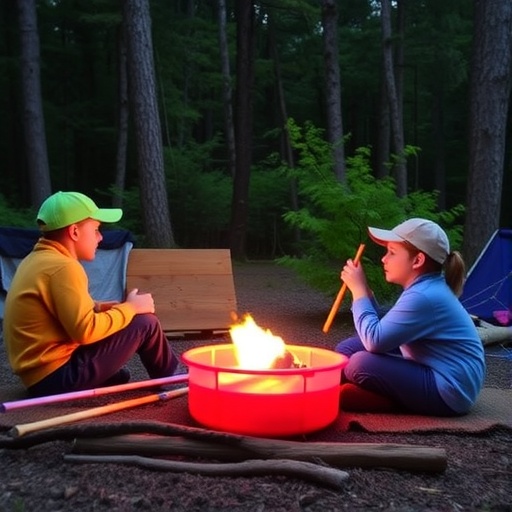
In the rugged landscapes of Millinocket, Maine, Stearns Junior-Senior High School exemplifies how rural educational institutions can harness their natural surroundings to revolutionize learning. The school’s proximity to expansive wilderness offers students not merely recreational outlets, but immersive experiential classrooms where the outdoors becomes an intrinsic part of their education. Here, paddling through serene waters, mountain biking rugged trails, cross-country skiing, and hiking in the iconic Baxter State Park transcend leisure activities, evolving into rigorous educational opportunities that cultivate resilience, practical knowledge, and environmental stewardship.
At the heart of this innovative outdoor pedagogy is Anna Loome, an English teacher who views the Maine wilderness as an expansive classroom. Her curriculum integrates core wilderness skills including navigation using topographic maps and compasses, trail construction and sustainable maintenance techniques, and outdoor culinary methods tailored for variable climates and emergency situations. Loome’s instructional model is designed to accommodate diverse student backgrounds—from novices with limited outdoor experience to adept adventurers—ensuring inclusive access to the physical and cognitive benefits of immersive environmental education. Notably, she regularly leads multi-day excursions to sites like the Haskell Hut, weaving practical survival skills with collaborative learning in the Katahdin Woods and Waters National Monument.
The transformative potential of outdoor education stretches well beyond physical health. Empirical studies have illuminated connections between nature access and improved behavioral regulation, enhanced emotional self-regulation, refined motor skill development, and elevated social competencies among young learners. Further, research indicates that consistent engagement with outdoor learning correlates with declines in chronic absenteeism, underscoring the role such experiences play in fostering school attachment and engagement. Lauren Jacobs, a senior lecturer and lead author from the University of Maine, underscores that while these benefits are documented, systemic challenges often inhibit their broader implementation in rural schools. However, Jacobs’ study in The Rural Educator aims to dismantle these barriers by pinpointing pragmatic strategies to embed outdoor learning into everyday school culture and curricula.
The University of Maine’s longitudinal research into rural outdoor education environments included an in-depth case study of a school distinguished by its comprehensive integration of outdoor instruction at all grade levels. This institution’s multifaceted outdoor curriculum encompasses dedicated physical education classes emphasizing environmental literacy, interdisciplinary lessons that seamlessly integrate outdoor contexts into science and social studies, and clearly delineated professional development pathways supporting teacher capacity-building. Crucially, this school fosters collaborative synergy among teachers, administrators, parents, and community partners, creating a cohesive support network that expands educational opportunities beyond school grounds.
COVID-19 emerged as an unexpected catalyst in this study by normalizing outdoor instruction as a health-conscious strategy. The pandemic’s demand for reduced indoor congregation accelerated the adoption of outdoor learning spaces and methodologies, facilitating not merely compliance with safety protocols but enriching pedagogical approaches. Observations revealed that students exhibited heightened engagement and reduced behavioral disruptions in outdoor settings, further validating the school’s investment in dedicated outdoor classrooms, which feature timber structures, gardens, orchards, and designated wilderness plots as dynamic learning laboratories.
While this case study school did not participate directly in Jacobs’ initial doctoral research, the parallels with Stearns Junior-Senior High School are striking. Stearns’ existing infrastructure includes outdoor classrooms and hewing to state and national educational standards through professional development workshops led by Jacobs herself. The school’s alliance with local organizations exemplifies a robust model of community-school partnership. For instance, Northern Penobscot Tech offers an Outdoor Leadership and Skills Program culminating in readiness for the prestigious Registered Maine Guide Exam. Simultaneously, the town of Millinocket supports a gear library, democratizing access to essential equipment and diminishing socioeconomic barriers to outdoor participation.
Central to this movement is the nonprofit Friends of Katahdin Woods and Waters, whose place-based learning initiatives serve both educators and students by facilitating connections to regional resources, gear, and field activities. These partnerships are pivotal in cultivating a sustainable and scalable ecosystem of outdoor education, ensuring that schools are not isolated entities but active nodes within a vibrant network of environmental engagement. Such cooperative ventures represent a model for overcoming challenges that historically curbed outdoor programming in rural contexts.
Nonetheless, systemic barriers persist. Time constraints impose a dual-edged sword, simultaneously demanding creative scheduling while reducing availability for extended outdoor lessons, teacher training, and longitudinal assessment of student outcomes. Weather variability introduces additional complexity, necessitating logistical flexibility and adequate provisioning of weather-appropriate gear. Jacobs’ insights reveal adaptive solutions from the case study school, such as strategically scheduling physical education adjacent to science classes to optimize outdoor time and minimize transition-related disruptions.
Creating safe and dedicated outdoor spaces also emerged as a non-negotiable factor in ensuring consistent, quality outdoor instruction. The physical environment must support diverse activities—from low-impact observational learning to physically demanding navigation exercises—while accounting for seasonal and emergent safety concerns. Importantly, community organizations have demonstrated willingness to collaborate by providing or maintaining these spaces, a resource leveraged successfully by schools looking to expand their outdoor classrooms beyond institutional grounds.
Teachers’ attitudes and skill levels vary widely; Loome advises educators not to strive for mastery in all outdoor activities, emphasizing instead a growth mindset oriented around learning alongside students. This approach models adaptive learning and resilience, values intrinsic to outdoor education. Jacobs echoes this sentiment, highlighting that many educators supporting outdoor curricula are not inherently “outdoorsy” yet are motivated by recognized student benefits rather than personal affinity for nature. This attitudinal shift underscores the potential scalability of outdoor learning initiatives to diverse educational settings.
For schools eager to scale outdoor programs, strategic planning is paramount. Integrating outdoor activities with existing curriculum standards, ensuring cultural and ecological relevance to the served community, and committing to long-term sustainability planning are foundational steps. Equally important is institutional support that balances instructional time management with professional development and resource acquisition.
The rewards of embedding outdoor learning in rural schools extend beyond academic achievement. These programs inculcate ecological literacy, foster community pride, and nurture future stewards of the environment. Jacobs concludes that despite the planning and resources required, the enduring benefits for youth and their communities unequivocally justify the investment. As rural education embraces the outdoors as a catalyst for holistic development, models like Stearns Junior-Senior High and Jacobs’ case study provide transformative blueprints for educators nationwide.
Web References:
- The Rural Educator journal article
- University of Maine Outdoor Leadership program
- Northern Penobscot Tech Outdoor Leadership and Skills Program
- Friends of Katahdin Woods and Waters place-based learning
References: DOI 10.55533/2643-9662.1526
Cite Scienmag News
Courtney Benton. (June 15, 2026). UMaine Study Provides Guidance for Schools Developing Outdoor Education Programs. Scienmag. https://scienmag.com/umaine-study-provides-guidance-for-schools-developing-outdoor-education-programs/
Courtney Benton. "UMaine Study Provides Guidance for Schools Developing Outdoor Education Programs." Scienmag, 15 June 2026, https://scienmag.com/umaine-study-provides-guidance-for-schools-developing-outdoor-education-programs/. Accessed 4 September 2026.
Courtney Benton. "UMaine Study Provides Guidance for Schools Developing Outdoor Education Programs." Scienmag. June 15, 2026. https://scienmag.com/umaine-study-provides-guidance-for-schools-developing-outdoor-education-programs/


