


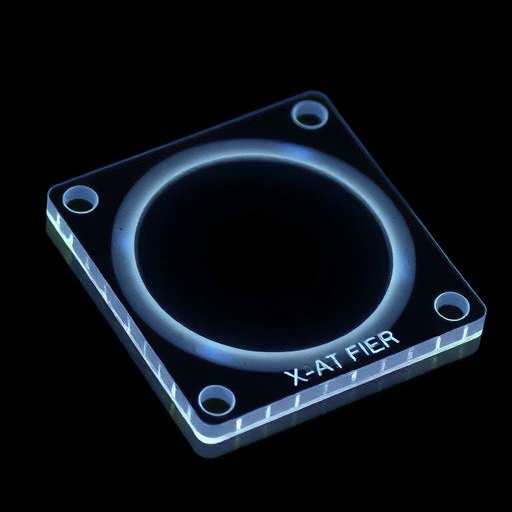
In a groundbreaking advancement that could redefine the future of radiation detection technologies, researchers Zhao, Liu, Chen, and their colleagues have unveiled an innovative paper-based lead-free thin film X-ray detector. This novel device, detailed in their forthcoming publication in npj Flexible Electronics, offers unprecedented sensitivity and remarkable environmental stability—two features long sought after in the design of next-generation X-ray detectors.
Traditional X-ray detectors often rely on heavy-metal-based materials, such as lead, to achieve efficiency and durability. While effective, the toxicity and environmental hazards associated with lead limit the widespread application and sustainability of these devices. The quest for lead-free alternatives has been a formidable challenge in materials science, especially when aiming to preserve or enhance detector performance. The research team’s paper-based solution not only addresses the toxicological concerns but also pioneers a new paradigm in flexible, lightweight, and environmentally benign radiation sensing.
At the core of this innovation lies the meticulous engineering of thin film semiconductor layers deposited onto a cellulose-based substrate—a medium traditionally disregarded in high-performance electronics. The paper substrate’s inherent flexibility and biodegradability complement the device’s functional merits, presenting opportunities to integrate X-ray detection into portable, wearable, or even disposable platforms. This approach underscores a confluence between materials science and sustainable design, positioning paper-based electronics at the forefront of flexible sensor technology.
The thin film itself is characterized by a unique composition of non-toxic materials, carefully tailored to optimize the photoelectric and charge transport properties essential for X-ray detection. These materials demonstrate a high absorption coefficient across the relevant X-ray energy spectrum, allowing the detector to convert incident radiation efficiently into measurable electrical signals. The researchers’ efforts in fine-tuning the crystalline structure of these thin films have also contributed to minimizing electronic noise and enhancing operational stability.
One of the hallmark features of this device is its exceptional sensitivity. In laboratory tests, the paper-based thin film detector rivals, and in some metrics surpasses, conventional lead-containing counterparts. This superior sensitivity is crucial for applications requiring accurate detection of low-intensity X-ray emissions, such as in medical diagnostics, security screening, and industrial non-destructive testing. The ability to detect subtle variations in X-ray intensity with reliability can significantly improve diagnostic outcomes and safety protocols.
Another compelling advantage of this detector is its environmental stability. Exposure to moisture, temperature fluctuations, and prolonged radiation typically degrade the performance of thin film detectors, especially when organic or hybrid materials are involved. However, the innovative architecture and choice of encapsulation materials in this device confer robust protection against environmental stressors. Accelerated aging tests demonstrated sustained sensitivity over extended periods, indicating its suitability for real-world applications where durability is paramount.
The integration of the detector onto a flexible paper substrate also allows for novel form factors and deployment strategies. For instance, the device’s mechanical flexibility enables it to conform to curved surfaces or irregular geometries, a capability unattainable by rigid semiconductor detectors. This attribute opens unprecedented possibilities for wearable medical devices capable of monitoring radiation dosage or real-time X-ray imaging in unconventional settings.
Moreover, the researchers have successfully employed scalable fabrication techniques compatible with low-cost printing and coating processes. Such manufacturing pathways could democratize access to high-performance X-ray sensing technologies, especially in resource-limited environments. The synergy of affordability, environmental friendliness, and high performance may drive widespread adoption in both developed and developing regions, supporting initiatives in healthcare, environmental monitoring, and security.
The interdisciplinary nature of this research—merging materials science, flexible electronics, and radiation physics—highlights the collaborative efforts necessary to overcome the complex challenges of modern sensor development. The team’s approach demonstrates how revisiting unconventional substrates like paper can yield transformative benefits when coupled with advanced material engineering.
Looking ahead, this innovation sets a promising trajectory for further exploration into multifunctional paper-based devices. Beyond X-ray detection, similar platforms could potentially integrate sensing modalities for ultraviolet light, gamma rays, or even chemical analytes, paving the way for a new class of eco-friendly, flexible sensors that can be seamlessly incorporated into everyday objects.
The environmental implications of this technology are equally profound. By eliminating hazardous materials, the lifecycle footprint of X-ray detectors can be significantly reduced, mitigating pollution associated with electronic waste disposal. Additionally, the inherent biodegradability of paper substrates facilitates end-of-life management through composting or recycling pathways, aligning with circular economy principles.
From a technical perspective, the researchers have implemented rigorous characterization protocols to validate their detector’s performance metrics. These include spectral response analysis, noise equivalent dose rate measurements, and long-term operational stability tests under varied environmental conditions. Such comprehensive evaluation ensures that the device meets stringent criteria found in clinical and industrial standards.
This pioneering work also sparks intriguing discussions about the fundamental physics governing charge generation and transport in hybrid cellulose-based thin films. Unraveling the mechanisms that enable efficient X-ray detection in these unconventional materials could inspire further material innovation, potentially unlocking new classes of radiation-sensitive semiconductors.
Furthermore, the potential for integrating this technology into flexible electronic circuits augments its appeal. By marrying X-ray detection with flexible display or communication components, multifunctional diagnostic or environmental monitoring systems that communicate wirelessly or interface with smartphones could become a reality, enhancing user accessibility and real-time data collection.
Critically, the paper-based detector’s performance stability amidst mechanical flexing and bending was systematically assessed, revealing negligible loss of functionality even after thousands of flexing cycles. This mechanical robustness reassures practical deployment scenarios in dynamic or wearable settings.
Finally, the researchers emphasize that while this is a significant step forward, continued research is necessary to optimize material formulations, improve device encapsulation, and extend the operational lifespan for commercial viability. Collaborative efforts spanning academia, industry, and regulatory agencies will be essential to translate this promising lab-scale invention into impactful products.
In conclusion, the development of paper-based, lead-free thin film X-ray detectors stands as a milestone in flexible electronics and sustainable sensor technologies. By delivering high sensitivity, environmental stability, and mechanical flexibility, this innovation heralds a future where safer, greener, and more versatile radiation detection devices are accessible to a wide array of scientific, medical, and industrial applications.
Cite Scienmag News
Denise Maddox. (June 13, 2026). Lead-Free Thin Film X-Ray Detectors: Sensitive, Stable. Scienmag. https://scienmag.com/lead-free-thin-film-x-ray-detectors-sensitive-stable/
Denise Maddox. "Lead-Free Thin Film X-Ray Detectors: Sensitive, Stable." Scienmag, 13 June 2026, https://scienmag.com/lead-free-thin-film-x-ray-detectors-sensitive-stable/. Accessed 3 September 2026.
Denise Maddox. "Lead-Free Thin Film X-Ray Detectors: Sensitive, Stable." Scienmag. June 13, 2026. https://scienmag.com/lead-free-thin-film-x-ray-detectors-sensitive-stable/


