


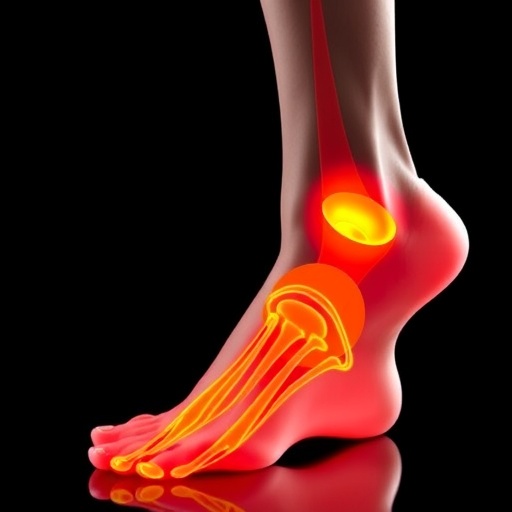
Parkinson’s Disease, a neurodegenerative disorder affecting millions worldwide, has evaded simple, early diagnostic measures for decades. However, an emerging frontier in clinical neurology and biomechanical research now promises to revolutionize the way we detect and monitor this debilitating condition. A groundbreaking comprehensive survey conducted by Wang, Zhao, Lin, and colleagues, soon to be published in npj Parkinson’s Disease, delves deeply into the nuanced relationship between plantar pressure dynamics and the diagnosis and assessment of Parkinson’s disease. This multifaceted analysis leverages state-of-the-art plantar pressure technologies to chart novel diagnostics pathways, potentially heralding a new era of objective, quantitative assessments for this complex movement disorder.
At its core, Parkinson’s disease disrupts the delicate orchestration of motor control, influencing gait patterns and leading to characteristic disturbances in posture and ambulation. Traditionally, diagnosis hinges on clinical observation of symptoms such as bradykinesia, resting tremor, and rigidity, augmented by patient history and neurological examination. Yet, these methods are inherently subjective, often leading to delays or inaccuracies in diagnosis. To bridge this gap, the authors emphasize the potential of plantar pressure analysis, a technique that intricately maps the pressure distribution beneath the foot during walking, standing, or other dynamic activities. By capturing subtle irregularities in pressure patterns and temporal gait parameters, clinicians could gain unprecedented insight into the biomechanical manifestations of Parkinson’s disease at stages far earlier than currently possible.
The human foot acts as a primary interface with the ground, and its pressure distribution reveals a wealth of information about neuromuscular integrity and motor execution. Parkinsonian gait is typified by reduced stride length, shuffling steps, and a decrease in heel strike force, all of which manifest as distinctive plantar pressure signatures measurable using pressure mats, insoles embedded with sensors, or advanced imaging modalities intertwined with force measurement technology. Wang et al. highlight how sophisticated algorithms and machine learning models can analyze multidimensional pressure data, distinguishing between subtle Parkinsonian gait abnormalities and those arising from other neurological or musculoskeletal disorders. This fine-grained differentiation carries significant clinical value, potentially enabling personalized intervention plans tailored to the unique motor profile of each patient.
This survey extensively reviews the spectrum of current plantar pressure analysis systems employed in Parkinson’s research. These range from high-resolution pressure platforms featuring piezoelectric sensor arrays that capture dynamic forces in real time, to wearable pressure sensor insoles enabling continuous ambulatory monitoring. A critical evaluation of these technologies underscores the trade-offs between data accuracy, user comfort, portability, and cost. Remarkably, the authors note that recent advances in flexible electronics and wireless data transmission have catalyzed a paradigm shift, permitting real-world gait monitoring outside clinical environments. Such ecological validity can dramatically enhance the reliability of Parkinson’s disease assessments, capturing fluctuations in motor performance throughout daily activities rather than static, clinic-based snapshots.
Furthermore, the authors explore the integration of plantar pressure metrics with other modalities, such as inertial measurement units (IMUs), electromyography (EMG), and neuroimaging, to forge robust multimodal diagnostic frameworks. Combining biomechanical data with neural signals promises a comprehensive characterization of disease progression and response to therapy. For example, detecting freezing of gait – a debilitating motor symptom in advanced Parkinson’s – can be refined by synchronizing plantar pressure data pinpointing foot placement irregularities with EMG-recorded muscle activation patterns. Such integrated approaches may unlock predictive markers of motor decline, informing timely therapeutic interventions and enhancing patient quality of life.
The survey further delves into the pathophysiological mechanisms underpinning the altered plantar pressure patterns in Parkinson’s disease. Dopaminergic neuron degeneration disrupts basal ganglia circuits integral to smooth motor function, culminating in motor deficits that manifest peripherally as impaired force modulation and proprioceptive feedback during gait. These neural abnormalities translate biomechanically into uneven pressure distribution, reduced ground reaction forces, and altered temporal sequencing of foot contact phases. By correlating these biomechanical anomalies with neurodegeneration severity, plantar pressure analysis emerges as not merely a diagnostic tool but also a biomarker reflecting underlying neuropathology.
Addressing challenges, Wang and colleagues candidly discuss the variability inherent in plantar pressure data caused by factors such as footwear differences, surface types, patient fatigue, and comorbidities like osteoarthritis. They advocate for standardizing testing protocols and data normalization techniques to mitigate confounding influences, ensuring consistency and reproducibility across studies. Moreover, large-scale population studies encompassing diverse demographics are essential to establish normative databases against which pathological deviations can be contrasted robustly.
In the realm of therapeutic monitoring, plantar pressure analysis presents exciting opportunities to quantify responses to pharmaceutical treatments, deep brain stimulation (DBS), and physiotherapy. Objective gait parameters derived from pressure sensors could serve as quantitative endpoints in clinical trials, facilitating more rapid and precise assessment of treatment efficacy. Early pilot studies discussed in the survey demonstrate measurable improvements in gait symmetry and pressure distribution post-intervention, reinforcing the technology’s potential as an indispensable clinical tool.
Importantly, patients themselves stand to benefit from these innovations through enhanced disease self-management. Wearable plantar pressure devices can provide real-time biofeedback, alerting users to gait deviations that predispose falls, a significant risk in Parkinsonian populations. Personalized gait training programs incorporating feedback loops may foster motor learning and neuroplastic adaptations, potentially slowing disease progression or improving functional independence.
Another compelling aspect explored is the potential integration of plantar pressure analysis within telemedicine frameworks. Remote patient monitoring, powered by wearable telemetry devices transmitting pressure data to healthcare providers, could facilitate continuous disease surveillance, timely adjustments in therapy, and improved access to specialist care for patients in geographically isolated regions. This aligns with the global movement toward digital health ecosystems, amplifying Parkinson’s disease management’s cost-efficiency and scalability.
Ethical considerations permeate this technological evolution. The survey underscores the necessity of safeguarding patient privacy and data security, particularly given the sensitive nature of continuous biomechanical and behavioral monitoring. Transparent consent processes and robust encryption protocols are essential to maintain trust and compliance within increasingly digitized healthcare landscapes.
Looking ahead, Wang et al. call for interdisciplinary collaborations marrying neurology, biomechanics, engineering, data science, and patient advocacy to propel plantar pressure analysis from research labs into routine clinical practice. Addressing regulatory pathways, standardization bodies, and reimbursement policies will be crucial to facilitate widespread adoption. The authors envision a future where plantar pressure measurements serve as a non-invasive, cost-effective, and precise method for Parkinson’s diagnosis, prognosis, and personalized therapeutic guidance.
In conclusion, this comprehensive survey represents a seminal contribution to Parkinson’s disease research, meticulously synthesizing technological advances, clinical applications, and future directions in plantar pressure analysis. Its insights illuminate a transformative pathway toward overcoming longstanding challenges in Parkinsonian gait assessment, enhancing diagnostic accuracy, monitoring disease progression, and ultimately improving patient outcomes. As this field rapidly evolves, plantar pressure analysis stands poised to become a cornerstone of precision medicine approaches in neurodegenerative diseases, charting new frontiers in both scientific understanding and clinical care.
Cite Scienmag News
Ophelia Keating. (June 11, 2026). Parkinson’s Diagnosis Through Plantar Pressure Analysis. Scienmag. https://scienmag.com/parkinsons-diagnosis-through-plantar-pressure-analysis/
Ophelia Keating. "Parkinson’s Diagnosis Through Plantar Pressure Analysis." Scienmag, 11 June 2026, https://scienmag.com/parkinsons-diagnosis-through-plantar-pressure-analysis/. Accessed 3 September 2026.
Ophelia Keating. "Parkinson’s Diagnosis Through Plantar Pressure Analysis." Scienmag. June 11, 2026. https://scienmag.com/parkinsons-diagnosis-through-plantar-pressure-analysis/


