

Tuesday, August 4, 2026
Science
No Result
View All Result
  • Login
  • HOME
  • SCIENCE NEWS
  • CONTACT US
  • HOME
  • SCIENCE NEWS
  • CONTACT US
No Result
View All Result
Scienmag
No Result
View All Result
Home Science News Cancer

Targeted cancer therapy: initial high concentration may slow down selection for resistance

August 6, 2024
in Cancer
Reading Time: 3 mins read
0
Targeted cancer therapy: initial high concentration may slow down selection
67
SHARES
607
VIEWS
Share on FacebookShare on Twitter
ADVERTISEMENT

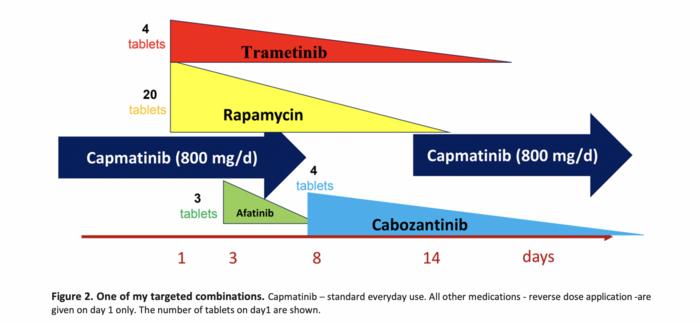
BUFFALO, NY- August 6, 2024 – On July 28, 2024, Mikhail V. Blagosklonny M.D., Ph.D., from Roswell Park Comprehensive Cancer Center published a new editorial in Volume 16, Issue 14 of Aging (listed by MEDLINE/PubMed as “Aging (Albany NY)” and “Aging-US” by Web of Science), entitled, “Targeted cancer therapy: the initial high concentration may slow down the selection for resistance.”

Targeted cancer therapy: the initial high concentration may slow down the selection for resistance

Credit: 2024 Blagosklonny et al.

BUFFALO, NY- August 6, 2024 – On July 28, 2024, Mikhail V. Blagosklonny M.D., Ph.D., from Roswell Park Comprehensive Cancer Center published a new editorial in Volume 16, Issue 14 of Aging (listed by MEDLINE/PubMed as “Aging (Albany NY)” and “Aging-US” by Web of Science), entitled, “Targeted cancer therapy: the initial high concentration may slow down the selection for resistance.”

“Unfortunately, any targeted therapy is, always, started with low levels of the drug in the organism, selecting for drug resistance. One should propose that initial drug levels must be maximized, and durations may be minimized, ideally, as portions of preemptive combination of targeted drugs.”

Read the full paper: DOI: 

Corresponding Author: Mikhail V. Blagosklonny – Blagosklonny@oncotarget.com, Blagosklonny@rapalogs.com

Keywords: aging, lung cancer, resistance, brain metastases, METex14, capmatinib, rapamycin

Click here to sign up for free Altmetric alerts about this article.

About Aging-US:

The mission of the journal is to understand the mechanisms surrounding aging and age-related diseases, including cancer as the main cause of death in the modern aged population.

The journal aims to promote 1) treatment of age-related diseases by slowing down aging, 2) validation of anti-aging drugs by treating age-related diseases, and 3) prevention of cancer by inhibiting aging. (Cancer and COVID-19 are age-related diseases.)

Please visit our website at www.Aging-US.com and connect with us:

  • Facebook
  • X
  • Instagram
  • YouTube
  • LinkedIn
  • Reddit
  • Pinterest
  • Spotify, or available wherever you listen to podcasts

Click here to subscribe to Aging publication updates.

For media inquiries, please contact media@impactjournals.com.

Aging (Aging-US) Journal Office
6666 E. Quaker Str., Suite 1B
Orchard Park, NY 14127
Phone: 1-800-922-0957, option 1


Journal

Aging-US

DOI

10.18632/aging.206046

Method of Research

Commentary/editorial

Subject of Research

Not applicable

Article Title

Targeted cancer therapy: the initial high concentration may slow down the selection for resistance

Article Publication Date

28-Jul-2024

COI Statement

The author declares no conflicts of interest related to this study.

Share27Tweet17
Previous Post

Shaping dairy farm vaccination decisions: social pressure and vet influence

Next Post

Competition to unlock atmospheres of distant planets using AI

Related Posts

UK Survey Reveals Breast Cancer Risk Assessment Priorities for Women Under 50
Cancer

UK Survey Reveals Breast Cancer Risk Assessment Priorities for Women Under 50

August 4, 2026
METTL14-Dependent FGF16 m6A Modification Promotes Angiogenesis Following IGFBP5 Deficiency
Cancer

METTL14-Dependent FGF16 m6A Modification Promotes Angiogenesis Following IGFBP5 Deficiency

August 4, 2026
New therapy targets gum disease bacteria while preserving beneficial oral microbes
Cancer

New therapy targets gum disease bacteria while preserving beneficial oral microbes

August 4, 2026
New study reveals aging unfolds at different rates across individual cells
Cancer

New study reveals aging unfolds at different rates across individual cells

August 4, 2026
Singapore researchers develop tool to accurately predict liver cancer recurrence
Cancer

Singapore researchers develop tool to accurately predict liver cancer recurrence

August 4, 2026
VCU Massey Cancer Center Awarded $2.7 Million NIH Grant
Cancer

VCU Massey Cancer Center Awarded $2.7 Million NIH Grant

August 4, 2026
Next Post
Competition to unlock atmospheres of distant planets using AI

Competition to unlock atmospheres of distant planets using AI

  • Mothers who receive childcare support from maternal grandparents show more

    Mothers who receive childcare support from maternal grandparents show more parental warmth, finds NTU Singapore study

    27656 shares
    Share 11059 Tweet 6912
  • University of Seville Breaks 120-Year-Old Mystery, Revises a Key Einstein Concept

    1061 shares
    Share 424 Tweet 265
  • Bee body mass, pathogens and local climate influence heat tolerance

    682 shares
    Share 273 Tweet 171
  • Researchers record first-ever images and data of a shark experiencing a boat strike

    546 shares
    Share 218 Tweet 137
  • Groundbreaking Clinical Trial Reveals Lubiprostone Enhances Kidney Function

    531 shares
    Share 212 Tweet 133
Science

Embark on a thrilling journey of discovery with Scienmag.com—your ultimate source for cutting-edge breakthroughs. Immerse yourself in a world where curiosity knows no limits and tomorrow’s possibilities become today’s reality!

RECENT NEWS

  • Dairy Intake and Home Resistance Training Affect Function in Older Japanese Adults
  • Intelligent Photonics and Digital Twins Advance Adaptive Care for Panvascular Disease
  • HMGA1 Promotes Bone-Like Transformation of Vascular Muscle Cells in Kidney Disease
  • Mechanically Tunable Molecular Switch Enables Circularly Polarized Light Emission

Categories

  • Agriculture
  • Anthropology
  • Archaeology
  • Athmospheric
  • Biology
  • Biotechnology
  • Blog
  • Bussines
  • Cancer
  • Chemistry
  • Climate
  • Earth Science
  • Editorial Policy
  • Marine
  • Mathematics
  • Medicine
  • Pediatry
  • Policy
  • Psychology & Psychiatry
  • Science Education
  • Social Science
  • Space
  • Technology and Engineering

Subscribe to Blog via Email

Success! An email was just sent to confirm your subscription. Please find the email now and click 'Confirm Follow' to start subscribing.

Join 5,147 other subscribers

© 2025 Scienmag - Science Magazine

Welcome Back!

Login to your account below

Forgotten Password?

Retrieve your password

Please enter your username or email address to reset your password.

Log In
No Result
View All Result
  • HOME
  • SCIENCE NEWS
  • CONTACT US

© 2025 Scienmag - Science Magazine
