


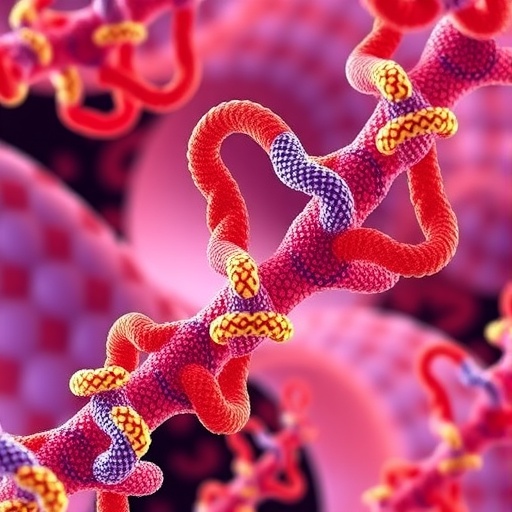
In the rapidly evolving landscape of cancer research, the three-dimensional structure of the genome has emerged as a critical frontier. Recent studies have unveiled how the spatial organization of chromatin within the nucleus orchestrates gene expression programs, and importantly, how its dysregulation underpins oncogenic transformation. Despite impressive technological advances in mapping 3D genome architecture, transforming these insights into effective cancer therapies remains a formidable challenge. The scientific community is now grappling with fundamental questions that must be addressed to harness the full therapeutic potential of genome folding dynamics.
One of the most pressing obstacles involves distinguishing bona fide functional changes in chromatin architecture from the overwhelming “noise” generated by genomic instability inherent to cancer cells. Tumors often exhibit thousands of alterations in chromatin contacts, loops, and topological domains, but only a fraction of these are true drivers—directly eliciting oncogenic transcriptional programs. The remainder are passengers, incidental by-products with negligible biological impact. Developing rigorous and reproducible criteria to identify these driver architectural elements is essential for moving beyond descriptive studies toward actionable targets in cancer therapy.
Moreover, the nature of 3D genome folding is exquisitely context-dependent, varying not just by tumor type but also by cell lineage, differentiation status, and microenvironmental signals. Structural variations or epigenetic modifications that provoke transformative changes in one cancer type may have radically different effects in another. This complexity has prompted a paradigm shift away from traditional cell line models towards the construction of comprehensive three-dimensional genome atlases derived directly from primary tumors. These atlases reveal that while broad chromatin compartments tend to be stable, fine-scale enhancer–promoter loops are highly plastic and specific to individual cancer lineages. Such precision mapping offers an unprecedented opportunity to redefine cancer subtypes and shape personalized therapeutic interventions.
However, the ambition to reengineer genome architecture for cancer treatment is fraught with technical and safety hurdles. Architectural proteins and epigenetic complexes that maintain chromatin structure exert their influence genome-wide, meaning that indiscriminate targeting risks collateral damage to normal tissues. Off-target effects could disrupt essential regulatory networks, resulting in genotoxicity or transcriptional chaos. To bypass this, emerging approaches emphasize the need for locus-specific, conditionally activated tools that reconfigure 3D genome interactions only within malignant cells or under defined states. The arrival of CRISPR-based epigenome editing and loop modifiers marks a monumental step, yet their transition from bench to bedside demands breakthroughs in delivery mechanisms, targeting accuracy, and long-term safety profiles.
Expanding the scope of genome architecture research, scientists recognize that integrating 3D chromatin maps with extensive layers of omics data is crucial for the next generation of precision oncology. Just as a single snapshot cannot capture a complex dance, isolated genomic or transcriptomic data fail to reflect the intricate interplay governed by spatial genome organization. The convergence of genomics, epigenomics, transcriptomics, proteomics, and metabolomics with 3D structural insights promises predictive models exquisitely tailored to individual patient tumors. These models could foresee therapeutic responses and resistance mechanisms, enabling clinicians to make informed decisions with unprecedented confidence.
The nascent field is now focusing its energy on generating patient-derived 3D genome connectomes—detailed maps capturing the unique folding patterns of chromatin in malignant tissues. These connectomes not only serve as diagnostic fingerprinting tools but also expose vulnerabilities that can be strategically targeted. Unlike previous one-size-fits-all approaches, this level of resolution supports bespoke treatments that exploit tumor-specific architectural features to disrupt pathological gene regulation while sparing healthy cells.
Despite this optimism, the complexity of chromatin folding mechanisms means that many questions remain unanswered. The exact interplay between architectural elements such as loops, topologically associating domains, and compartments in dictating oncogene activation or tumor suppressor silencing is still being dissected. Furthermore, how the tumor microenvironment and metabolic cues interface with 3D genome remodeling adds layers of nuance that therapeutic strategies will need to accommodate. These multifactorial influences underscore the necessity for multi-dimensional research frameworks that integrate spatial, molecular, and ecological perspectives.
In parallel, researchers are delving deeper into the molecular basis of driver genomic alterations that reshape 3D architecture in cancer. Mutations in architectural proteins like CTCF and cohesin, alterations in histone modifiers, and noncoding regulatory element disruptions all converge to perturb chromatin folding landscapes. Each of these mutations can manifest as changes in higher-order chromatin looping or compartmental shifts, ultimately rewriting gene expression programs to favor uncontrolled proliferation, invasion, and metastasis. Unraveling these molecular mechanisms is pivotal to developing precise editing tools that reverse malignancy-associated rewiring.
The advent of sophisticated genome editing platforms combining CRISPR technology with epigenetic modifiers heralds a new era for direct manipulation of 3D genome structure. Experimental applications have demonstrated the feasibility of selectively restoring or disrupting enhancer–promoter loops to modulate oncogene activity. While these proof-of-concept studies lay critical groundwork, translating them into viable therapies requires addressing formidable barriers such as delivery specificity to tumor cells, minimizing immunogenicity, and ensuring durability of the architectural corrections without unintended permanent changes.
Meanwhile, a growing appreciation of systems-level safety has encouraged the adoption of conditionally activated genome engineering approaches. Techniques that utilize inducible promoters, tissue-specific enhancers, or environmentally responsive systems offer ways to limit architectural remodeling to diseased states or anatomical contexts. Such fine control will be necessary to mitigate risks of harming essential 3D genome features that underpin normal cellular function, thus elevating the therapeutic index of potential interventions.
Beyond therapeutic manipulation, 3D genome architecture is rapidly becoming a potent biomarker for cancer classification. By integrating chromatin connectivity patterns into diagnostic workflows, it is possible to stratify patients more accurately according to distinct molecular subtypes. This topological dimension enriches conventional histopathology and molecular profiling, potentially guiding treatment choices and prognostic assessments with greater precision and nuance than previously achievable.
Furthermore, large-scale initiatives aimed at building comprehensive multi-omics databases inclusive of 3D genome information are gaining momentum. These resources facilitate machine learning and artificial intelligence applications designed to mine complex datasets, revealing hidden patterns predictive of disease progression or therapeutic response. By harnessing these computational advances, clinicians may soon access dynamic models that simulate the effects of proposed interventions on spatial genome organization, thereby refining and personalizing treatment regimens before clinical application.
Nevertheless, it is crucial to emphasize that the field is still in its infancy with respect to clinical translation. While foundational knowledge about the 3D genome’s role in cancer biology is expanding rapidly, realizing safe and effective therapeutic modalities will require coordinated interdisciplinary efforts. Collaboration between molecular biologists, bioinformaticians, clinicians, and bioengineers will be instrumental in bridging gaps from mechanistic insights to real-world implementation.
In conclusion, the promise of 3D chromatin architecture as both a window into cancer pathogenesis and a modality for precision therapy is immense and tantalizing. Overcoming fundamental scientific and technical bottlenecks will open the door to novel cancer treatments that operate by rewiring the spatial genome, offering hope for durable remissions and reduced side effects. The ongoing revolution in genome folding research is poised to reshape oncology in profound ways, marking one of the most exciting frontiers in modern biomedical science.
Cite Scienmag News
Nathaniel Bowman. (June 6, 2026). 3D Chromatin Changes in Cancer: Causes and Therapies. Scienmag. https://scienmag.com/3d-chromatin-changes-in-cancer-causes-and-therapies/
Nathaniel Bowman. "3D Chromatin Changes in Cancer: Causes and Therapies." Scienmag, 6 June 2026, https://scienmag.com/3d-chromatin-changes-in-cancer-causes-and-therapies/. Accessed 3 September 2026.
Nathaniel Bowman. "3D Chromatin Changes in Cancer: Causes and Therapies." Scienmag. June 6, 2026. https://scienmag.com/3d-chromatin-changes-in-cancer-causes-and-therapies/


