


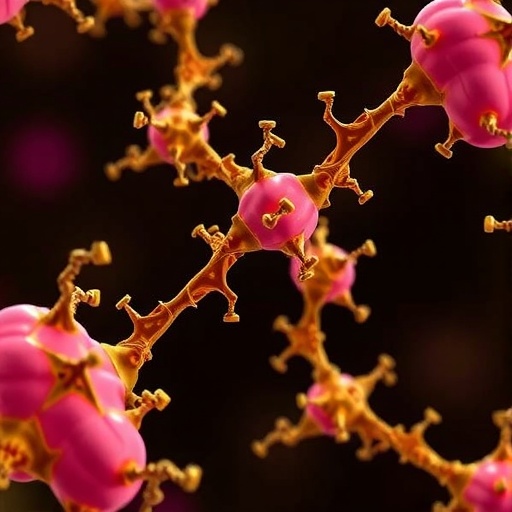
In a groundbreaking new study published in Cell Death Discovery, an international team of researchers has uncovered a novel truncating mutation in the desmin gene—designated Arg150Stop—that fundamentally disrupts cellular architecture and homeostasis by inducing the formation of persistent aggregate-like structures. This discovery has profound implications for our understanding of cytoskeletal diseases and introduces a fresh molecular target for therapeutic intervention.
Desmin, a muscle-specific intermediate filament protein, is critical for maintaining the structural integrity and mechanical properties of muscle cells. It stabilizes sarcomeres and mediates the transmission of contractile forces and signals throughout the cell. Mutations in desmin are known to lead to desmin-related myopathies, a group of disorders characterized by muscle weakness and cardiomyopathy. However, the newly identified Arg150Stop mutation represents a truncating alteration that prematurely halts translation, generating a defective protein with distinct pathological features.
The Arg150Stop variant was identified through comprehensive genetic screening of patients presenting with unexplained myofibrillar abnormalities and cardiac dysfunction. Functional analysis revealed that the truncated desmin protein lacks critical domains required for filament assembly, thereby compromising the intricate network essential for cellular stability. Instead of integrating into the normal filamentous architecture, this aberrant protein self-associates into large, persistent aggregate-like assemblies within muscle cells, as demonstrated by advanced imaging techniques.
At the molecular level, the formation of these aggregates perturbs the delicate balance of protein homeostasis—or proteostasis—and overwhelms the cellular quality control machinery. Normally, chaperones and proteasomal degradation pathways would mitigate the accumulation of misfolded proteins, but the Arg150Stop-derived aggregates appear resistant to clearance. This persistence leads to sustained cellular stress, activation of deleterious signaling cascades, and disruption of organelle function, contributing to progressive muscle degeneration.
Furthermore, the study elucidates the cascading effects of these aggregates on intracellular compartments, particularly mitochondria and the endoplasmic reticulum. Electron microscopy and histochemical staining revealed mitochondrial swelling, loss of cristae, and evidence of bioenergetic failure in affected cells. Concurrently, markers of endoplasmic reticulum stress were elevated, indicating a broader cellular crisis beyond cytoskeletal disruption.
The authors also employed cutting-edge proteomic analyses to profile the composition of the desmin aggregates, uncovering the sequestration of multiple cellular factors involved in protein folding, signaling, and cytoskeleton dynamics. This sequestration not only depletes functional proteins from their native locales but also creates a toxic microenvironment that propagates cellular dysfunction. The aggregate-like structures thereby act as hubs of pathological signaling, exacerbating tissue damage.
Animal models engineered to carry the Arg150Stop mutation replicated many hallmarks observed in human patients, including muscle weakness, cardiac conduction abnormalities, and formation of cytoplasmic inclusions. Longitudinal studies in these models underscored the progressive nature of the pathology and illuminated potential windows for therapeutic intervention aimed at modulating aggregate formation or enhancing proteostatic capacity.
Importantly, this research sheds light on the broader implications of protein truncation mutations in cytoskeletal disorders. Unlike missense mutations that alter single amino acids, truncating mutations like Arg150Stop introduce radical changes to protein structure and function, often with more severe phenotypic consequences. Understanding the unique pathogenic mechanisms induced by such mutations is critical for precision medicine approaches.
The study’s findings also suggest that therapeutic strategies enhancing autophagy or proteasome activity may hold promise in mitigating the toxic effects of desmin aggregates. Preliminary experiments demonstrated that stimulating autophagic flux reduced aggregate burden and improved cellular viability, pointing toward viable druggable targets. Future work will focus on screening compounds capable of modulating these pathways in relevant disease models.
Moreover, the identification of persistent aggregate-like structures as a hallmark of the Arg150Stop mutation provides a potential biomarker for early diagnosis and disease progression monitoring. Non-invasive imaging and biochemical assays could be developed to detect these pathological features in patient muscle biopsies or circulating biomarkers, facilitating earlier intervention and better prognosis.
The implications for cardiac health are particularly significant, given desmin’s pivotal role in the myocardium. Disruption of desmin networks in cardiac muscle compromises not only contractile function but also electrical conduction, increasing susceptibility to arrhythmias and heart failure. Targeting the pathological aggregates in heart tissue could transform treatment paradigms for desmin-related cardiomyopathies.
In summary, the discovery of the Arg150Stop truncating mutation in desmin unveils a novel pathogenic mechanism centered on the generation of persistent intracellular aggregates that undermine structural integrity and cellular homeostasis. This insight enriches our molecular understanding of desminopathies and opens new avenues for therapeutic exploration aimed at restoring cytoskeletal function and proteostasis.
As research continues to unravel the complex interplay between intermediate filament mutations and muscle pathology, the findings reported in this study will undoubtedly catalyze innovative approaches to diagnosis, monitoring, and treatment, ultimately improving outcomes for patients afflicted by these challenging diseases.
Cite Scienmag News
Juliet Wilcox. (June 5, 2026). Desmin Arg150Stop Mutation Causes Harmful Protein Aggregates. Scienmag. https://scienmag.com/desmin-arg150stop-mutation-causes-harmful-protein-aggregates/
Juliet Wilcox. "Desmin Arg150Stop Mutation Causes Harmful Protein Aggregates." Scienmag, 5 June 2026, https://scienmag.com/desmin-arg150stop-mutation-causes-harmful-protein-aggregates/. Accessed 4 September 2026.
Juliet Wilcox. "Desmin Arg150Stop Mutation Causes Harmful Protein Aggregates." Scienmag. June 5, 2026. https://scienmag.com/desmin-arg150stop-mutation-causes-harmful-protein-aggregates/


