


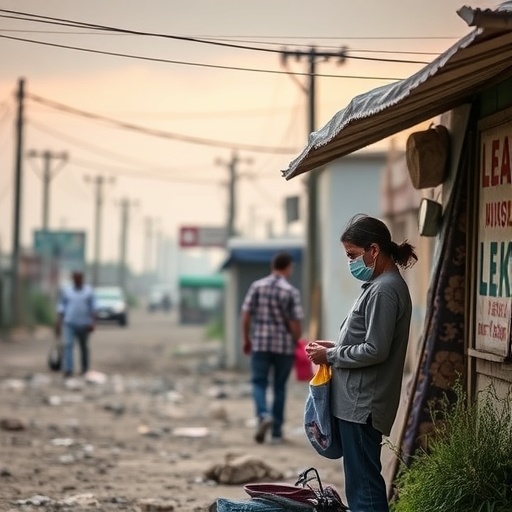
As global temperatures climb with alarming speed, a harrowing new dimension of climate vulnerability is coming into sharper focus: the phenomenon termed “cooling poverty.” Recent groundbreaking research published in Nature Sustainability delineates how over two billion individuals, predominantly residing in low- and middle-income regions, suffer from insufficient access to safe and affordable cooling solutions. This multifaceted deprivation poses acute health risks amid increasingly frequent and intense heatwaves exacerbated by climatic shifts and the looming influence of the El Niño weather pattern.
Heat stress and its deadly toll have long been documented, but this study reframes the issue by exposing systemic infrastructural, social, and economic deficits that amplify heat exposure risks far beyond mere temperature metrics. Cooling poverty emerges not only as a lack of devices like air conditioners but as the absence of essential housing quality, healthcare accessibility, reliable energy, and educational resources that collectively enable populations to attain thermal safety. The data set underpinning these insights draws from over a million households across 28 nations, revealing a staggering vulnerability in regions where heat combined with human factors creates existential crises.
South Asia and Sub-Saharan Africa dominate the geographic hotspots of systemic cooling poverty, albeit through contrasting causal mechanisms. In South Asia—countries including India, Nepal, and Bangladesh—extreme heat synergizes with high humidity levels to create oppressive wet-bulb conditions, severely impairing the human body’s natural cooling through perspiration. Coupled with vast outdoor labor sectors and limited policy engagement on cooling adaptation, this leads to widespread thermal insecurity. Nearly 80% of sampled populations in these regions score alarmingly high on the systemic cooling poverty index, reflecting exacerbated exposure and inadequate protective measures.
Sub-Saharan Africa’s challenges, while centered on lower absolute temperatures, are shaped primarily by infrastructural gaps: poor housing materials that fail to insulate against heat, deficient access to potable water and sanitation, unstable electricity supply, and an absence of urban green spaces. Nations like Ethiopia, the Democratic Republic of Congo, Rwanda, and Malawi typify these structural vulnerabilities where more than 90% of residents endure conditions that compound heat-related health fragility. Here, the lack of cooling infrastructure means even small increments in temperature surges could have catastrophic implications.
Housing quality plays a pivotal role in modulating heat risk, becoming literal heat traps when constructed from rudimentary materials such as tin or asbestos roofs, which can amplify indoor temperatures significantly beyond ambient measures. This is especially dire in urban poor settlements, where overcrowding and unreliable utilities prevent meaningful respite from sweltering outdoor conditions. Health infrastructure inadequacies further weaken adaptive capacities, particularly in countries with limited health service penetration, increasing morbidity and mortality from otherwise preventable heat illnesses.
The human cost of cooling poverty is not evenly distributed. Vulnerable groups including women, ethnic minorities, the elderly, children, and economically disadvantaged households face disproportionate exposure to thermal hazards. Many are constrained by systemic factors like poor housing, lack of information, and limited healthcare access, which leaves them ill-equipped to mitigate risks. The occupational dimension compounds danger for outdoor laborers engaged in agriculture, construction, transport, and informal trade who are routinely subjected to prolonged high-heat exposure without adequate protection or labor safeguards.
Traditional responses centered on expanding air conditioning access are increasingly regarded as unsustainable. The enormous energy consumption and strain on fragile electrical grids that come with widespread AC deployment present significant environmental and economic dilemmas. Moreover, the carbon footprint of such reliance exacerbates the underlying climatic drivers of heat stress. Researchers and climate advocates concur that air conditioning alone is an insufficient remedy and urges a paradigmatic pivot to intersectional, low-cost, and systemic interventions.
Innovative cooling strategies focus on enhancing architectural resilience, urban planning, and public health infrastructures without excessive energy dependence. Employing climate-sensitive building materials and designs can markedly reduce indoor heat accumulation, while expanding natural shading through urban green spaces, tree cover, and water bodies contributes to community-level cooling effects. Techniques such as applying solar-reflective white coatings on rooftops have demonstrated temperature reductions of up to five degrees Celsius, providing cost-effective mitigation for vulnerable households.
Public policy emerges as a critical lever for effecting meaningful change. Heat action plans, though adopted sporadically in parts of South Asia and largely absent in Sub-Saharan Africa, represent a promising governance tool for coordinating cross-sectoral measures encompassing housing codes, labor protections, healthcare access, and environmental conservation. Mandating climate-resilient building standards alongside financial support mechanisms to safeguard informal and daily wage laborers from heat exposure losses could significantly lessen exposure-driven health impacts.
Parallel to infrastructural and policy solutions, community-based approaches emphasizing awareness, education, and behavioral adaptations remain crucial within the broader cooling poverty framework. Empowering vulnerable populations with timely heat risk information, hydration strategies, and access to communal cooling shelters with safe drinking water can lower heat-related illness incidence while reinforcing social resilience. However, experts caution against over-reliance on adaptive capacities alone, recognizing inherent biological and environmental limits beyond which extreme heat becomes unsurvivable.
The convergence of climate science and social equity embedded in the concept of cooling poverty underscores a shifting narrative in global heat risk discourse. It compels policymakers, researchers, and humanitarian actors to transcend simplistic temperature-focused models and engage deeply with the socioeconomic and infrastructural determinants of vulnerability. Addressing this complex challenge demands innovative, multidisciplinary solutions to protect billions from an escalating threat that intertwines environmental change with entrenched inequalities.
This emergent evidence warns starkly of the consequences of neglecting cooling poverty as a global public health and development crisis. It underscores the imperative for urgent, integrated actions to build adaptive capacities, strengthen infrastructure, and craft equitable policies. Only through such comprehensive engagement can humanity hope to stem the growing toll of heat-related risks amid a warming world increasingly shaped by dynamic climatic forces such as the El Niño phenomenon.
News Publication Date:
2024
Web References:
- Study in Nature Sustainability: https://www.nature.com/articles/s41893-026-01845-4
- World Meteorological Organization El Niño warning: https://wmo.int/news/media-centre/wmo-prepare-el-nino
Cite Scienmag News
Russell Cooper. (June 5, 2026). “Cooling Poverty” Grips 2 Billion as Global Heat Risks Escalate. Scienmag. https://scienmag.com/cooling-poverty-grips-2-billion-as-global-heat-risks-escalate/
Russell Cooper. "“Cooling Poverty” Grips 2 Billion as Global Heat Risks Escalate." Scienmag, 5 June 2026, https://scienmag.com/cooling-poverty-grips-2-billion-as-global-heat-risks-escalate/. Accessed 3 September 2026.
Russell Cooper. "“Cooling Poverty” Grips 2 Billion as Global Heat Risks Escalate." Scienmag. June 5, 2026. https://scienmag.com/cooling-poverty-grips-2-billion-as-global-heat-risks-escalate/


