


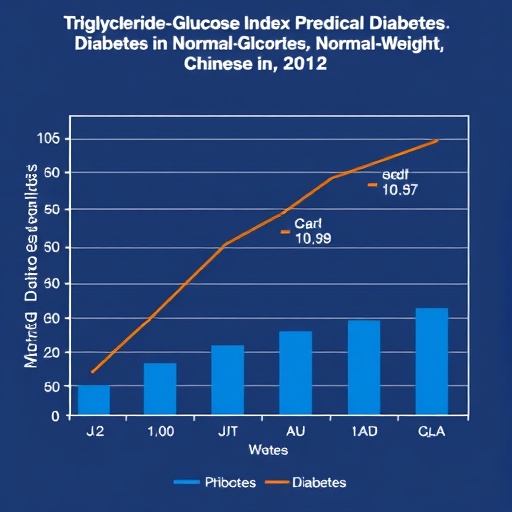
In a groundbreaking study poised to shift current paradigms of metabolic health assessment, researchers from the China-PAR project have unveiled compelling evidence linking the trajectories of the triglyceride-glucose (TyG) index with the onset of type 2 diabetes mellitus (T2DM) in individuals with normal body weight. This revelation addresses an important gap in diabetes research, where the conventional markers and risk factors have predominantly focused on overweight or obese populations, often overlooking those who maintain a normal weight yet face hidden metabolic risks.
For years, the TyG index, a composite marker calculated from fasting triglyceride and glucose levels, has emerged as a reliable proxy for insulin resistance—a key driver of T2DM development. However, the dynamic changes in the TyG index over time and their relationship with diabetes risk in metabolically “normal” weight individuals have remained obscure until now. The study, published in the International Journal of Obesity, meticulously tracked a large cohort of Chinese adults with normal body mass index (BMI) over several years, employing sophisticated trajectory analysis methods to discern patterns in TyG index fluctuations and their correlation with diabetes incidence rates.
The researchers identified several distinct longitudinal TyG index trajectories within the cohort, revealing heterogeneous metabolic profiles even among those classified as normal weight. Some participants exhibited steadily low TyG indexes, indicative of stable metabolic health, while others displayed increasing or persistently high trajectory patterns. Intriguingly, individuals with upward or chronically elevated TyG trajectories were found to possess a significantly higher risk of developing T2DM compared to those maintaining low TyG levels, despite their normal weight status. This challenges the simplistic narrative that normal BMI equates to low diabetes risk and underscores the insidious nature of metabolic dysfunction that can occur independent of adiposity.
Delving deeper, the study elucidates the pathophysiological mechanisms that might explain this phenomenon. Elevated TyG index values reflect underlying insulin resistance and dyslipidemia, conditions that promote pancreatic beta-cell stress and eventual failure. The patterns in TyG trajectories potentially serve as early signals of progressive metabolic deterioration, even before overt hyperglycemia or clinical diabetes manifest. This calls for a paradigm shift towards incorporating biochemical and dynamic biomarker monitoring into routine health assessments, moving beyond static anthropometric measurements.
Importantly, the China-PAR study utilized advanced statistical modeling techniques, such as group-based trajectory modeling, to capture the nuanced temporal changes in the TyG index. This approach enabled the researchers to stratify participants into meaningful subgroups based on their metabolic trajectories, offering a powerful predictive framework for diabetes risk stratification. The use of longitudinal data rather than cross-sectional snapshots represents a significant methodological advancement, enhancing the ability to identify those at risk earlier and more accurately.
This research also has profound implications for public health strategies, especially in countries like China that are experiencing rapid urbanization and lifestyle transitions, factors known to influence metabolic health. The high prevalence of T2DM and the substantial burden it places on healthcare systems necessitate early detection and personalized intervention approaches. By spotlighting the utility of the TyG index as a dynamic biomarker in normal-weight populations, this study paves the way for more nuanced screening guidelines and targeted preventive measures.
Moreover, the study’s findings prompt reevaluation of the “metabolically healthy normal weight” (MHNW) phenotype, often considered a benign classification. The identification of vulnerable subgroups within this population underscores the heterogeneity in metabolic health and the need for ongoing surveillance. This insight is particularly relevant for clinicians and researchers seeking to optimize diabetes prevention and management strategies, highlighting the importance of integrating biochemical monitoring with lifestyle factors and genetic predispositions.
In addition to advancing scientific understanding, these findings may influence clinical practice by promoting the inclusion of the TyG index in risk assessment protocols. Given the simplicity and cost-effectiveness of measuring triglyceride and glucose levels, the TyG index is an accessible tool that can be readily implemented in diverse healthcare settings. Its predictive capacity for T2DM, especially when assessed longitudinally, offers a valuable complement to traditional risk factors, enabling earlier therapeutic interventions.
The study also opens new avenues for research into the molecular mechanisms linking lipid and glucose metabolism with pancreatic function and insulin signaling pathways. Understanding how fluctuations in the TyG index reflect metabolic derangements at the cellular level could inform the development of novel pharmacological targets and precision medicine approaches tailored to metabolic profiles.
Notably, the research emphasizes the critical importance of sustained metabolic monitoring over time rather than reliance on isolated measurements. The trajectory-based framework provides a more dynamic picture of metabolic health, accommodating individual variability and temporal trends that static indices fail to capture. This temporal dimension aligns with the evolving understanding of chronic diseases as processes unfolding over years rather than singular events.
Furthermore, the China-PAR project’s extensive and ethnically homogenous cohort enhances the relevance of these findings for East Asian populations, who exhibit unique phenotypic and genetic susceptibilities to diabetes. Such context-specific insights are invaluable for designing culturally sensitive interventions and refining global diabetes risk models to account for ethnic diversity.
In summary, this innovative study elucidates the critical role of longitudinal TyG index trajectories in predisposing normal-weight individuals to the development of type 2 diabetes. By revealing that metabolic risk can lurk beneath the veneer of normal BMI, the research advocates for a more refined, biomarker-driven approach to diabetes prevention. As metabolic diseases continue to surge worldwide, such insights are instrumental in guiding clinical and public health efforts towards early detection and personalized care, ultimately aiming to curb the global diabetes epidemic.
The study’s profound implications highlight the necessity of integrating biochemical markers like the TyG index into broader health monitoring frameworks, reinforcing the concept that metabolic health cannot be inferred solely from body weight. Moving forward, healthcare systems must embrace such multifaceted approaches to identify high-risk individuals timely, adapting interventions to the nonlinear progression of metabolic disturbances. This research marks a pivotal advancement, reshaping how we conceptualize and confront diabetes risk in populations traditionally considered low-risk due to their normal weight status.
Cite Scienmag News
Ophelia Keating. (June 5, 2026). Triglyceride-Glucose Index Predicts Diabetes in Normal-Weight Chinese. Scienmag. https://scienmag.com/triglyceride-glucose-index-predicts-diabetes-in-normal-weight-chinese/
Ophelia Keating. "Triglyceride-Glucose Index Predicts Diabetes in Normal-Weight Chinese." Scienmag, 5 June 2026, https://scienmag.com/triglyceride-glucose-index-predicts-diabetes-in-normal-weight-chinese/. Accessed 4 September 2026.
Ophelia Keating. "Triglyceride-Glucose Index Predicts Diabetes in Normal-Weight Chinese." Scienmag. June 5, 2026. https://scienmag.com/triglyceride-glucose-index-predicts-diabetes-in-normal-weight-chinese/


