


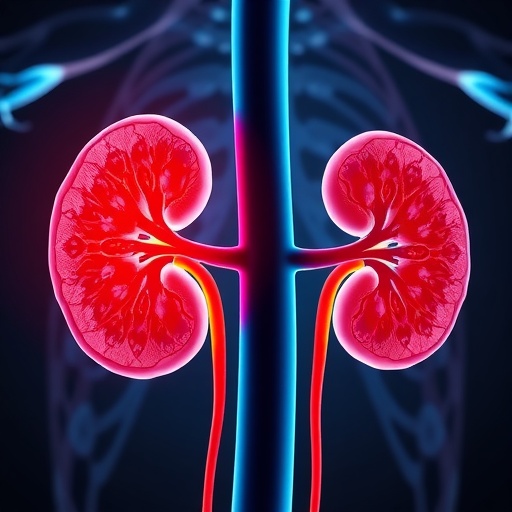
In a groundbreaking development in nephrology, the Phase III FIND-CKD trial has delivered compelling evidence that finerenone, a novel non-steroidal mineralocorticoid receptor antagonist, significantly decelerates kidney function decline in adults afflicted with chronic kidney disease (CKD) without diabetes. This pivotal trial, heralded as the largest of its kind, casts new light on therapeutic avenues for this vast demographic, previously underserved by current treatment modalities.
Chronic kidney disease persists as a critical global health challenge, affecting roughly 850 million individuals worldwide. While diabetes mellitus remains the leading cause, a substantial proportion of CKD cases arise independent of diabetes, driven by a spectrum of etiologies including hypertension-associated nephropathy and various glomerular pathologies. This heterogeneous manifestation has posed a significant conundrum for clinicians striving to attenuate disease progression and its devastating cardiovascular sequelae.
The FIND-CKD study enrolled over 1,500 participants, each rigorously vetted to exclude diabetic pathology, thereby focusing on the nuances of non-diabetic CKD. Subjects were randomized to receive finerenone adjunctive to maximally tolerated renin-angiotensin system (RAS) blockade or placebo, against a backdrop of contemporary standard care. This design underscored an intent to isolate finerenone’s therapeutic impact within a rigorously controlled clinical environment.
Crucially, the trial achieved its primary endpoint with statistical robustness, demonstrating that finerenone significantly mitigated the annual decline in estimated glomerular filtration rate (eGFR), a surrogate marker for renal function. The reduction quantified at 0.7 mL/min/1.73 m² per year compared with placebo, marks a meaningful clinical deceleration of the inexorable loss of kidney function emblematic of CKD progression.
Beyond renal preservation, finerenone also exerted a salutary effect on composite cardiovascular-renal endpoints. This composite metric encompassed kidney failure, sustained eGFR decline of 57% or more, hospitalizations due to heart failure, and cardiovascular mortality. A 23% relative risk reduction in this composite outcome elucidates finerenone’s dual organ-protective potential, an attribute of immense significance given the intertwined pathophysiology of cardiovascular and renal diseases.
Professor Hiddo Lambers Heerspink, the study’s principal investigator, emphasized the comprehensive nature of the trial, which spanned multiple etiologies of non-diabetic CKD. The broad applicability of finerenone, evidenced by uniform benefits across prespecified subgroups, heralds a paradigm shift in CKD management catering to a diverse patient population hitherto limited to less effective interventions.
Safety parameters evaluated during the trial affirmed finerenone’s tolerability, aligning with profiles observed in prior studies. Although hyperkalemia—a known risk associated with mineralocorticoid receptor antagonism—was more frequent in the finerenone cohort, the incidence of severe events prompting treatment cessation or hospitalization remained low. Importantly, rates of acute kidney injury were comparable between finerenone and placebo groups, reinforcing the drug’s renal safety.
The molecular underpinnings of finerenone’s efficacy are rooted in its selective blockade of mineralocorticoid receptors, mitigating aldosterone-driven inflammation and fibrosis—central contributors to CKD progression and cardiovascular remodeling. This targeted mechanism distinguishes finerenone from traditional steroidal antagonists, offering a refined therapeutic profile with potentially fewer adverse effects.
Understanding the implications of FIND-CKD demands appreciation of the broader nephrological landscape, where available therapies, predominantly RAS inhibitors, though effective, do not fully abrogate the risk of kidney deterioration or cardiovascular events. This trial’s findings introduce an additional pharmacologic tool capable of complementing existing regimens and addressing unmet medical needs.
The epidemiological significance of non-diabetic CKD, affecting patients beset by hypertension and glomerular diseases, underscores the urgency of expanding therapeutic strategies. The FIND-CKD trial’s robust data set paves the way for clinical guideline revisions and reorienting patient management frameworks to incorporate finerenone, potentially transforming long-term outcomes.
Parallel investigations and meta-analyses conducted by consortia such as the SGLT2 inhibitor Meta-Analysis Cardio-Renal Trialists’ Consortium suggest combinatorial benefits when integrating finerenone with other emerging treatments. However, further research is warranted to elucidate synergistic effects and refine patient selection criteria.
From a public health perspective, the dissemination of FIND-CKD results during the 63rd European Renal Association Congress and simultaneous publication in the New England Journal of Medicine amplifies their impact. It catalyzes awareness among clinicians, researchers, and policymakers, reinforcing the imperative to combat the global CKD burden with innovative, evidence-based interventions.
In sum, finerenone emerges from the FIND-CKD trial as a beacon of hope for the extensive population of patients grappling with non-diabetic CKD. Its capacity to attenuate kidney function decline and diminish cardiovascular-renal complications heralds an epoch of refined and potent therapeutic strategies in nephrology, promising enhanced longevity and quality of life for millions worldwide.
News Publication Date: 5-Jun-2026.
Web References: www.era-online.org
References:
- Heerspink H.J.L., Tuttle, K.R., Perkovic, V. (2026). Finerenone in patients with chronic kidney disease. Presented at the 63rd ERA Congress, Glasgow, Scotland, June 2026, and published simultaneously in the New England Journal of Medicine. DOI: 10.1056/NEJMoa2604625.
- Jager, K. J., Kovesdy, C., Langham, R. et al. (2019). A single number for advocacy and communication-worldwide more than 850 million individuals have kidney diseases. Kidney International, 96(5), 1048–1050.
- Heerspink H.J.L., et al. Nephrol Dial Transplant. 2025;40:308–319.
- The Nuffield Department of Population Health Renal Studies Group & the SGLT2 inhibitor Meta-Analysis Cardio-Renal Trialists’ Consortium. Lancet. 2022;400:1788–1801.
Cite Scienmag News
Jerry Hayes. (June 5, 2026). Major Trial Finds Finerenone Slows Kidney Decline and Lowers Cardiovascular Risk in Non-Diabetic Chronic Kidney Disease. Scienmag. https://scienmag.com/major-trial-finds-finerenone-slows-kidney-decline-and-lowers-cardiovascular-risk-in-non-diabetic-chronic-kidney-disease/
Jerry Hayes. "Major Trial Finds Finerenone Slows Kidney Decline and Lowers Cardiovascular Risk in Non-Diabetic Chronic Kidney Disease." Scienmag, 5 June 2026, https://scienmag.com/major-trial-finds-finerenone-slows-kidney-decline-and-lowers-cardiovascular-risk-in-non-diabetic-chronic-kidney-disease/. Accessed 4 September 2026.
Jerry Hayes. "Major Trial Finds Finerenone Slows Kidney Decline and Lowers Cardiovascular Risk in Non-Diabetic Chronic Kidney Disease." Scienmag. June 5, 2026. https://scienmag.com/major-trial-finds-finerenone-slows-kidney-decline-and-lowers-cardiovascular-risk-in-non-diabetic-chronic-kidney-disease/


