


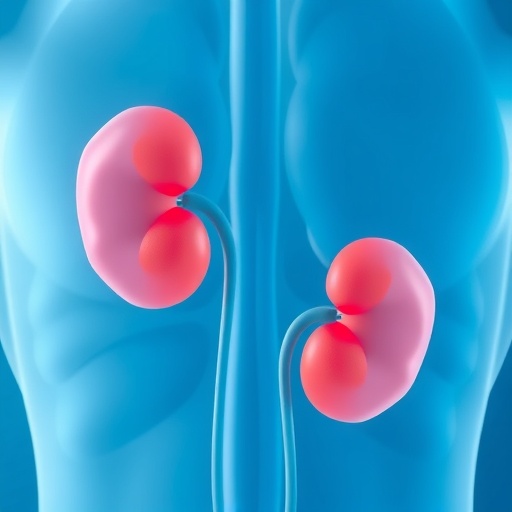
A groundbreaking study unveiled at the 63rd European Renal Association (ERA) Congress in Glasgow has brought to light unsettling evidence regarding the safety of a widely prescribed class of antihypertensive drugs in people with type 2 diabetes (T2D). The focus centers on dihydropyridine calcium-channel blockers (DCCBs), medications often administered as second-line blood pressure management in diabetic kidney disease (DKD). Alarmingly, this research suggests that DCCBs may be linked to worsened kidney outcomes even when employed alongside the latest kidney-protective therapies.
DCCBs function by relaxing vascular smooth muscle, thus promoting vasodilation and reducing systemic blood pressure. In clinical practice, they are favored for their efficacy and tolerability, making them a cornerstone in managing hypertension—a common comorbidity in T2D. However, the kidney’s intricate microvascular network responds uniquely to changes in vascular tone. This new observational study postulates that DCCB use could inadvertently exacerbate intrarenal hemodynamic stress, accelerating chronic kidney damage.
Diabetic kidney disease represents a formidable healthcare challenge globally, being a principal driver of end-stage renal disease requiring dialysis or transplantation. The pathophysiology of DKD involves persistent hyperglycemia inducing microvascular injury, culminating in glomerular sclerosis and a progressive decline in glomerular filtration rate (GFR). Hypertension intensifies this damage by increasing intraglomerular pressure, underscoring the imperative of rigorous blood pressure control in these patients.
In recent years, the therapeutic landscape for DKD has evolved substantially. Renin-angiotensin system (RAS) inhibitors, such as angiotensin-converting enzyme inhibitors and angiotensin receptor blockers, mitigate both systemic pressure and intraglomerular hypertension. Concurrently, sodium-glucose cotransporter-2 (SGLT2) inhibitors have emerged as kidney-protective agents, lowering hyperfiltration and conferring metabolic benefits beyond glycemic control. The integration of these medications represents the standard therapeutic regimen aiming to stall DKD progression.
Researchers analyzed a robust dataset comprising 31,031 adults with T2D between 2016 and 2021. All participants were treated with both RAS and SGLT2 inhibitors, ensuring a uniform background of nephroprotective therapy. Within this cohort, approximately 39% (12,172 individuals) received adjunctive DCCB therapy, while the remainder were prescribed alternative antihypertensive agents. Follow-up extended over a median duration of 3.5 years, providing ample longitudinal data on kidney outcomes.
Strikingly, after controlling for demographic and baseline clinical variables, DCCB recipients exhibited a 33% heightened risk of experiencing major adverse kidney events relative to those on other blood pressure medications. These adverse events were defined rigorously as either a significant decline of at least 40% in estimated glomerular filtration rate (eGFR) or progression to end-stage kidney disease necessitating renal replacement therapy. This association persisted despite the presumed kidney-protective milieu established by RAS and SGLT2 inhibitor therapy.
The physiological rationale behind these findings is rooted in the unique effects of DCCBs on renal microcirculation. It is hypothesized that DCCBs induce preferential vasodilation of afferent arterioles—the blood vessels delivering blood to the glomeruli—without a commensurate effect on efferent arterioles, which drain blood away. This imbalance may elevate intraglomerular pressure, precipitating continued glomerular injury and hyperfiltration. In the context of DKD, where pathological hyperfiltration is already pronounced, such hemodynamic alterations could be deleterious.
Dr. Timna Agur, lead investigator and senior nephrologist at Rabin Medical Center, emphasized the clinical significance of these observations. She highlighted that, despite their widespread use, the safety profile of DCCBs in the milieu of optimized nephroprotective strategies warrants re-examination. “Our study challenges the assumption that DCCBs are benign when combined with modern therapeutic regimens and calls for a reassessment of their role in managing hypertension among DKD patients,” Dr. Agur remarked.
Importantly, the study’s observational design precludes causal inferences. While the research identifies a robust statistical association, randomized controlled trials are necessary to definitively ascertain whether DCCBs directly contribute to adverse kidney outcomes or if unmeasured confounding factors are at play. Nevertheless, the findings argue for cautious prescription practices and heightened vigilance when deploying DCCBs in this vulnerable population.
The implications of this research are profound given the extensive prevalence of diabetes and associated kidney disease. Millions of patients worldwide may be exposed to antihypertensive regimens containing DCCBs. An incremental increase in kidney disease progression risk, even if modest, could translate into substantial population-level morbidity and healthcare burden. This underscores the urgent need for prospective clinical trials and mechanistic studies to delineate the safest therapeutic pathways.
This study also brings to focus the complexity of renal hemodynamics and how systemic antihypertensive therapies can differentially influence the kidney’s vascular architecture. It reinforces the nuanced understanding that not all blood pressure medications confer equal renal protection, especially in the setting of DKD. Moving forward, precision medicine approaches integrating patient-specific risk profiles and drug mechanistic insights will be key to optimizing outcomes.
Meanwhile, clinicians managing individuals with T2D and DKD should weigh these emerging data when selecting antihypertensive agents, considering alternatives to DCCBs where appropriate. Collaborative multidisciplinary efforts spanning nephrology, endocrinology, and cardiology are essential to refine treatment algorithms that safeguard kidney function while effectively controlling blood pressure.
In summary, the 63rd ERA Congress has spotlighted a critical evaluation point for a common class of antihypertensive drugs. The intersection of diabetes, hypertension, and kidney disease remains a dynamic field, with evolving evidence challenging established paradigms. Continued research and vigilance will be indispensable in translating these insights into improved clinical practice and patient outcomes.
News Publication Date: June 2026
Web References:
www.era-online.org
References:
- Agur T, Rozen Zvi B, Steinmetz T, et al. DCCB Therapy and Risk of CKD Progression in Type 2 Diabetes on RASi and SGLT2i. Presented at the 63rd ERA Congress, Glasgow, Scotland, 2026.
- Li, J., Guo, K., Qiu, J. et al. (2025). Epidemiological status, development trends, and risk factors of disability-adjusted life years due to diabetic kidney disease: A systematic analysis of Global Burden of Disease Study 2021. Chinese Medical Journal, 138(5), 568–578.
Cite Scienmag News
Jerry Hayes. (June 4, 2026). New Study Links Common Blood Pressure Medication to Worsened Kidney Outcomes in Type 2 Diabetes. Scienmag. https://scienmag.com/new-study-links-common-blood-pressure-medication-to-worsened-kidney-outcomes-in-type-2-diabetes/
Jerry Hayes. "New Study Links Common Blood Pressure Medication to Worsened Kidney Outcomes in Type 2 Diabetes." Scienmag, 4 June 2026, https://scienmag.com/new-study-links-common-blood-pressure-medication-to-worsened-kidney-outcomes-in-type-2-diabetes/. Accessed 3 September 2026.
Jerry Hayes. "New Study Links Common Blood Pressure Medication to Worsened Kidney Outcomes in Type 2 Diabetes." Scienmag. June 4, 2026. https://scienmag.com/new-study-links-common-blood-pressure-medication-to-worsened-kidney-outcomes-in-type-2-diabetes/


