


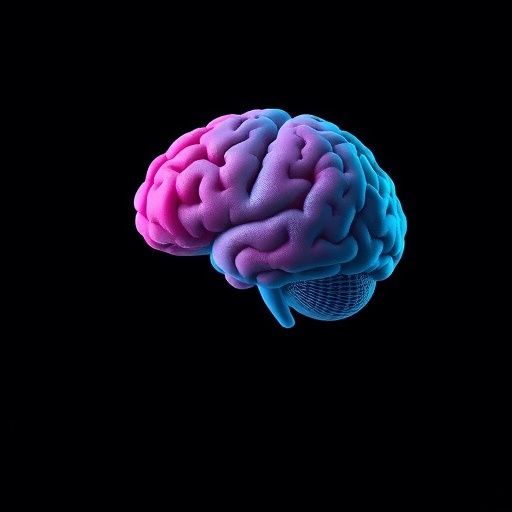
In a groundbreaking study set to redefine our understanding of early-stage psychotic disorders, researchers have illuminated the complex mosaic of cognitive subtypes and brain network differences in individuals experiencing their first episode of psychosis, untouched by antipsychotic treatment. This ambitious investigation, spearheaded by Patton, Maximo, Luther, and their colleagues, delves deep into the neural architectures underlying psychosis, bringing to light distinctions that promise to tailor future therapeutic strategies with unprecedented precision. Published in the prestigious journal Schizophrenia in 2026, their findings herald a transformative era in psychiatry where cognitive phenotyping and brain connectivity metrics coalesce to map the heterogeneity of psychotic disorders.
The study’s focal population—antipsychotic-naïve, first-episode psychosis patients—provides a rare window into the unadulterated pathophysiology of schizophrenia spectrum conditions. By circumventing the confounding effects of medication, the researchers harness an unparalleled clarity in observing intrinsic neural disruptions. Previous investigations have often struggled with this confound, blurring the line between disease-related abnormalities and pharmacological consequences. This study sidesteps that issue, employing sophisticated neuroimaging coupled with comprehensive cognitive batteries to disentangle the nuanced subtypes that exist within this clinical population.
Central to the methodology was the deployment of advanced functional magnetic resonance imaging (fMRI) and diffusion tensor imaging (DTI), which together chart diversified brain network dynamics and structural integrity. Participants underwent exhaustive cognitive assessments that encapsulated domains such as working memory, processing speed, executive function, and social cognition. The integration of multimodal neuroimaging with detailed psychometric profiling advanced the understanding of how distinct cognitive impairments correlate with specific disruptions in brain connectivity.
A pivotal revelation from this research is the identification of discrete cognitive subtypes within the psychosis spectrum—clusters of patients who demonstrate divergent cognitive profiles. These subtypes do not merely differ in the severity of cognitive deficits but manifest unique patterns of disruption across distinct brain networks, especially within the default mode network (DMN), salience network (SN), and frontoparietal control network (FPCN). Such differentiation accentuates the heterogeneity inherent in psychosis, challenging the one-size-fits-all paradigm that currently dominates clinical practice.
Delving into the mechanics, the default mode network, often implicated in self-referential thought and mind-wandering, displayed altered connectivity patterns that correlated strongly with deficits in social cognition and theory of mind tasks. These disruptions may underpin the social withdrawal and impaired interpersonal functioning commonly observed in these patients. Concurrently, anomalies within the salience network, a critical hub for detecting and filtering relevant stimuli, were linked with aberrant processing speed and attentional control deficits, potentially explaining the heightened distractibility and misattribution of salience to irrelevant environmental cues observed during psychotic episodes.
The frontoparietal control network, responsible for higher-order cognitive control and executive functioning, exhibited differential connectivity patterns that mirrored impairments in working memory and cognitive flexibility. Intriguingly, some patient subtypes demonstrated hyperconnectivity, a finding that contrasts with the hypoconnectivity frequently reported in chronic schizophrenia, hinting at dynamic neural adaptations in the early stages of illness progression. These nuanced insights challenge traditional interpretations and invite a reconsideration of neural network dysfunction trajectories throughout the illness course.
Equally compelling was the characterization of white matter integrity abnormalities, obtained via DTI analyses, which revealed subtype-specific microstructural alterations in tracts such as the uncinate fasciculus and cingulum bundle. These tracts integrate limbic and frontal regions, essential for emotional regulation and executive processes. Such findings underscore a pathophysiological continuum whereby microstructural disruptions potentiate functional network dysregulation, culminating in the cognitive heterogeneity observed clinically.
Methodologically, the authors leveraged machine learning algorithms to classify cognitive subtypes based on neuroimaging biomarkers. This approach not only enhances diagnostic precision but sets a precedent for personalized medicine in psychiatric care. By predicting subtype membership with high accuracy, these computational tools could eventually guide individualized intervention protocols, optimizing therapeutic outcomes and mitigating the debilitating trajectory often associated with psychosis.
The implications of this research are vast. Clinically, the delineation of cognitive subtypes rooted in specific brain network dysfunctions provides a scaffold for developing targeted rehabilitation programs. Cognitive remediation therapy, for instance, could be tailored to reinforce the integrity of affected networks or compensate for deficits unique to each subtype. Furthermore, pharmacological strategies might be refined to modulate aberrant circuits selectively, moving beyond broad-spectrum antipsychotics towards novel agents with circuit-level specificity.
Importantly, the focus on antipsychotic-naïve individuals accentuates the significance of early intervention. The neural signatures identified could serve as biomarkers for early diagnosis, risk stratification, and monitoring disease progression or treatment response. Early detection and subtype-specific interventions may ultimately transform the prognosis for individuals with psychosis, reducing chronic disability and enhancing quality of life.
This study also pushes the boundary of neuroscientific inquiry by integrating cognitive neuroscience with computational psychiatry. The fusion of rich cognitive phenotyping, multimodal neuroimaging, and machine learning is a blueprint for unraveling the complexity of psychiatric conditions, which have traditionally defied straightforward biological characterization. Such interdisciplinary synergy is emblematic of the future trajectory of mental health research.
Moreover, the research invites a reconceptualization of schizophrenia and related psychoses not as monolithic diseases but as spectra encompassing diverse neural and cognitive pathologies. Recognizing this heterogeneity reframes ongoing debates about classification systems and nosology, encouraging a move towards dimensional and biologically grounded frameworks akin to the Research Domain Criteria (RDoC) initiative.
From a translational standpoint, the findings advocate for integrating neurobiological assessments into routine clinical workflows. Despite challenges such as cost and accessibility of neuroimaging, the potential benefits of early, precise, and personalized diagnosis heavily justify investment into developing feasible protocols for clinical neuroscience. Mobile cognitive testing platforms and portable neuroimaging technologies could bridge existing gaps, catalyzing the practical application of these insights.
Public awareness and destigmatization efforts stand to benefit from this research as well. By elucidating the biological substrates of cognitive impairments in psychosis, it counters misconceptions that these deficits are simply behavioral or moral failings. Emphasizing the neurobiological dimension fosters empathy, supports advocacy, and motivates systemic change in mental health services.
Looking forward, the study lays fertile groundwork for longitudinal investigations to track how cognitive subtypes and their neural correlates evolve with illness course, treatment exposure, and environmental factors. Understanding these trajectories will be crucial for identifying windows of plasticity and tailoring interventions dynamically over time. Additionally, expanding sample diversity to include varying ethnic and socioeconomic backgrounds will enhance the generalizability of findings.
Innovations in neuroimaging modalities, such as ultra-high-field fMRI and network-level electrophysiology, promise to refine the resolution of observed connectivity patterns. Coupled with genomic and molecular profiling, future research will elucidate the multilayered etiology of psychosis, integrating genetics, brain networks, and cognition into a unified explanatory model.
In sum, this seminal study by Patton, Maximo, Luther, and colleagues constitutes a milestone in psychiatric neuroscience. By charting cognitive subtypes aligned with distinct brain network alterations in antipsychotic-naïve first-episode psychosis, it not only enriches scientific understanding but also lights the path toward personalized brain-based psychiatry. The promise is a future where diagnosis, prognosis, and treatment transcend symptomatic observation to encompass mechanistic insight, ultimately transforming patient care and outcomes worldwide.
Cite Scienmag News
Cassandra Pierce. (June 4, 2026). Cognitive Subtypes Linked to Brain Networks in Psychosis. Scienmag. https://scienmag.com/cognitive-subtypes-linked-to-brain-networks-in-psychosis/
Cassandra Pierce. "Cognitive Subtypes Linked to Brain Networks in Psychosis." Scienmag, 4 June 2026, https://scienmag.com/cognitive-subtypes-linked-to-brain-networks-in-psychosis/. Accessed 4 September 2026.
Cassandra Pierce. "Cognitive Subtypes Linked to Brain Networks in Psychosis." Scienmag. June 4, 2026. https://scienmag.com/cognitive-subtypes-linked-to-brain-networks-in-psychosis/


