


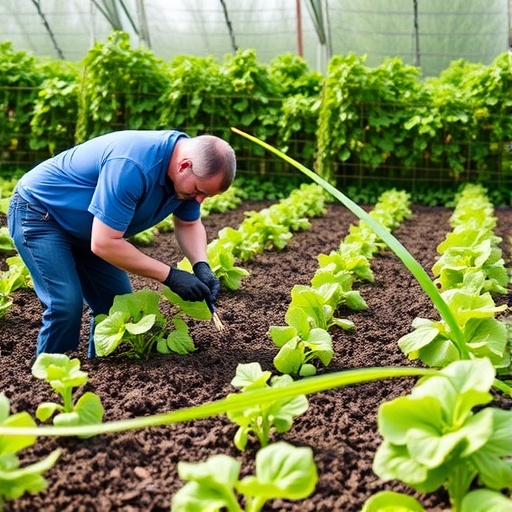
In recent years, the confluence of biotechnology and sustainable agriculture has sparked a revolution that promises to redefine farming paradigms globally, particularly within the European context. The introduction of novel genomic techniques is now heralding a new era where crop improvement and environmental conservation are intertwined more profoundly than ever before. A pivotal study led by Gaskell and colleagues, published in npj Sustainable Agriculture, meticulously explores these revolutionary genomic approaches and their transformative potential across Europe’s agricultural landscapes.
With global populations surging and climate instability escalating, traditional agricultural methods are increasingly inadequate in meeting food security demands without exacerbating environmental degradation. Genomic technologies such as CRISPR-based gene editing, base editing, and next-generation sequencing are enabling unprecedented precision and efficiency in modifying crop genomes. These methodologies vastly accelerate crop development cycles and enable the fine-tuning of traits including drought resistance, pathogen tolerance, nutrient use efficiency, and yield enhancement — all essential for adapting to shifting environmental pressures and resource constraints.
The European agricultural sector, characterized by diverse agroecological zones and stringent regulatory frameworks, stands at a crossroads. The study underscores that while conventional breeding has been instrumental in past yield improvements, its reliance on phenotypic selection and long generation times limits responsiveness to emergent challenges. In contrast, new genomic tools facilitate targeted modifications at the molecular level, thereby slashing the timelines between conception and field implementation. This could catalyze a paradigm shift towards dynamic, resilient cropping systems aligned with the European Union’s Green Deal and Farm to Fork strategies, which emphasize sustainability and reduced agrochemical dependency.
Technically, the paper delineates the multifaceted genomic platforms now at farmers’ disposal. CRISPR-Cas systems, for example, allow for precise gene knockouts or insertions without introducing foreign DNA, circumventing many biosafety concerns associated with classic GMOs. Base editors further refine this technique by enabling single nucleotide changes to rectify deleterious genetic variants or optimize traits. Moreover, advances in high-throughput phenotyping and bioinformatics are elevating the capacity to correlate genotype with phenotype in complex field conditions, thus enhancing the predictive accuracy of gene edits for targeted trait enhancement.
Europe’s cautious regulatory environment and public skepticism towards genetically modified organisms have traditionally hindered widespread adoption. However, the ongoing discourse is increasingly shaped by the distinction between transgenic organisms and gene-edited crops, the latter often viewed as subtle, non-transgenic modifications that mimic natural genetic variations. The paper highlights burgeoning policy reforms aimed at harmonizing safety with innovation, potentially streamlining approval pathways for crops engineered through these refined genomic approaches.
A critical focus is also placed on the sustainability dividends of these technologies. The study projects that precise genome edits can reduce reliance on fertilizers and pesticides by breeding varieties with superior nutrient use efficiency and enhanced intrinsic disease resistance. This aligns with broader ecosystem service goals, mitigating off-target environmental impacts such as soil degradation, water contamination, and loss of biodiversity. Furthermore, by fostering climate-resilient cultivars, genomic technologies provide a strategic buffer against unpredictable weather extremes, thus safeguarding yields and securing farmer livelihoods.
Notably, the research pays substantial attention to genomic innovation integration within agroecological principles. It envisions a synergy where high-tech breeding complements traditional knowledge and sustainable management practices to create agroecosystems that are both productive and ecologically harmonious. This holistic framework includes precision agriculture, crop rotation, and biological pest control, leveraging genomic insights to bolster the inherent resilience of cropping systems.
From an economic standpoint, the analysis underlines the potential for these biotechnologies not only to enhance farm profitability by raising productivity but also to stimulate rural economies through localized seed production and associated bioindustry development. However, the authors caution that equitable access to genomic tools must be a cornerstone of European agricultural policy, ensuring smallholder and organic farmers are not marginalized in the emerging genomics-driven landscape.
The article also delves into the bioethical dimensions underscoring transparency, intellectual property rights, and stakeholder engagement. Given that innovative genomic techniques challenge traditional conceptions of plant breeding, the study calls for inclusive dialogues among scientists, policymakers, farmers, and consumers to build trust and align innovations with societal values. Public education initiatives are deemed essential to demystify the science and highlight the tangible benefits and risk mitigation from gene editing.
On the frontier of technical innovation, the paper spotlights emerging approaches such as prime editing and epigenome editing, which hold promise for even more sophisticated trait engineering without altering DNA sequence permanently. These advancements could unlock new levels of genetic plasticity, enabling crops to dynamically adapt to environmental stimuli, thus adding a new dimension to sustainable agriculture.
The comprehensive overview provided by Gaskell and colleagues presents a roadmap for the responsible deployment of genomic technologies within Europe’s ambitious sustainability agenda. It calls for multidisciplinary collaborations, robust regulatory frameworks, and proactive engagement with societal concerns to ultimately mainstream these advances in a manner that catalyzes robust food systems while preserving environmental integrity.
In conclusion, this seminal study sheds light on how cutting-edge genomic tools are not merely futuristic concepts but actionable technologies that can redefine sustainability metrics in agriculture. Their judicious application promises to reconcile the imperative for heightened food production with ecological stewardship, ensuring Europe’s agricultural sector remains innovative, resilient, and environmentally sound in the face of 21st-century challenges.
Cite Scienmag News
Juliet Wilcox. (June 2, 2026). New Genomic Tools Boost Sustainable Farming in Europe. Scienmag. https://scienmag.com/new-genomic-tools-boost-sustainable-farming-in-europe/
Juliet Wilcox. "New Genomic Tools Boost Sustainable Farming in Europe." Scienmag, 2 June 2026, https://scienmag.com/new-genomic-tools-boost-sustainable-farming-in-europe/. Accessed 4 September 2026.
Juliet Wilcox. "New Genomic Tools Boost Sustainable Farming in Europe." Scienmag. June 2, 2026. https://scienmag.com/new-genomic-tools-boost-sustainable-farming-in-europe/


