


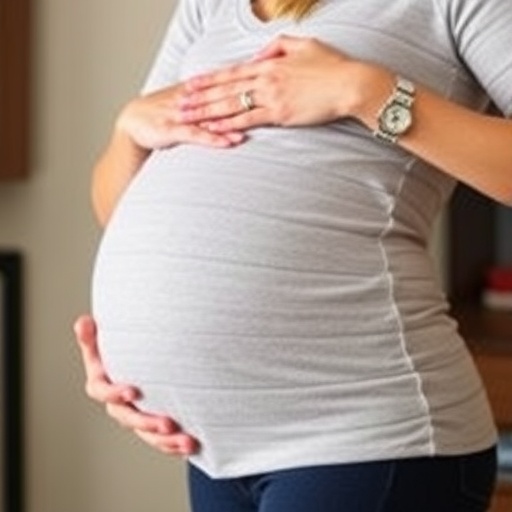
A groundbreaking study conducted by researchers at West Virginia University (WVU) in collaboration with the University of Iowa and the University of Pittsburgh has unveiled a striking link between sedentary behavior and adverse pregnancy outcomes. Published recently in the prestigious Journal of the American Medical Association, the research highlights the potentially hazardous effects of prolonged sitting during pregnancy, bringing to light new considerations for maternal health practitioners and public health policymakers alike.
The investigation centered on analyzing how daily activity patterns, specifically sedentary behavior measured by sitting time, influence the development of pregnancy complications such as gestational diabetes, preeclampsia, gestational hypertension, preterm birth, and small for gestational age infants. These conditions are known not only to jeopardize the health and wellbeing of both mother and child during gestation but also to pose lasting implications for their long-term health trajectories.
Under the leadership of Dr. Bethany Barone Gibbs, professor and chair of the WVU School of Public Health’s Department of Epidemiology and Biostatistics, the study meticulously monitored 500 pregnant women recruited in their first trimester. Employing advanced activity monitors affixed to participants’ legs, the team objectively quantified sitting duration and patterns of movement across each trimester through to delivery, thereby offering a detailed behavioral profile uncommon in prior research relying heavily on self-reporting.
One of the study’s most salient findings was the pronounced elevation in risk among those women who sat for more than ten hours daily. These individuals exhibited double the incidence of adverse pregnancy outcomes when compared to their counterparts who limited sitting time and incorporated more frequent periods of light activity. This revelation underscores the critical importance of addressing not just vigorous exercise, which may be impractical for many pregnant women, but the reduction of sedentary intervals as a feasible intervention.
From a physiological standpoint, the detrimental effects of prolonged immobility during pregnancy can be linked to altered hemodynamics and increased risk of metabolic dysregulation. Preeclampsia, characterized by a rapid escalation in blood pressure that can precipitate maternal seizures, stroke, or multi-organ failure, remains a paramount concern, as it accounts for significant maternal and neonatal morbidity and mortality worldwide. Moreover, women affected by preeclampsia face heightened vulnerability to cardiovascular disease later in life, further amplifying the public health urgency.
Similarly, gestational diabetes mellitus (GDM), which develops during pregnancy and often resolves postpartum, carries long-term risks including progression to type 2 diabetes and its associated complications. The findings suggest that sedentary behavior may contribute to impairments in glucose metabolism during pregnancy, signaling the importance of behavioral modification as part of comprehensive prenatal care.
What distinguishes this study from earlier work is the emphasis on light-intensity physical activity and incremental movement rather than structured exercise regimens. Given the physiological and psychosocial barriers many pregnant women confront—such as fatigue, musculoskeletal discomfort, and nausea—simpler strategies like regular movement breaks and minimizing uninterrupted sitting represent practical, accessible recommendations. These measures hold promise particularly for populations with limited resources or access to formal exercise programs.
Historically, expectant mothers were often advised to limit activity or undergo bed rest to manage pregnancy complications. However, accumulating evidence has turned this paradigm on its head, revealing that activity restriction can actually exacerbate risks by fostering conditions such as preeclampsia and preterm labor. The present study contributes compelling data supporting modern guidelines advocating for movement and cautioning against sedentary lifestyles.
The research process involved an interdisciplinary team including postdoctoral fellows, doctoral candidates, and faculty spanning epidemiology, exercise physiology, and obstetrics. This holistic approach facilitated comprehensive analysis of how objective measures of movement correlate with clinical outcomes, bridging gaps between behavioral science and maternal-fetal medicine. Moreover, the study’s multi-site nature enhanced generalizability across diverse geographic and demographic contexts.
Funding from the National Heart, Lung, and Blood Institute enabled the deployment of ambulatory monitors sophisticated enough to capture subtle variations in daily movement patterns. Participants’ activity was tracked longitudinally, providing granular insights into behavioral dynamics as pregnancy progressed. The rigorous methodology enhances confidence in the robustness of findings and their applicability toward public health strategies.
Looking ahead, Dr. Barone Gibbs emphasizes the need for larger clinical trials to validate these preliminary but impactful findings on a broader scale. She suggests that incorporating wearable technology that prompts users to break up sitting time could serve as an effective tool to encourage healthier activity patterns among pregnant women. Importantly, listening to the body’s cues and attending to discomfort can guide individualized adjustments, reinforcing patient-centered care.
The implications of this study extend beyond pregnancy, signaling potential benefits in targeting sedentary behavior earlier in women’s health trajectories and potentially reducing the intergenerational transmission of metabolic and cardiovascular risks. As healthcare providers grapple with rising rates of pregnancy complications worldwide, integrating simple, evidence-based recommendations to reduce sitting time provides a novel and actionable approach to improving maternal and neonatal outcomes.
In sum, this pivotal research underscores that mitigating prolonged sitting during pregnancy—not solely engaging in moderate to vigorous exercise—can significantly diminish the risk of adverse outcomes. It marks a paradigm shift toward inclusive, scalable interventions promoting maternal health, reinforcing that every movement, even light activity or standing breaks, counts toward safeguarding the next generation’s health.
News Publication Date:
27-May-2026
Web References:
https://jamanetwork.com/journals/jama/fullarticle/10.1001/jama.2026.6986
References:
Barone Gibbs, B., Whitaker, K., Wilhite, K., Marshall, E., Nichols, B., Modlin, S., Thrower, A., Sheikh, I. (2026). Adverse Pregnancy Outcomes and Sedentary Behavior, Light-Intensity Physical Activity, and Daily Steps. Journal of the American Medical Association. DOI: 10.1001/jama.2026.6986.
Cite Scienmag News
Harold Sullivan. (June 2, 2026). WVU Study Finds Increased Movement and Reduced Sitting Linked to Healthier Pregnancies. Scienmag. https://scienmag.com/wvu-study-finds-increased-movement-and-reduced-sitting-linked-to-healthier-pregnancies/
Harold Sullivan. "WVU Study Finds Increased Movement and Reduced Sitting Linked to Healthier Pregnancies." Scienmag, 2 June 2026, https://scienmag.com/wvu-study-finds-increased-movement-and-reduced-sitting-linked-to-healthier-pregnancies/. Accessed 5 September 2026.
Harold Sullivan. "WVU Study Finds Increased Movement and Reduced Sitting Linked to Healthier Pregnancies." Scienmag. June 2, 2026. https://scienmag.com/wvu-study-finds-increased-movement-and-reduced-sitting-linked-to-healthier-pregnancies/


