


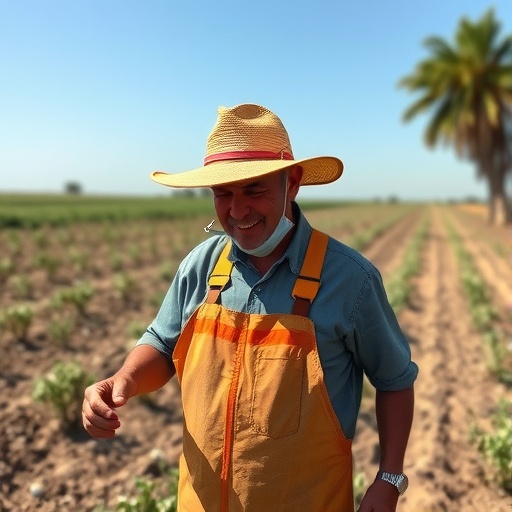
In recent years, the escalating global climate crisis has brought unprecedented challenges to human health, particularly for populations exposed to extreme environmental conditions. A groundbreaking study published in the Journal of Exposure Science and Environmental Epidemiology has unveiled profound connections between heat exposure and the exacerbation of cardiovascular risk factors among migrant and seasonal farmworkers in the United States. Drawing on an extensive dataset amassed through the National Agricultural Workers Survey from 1999 to 2020, this research offers critical insights into how prolonged exposure to high temperatures adversely affects a vulnerable, often overlooked segment of the workforce.
This investigation centers on migrant and seasonal farmworkers, individuals who labor under some of the most strenuous physical conditions and environmental stressors, frequently with limited access to healthcare and protective measures. The agricultural sector has long been known to subject these workers to prolonged heat exposure due to the nature of outdoor labor during the hottest months of the year. The cumulative impact of sustained elevated temperatures not only heightens heat-related illnesses but appears intricately linked to cardiovascular health—a relationship this study delineates with newly developed epidemiological rigor.
The fundamental premise underpinning this inquiry is the physiological stress caused by thermal overload, which compromises cardiovascular functioning. Heat stress induces dehydration, electrolyte imbalances, and inflammatory responses, all of which jeopardize heart health. The researchers quantified heat exposure using meteorological heat indices cross-referenced with participants’ geolocations and work periods. Leveraging advanced statistical modeling, they examined correlations between environmental heat and key cardiovascular risk parameters, including hypertension, arrhythmia, and indicators of inflammation and oxidative stress.
One of the study’s pivotal findings is a dose-response relationship between degrees of heat exposure and the prevalence of adverse cardiovascular markers. Notably, farmworkers experiencing the highest quartile of heat indices exhibited significantly elevated risks compared to those in cooler work environments. This underscores the severity of heat as a direct environmental determinant of cardiovascular morbidity and not merely a cofactor intertwined with other occupational hazards such as pesticide exposure or physical exertion.
Furthermore, the temporal dimension of the data, spanning over two decades, allowed the scientists to observe alarming trends of increasing heat intensity and frequency in agricultural regions. The ripple effects of climate change manifest most strikingly in the worsening cardiovascular profiles of these workers, whose health deteriorates in alignment with rising mean temperatures. The temporal analysis also highlighted seasonal fluctuations, with late summer months registering the highest incidence rates of heat-related cardiovascular complications.
Compounding the issue, socioeconomic factors intrinsic to migrant and seasonal farmworkers amplify their vulnerability. The majority experience inadequate access to medical care, limited workplace protections, and precarious living conditions. These settings hinder effective mitigation of heat strain and delay diagnosis and treatment of cardiovascular symptoms. The study underscores the critical need for integrative interventions that address both environmental and systemic inequities to safeguard this cohort’s health.
The mechanistic pathways linking heat exposure to cardiovascular dysfunction were also explored. Biologically, heat stress precipitates autonomic nervous system disruptions, elevating heart rate and blood pressure. Chronic exposure leads to sustained sympathetic activation, increasing myocardial oxygen demand and exacerbating pre-existing cardiovascular conditions. Moreover, inflammatory cytokines released in response to heat stress promote endothelial dysfunction, a precursor to atherosclerosis and ischemic events.
Beyond individual health implications, the research contemplates broader public health consequences. Given the indispensable role of farmworkers in maintaining national food security, their compromised health could cascade into decreased labor productivity and agricultural output. Public health agencies and policymakers are urged to integrate climate resilience strategies into occupational safety regulations and healthcare frameworks for agricultural workers.
Critically, the research also evaluates existing mitigation strategies, such as mandated rest breaks and hydration protocols, deeming them insufficient under progressively intensifying heat stress scenarios. The authors advocate for innovative solutions including remote sensing heat stress warnings, improved protective clothing technology, and systemic policy reforms encompassing climate adaptation measures tailored to vulnerable worker populations.
The study’s methodological breadth represents a significant advancement in occupational epidemiology. By fusing meteorological datasets with long-term health surveillance of a marginalized worker population, it exemplifies a multidisciplinary approach essential for tackling the complex health sequelae of climate change. The extensive temporal coverage enhances the reliability of detected associations and facilitates predictive insights for future climate-health projections.
There remain challenges, however, such as disentangling the compounded effects of heat from concomitant occupational exposures and lifestyle factors. Nevertheless, Monte Carlo simulations and sensitivity analyses embedded in the study’s design strengthened confidence in the observed links. The elucidation of cardiovascular risk elevation attributable primarily to heat exposure charts a path for targeted interventions and future mechanistic studies.
In conclusion, this landmark research crystallizes the urgent health threats posed by increasing environmental heat to migrant and seasonal farmworkers, highlighting cardiovascular risk as a critical sphere of impact. It demands immediate action from stakeholders across environmental, occupational, and public health sectors to devise comprehensive policies and protective measures. Addressing the intersection of climate change and worker health is imperative to ensuring the welfare of this essential yet vulnerable labor force.
As climate models forewarn of continued temperature rises and more frequent heatwaves, the insights from this study serve as an indispensable call to protect those who sustain agriculture and the broader food system. Harnessing this knowledge to transform workplace standards and public health infrastructures could mitigate burgeoning cardiovascular health disparities intensified by climatic stressors.
The scientific community and policymakers alike must recognize the intersectionality of environmental exposure, social determinants, and health outcomes illuminated herein, propelling a multifaceted response to safeguard the future of millions of farmworkers. This research thus not only enriches our understanding of climate-health dynamics but also embodies an urgent manifesto for climate justice in occupational health.
Cite Scienmag News
Ophelia Keating. (May 30, 2026). Heat Exposure Raises Heart Risks in US Farmworkers. Scienmag. https://scienmag.com/heat-exposure-raises-heart-risks-in-us-farmworkers/
Ophelia Keating. "Heat Exposure Raises Heart Risks in US Farmworkers." Scienmag, 30 May 2026, https://scienmag.com/heat-exposure-raises-heart-risks-in-us-farmworkers/. Accessed 5 September 2026.
Ophelia Keating. "Heat Exposure Raises Heart Risks in US Farmworkers." Scienmag. May 30, 2026. https://scienmag.com/heat-exposure-raises-heart-risks-in-us-farmworkers/


