


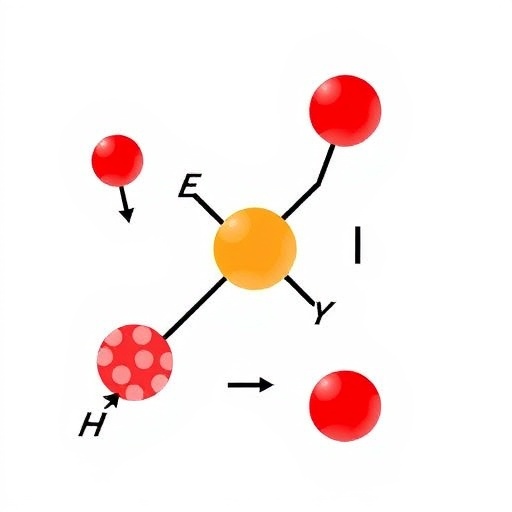
In an era where synthetic chemistry relentlessly pushes the boundaries of molecular construction, the humble ketone—a functional group fondamentale to organic synthesis—has often presented a persistent challenge. Despite their ubiquity and versatile nature, transforming common aliphatic ketones into ketyl-type radicals under mild conditions has remained elusive. Traditional methods typically invoke strongly reductive reagents or harsh conditions, limiting the scope and compatibility of such transformations. Now, a groundbreaking study introduces a transformative protocol that elegantly surmounts these obstacles, unleashing new potential for coupling ketones with olefins through innovative radical chemistry merged with palladium catalysis.
Ketones serve as pivotal building blocks in pharmaceuticals, agrochemicals, and material sciences, underpinning countless synthetic routes. However, their activation via radical pathways, particularly ketyl radicals derived from aliphatic ketones, has historically been hindered by the need for strongly reducing conditions. These conditions often compromise sensitive functionality and narrow substrate scope, impeding the development of novel transformations that could streamline synthetic strategies. The research uncovered in this new study disrupts this paradigm by unveiling a mild, bifunctional silyl reagent capable of converting aliphatic ketones directly into ketyl-type radicals, enabling new reaction manifolds without resorting to harsh redox manipulations.
This innovative methodology centers on a distinct radical translocation mechanism. By harnessing the unique reactivity of the silyl reagent, the approach facilitates the generation of ketyl-type radicals under redox-neutral conditions. This marks a significant departure from conventional protocols, which typically demand external reagents or electrochemical setups that can be synthetically taxing. The radical translocation not only circumvents the strong reductive agents but also imparts compatibility with a variety of functional groups, thereby broadening the practical utility of ketone radical chemistry in complex molecule synthesis.
A particularly striking aspect of this advancement is the seamless integration of the ketyl radical generation with palladium-catalyzed C–C bond formation. Transition-metal catalysis is a cornerstone of modern organic synthesis, prized for its selectivity and efficiency in forging carbon–carbon bonds. However, merging radical intermediates with metal catalysis, especially at the carbonyl carbon of ketones, poses significant synthetic challenges due to potential side reactions and compatibility issues. The reported protocol adeptly navigates these challenges, enabling redox-neutral ketone–olefin coupling reactions that utilize readily available olefins instead of preformed organometallic reagents, effectively redefining how ketone radical chemistry interfaces with metal catalysis.
From a synthetic standpoint, this development paves the way for unprecedented methods to access alkenylation and allylation products. Traditional approaches typically rely on organometallics like Grignard reagents or enolate chemistry, which can be sensitive to moisture, often require low temperatures, and lack functional group tolerance. By circumventing these constraints, the new protocol allows for direct coupling with simple olefins, streamlining synthetic workflows and enhancing step economy. The ability to achieve these transformations in a redox-neutral fashion also significantly reduces environmental impact by minimizing waste and the use of harsh reagents.
The strategy’s versatility is underscored by its broad substrate scope. Both inter- and intramolecular variants have been successfully demonstrated, showcasing the adaptability of the methodology across diverse molecular architectures. This includes substrates bearing intricate functionality, highlighting the robustness and mildness of the conditions. Such tolerance is invaluable for complex molecule synthesis, where sensitive functional groups frequently coexist and demand chemoselective transformations that traditional radical chemistry often cannot accommodate.
Mechanistically, the success of this approach rests on the innovative design of the bifunctional silyl reagent. The reagent not only facilitates the critical formation of the ketyl-type radical but also guides its subsequent engagement in palladium-catalyzed coupling in a controlled manner. This dual functionality is a testament to modern reagent design, where multifunctional entities are tailored to orchestrate complex reaction sequences. By engineering such reagents, the researchers have opened new vistas in the orchestration of redox-neutral radical transformations that were previously unattainable.
This research’s implications extend beyond just ketone–olefin coupling. The platform established may be generalizable to other valuable ketone transformations that similarly require mild radical generation. Through the principle of radical translocation and dual functionality, the blueprint laid out is poised to inspire future strategies that merge radical intermediates with transition-metal catalysts, potentially transforming a wide range of synthetic processes.
Furthermore, the environmental and practical advantages of the protocol resonate with the principles of green chemistry. Avoiding the use of stoichiometric organometallic reagents, eliminating the need for strong reductants, and operating under mild, redox-neutral conditions collectively promote sustainability. These features not only appeal to academic chemists seeking elegant solutions but also to industrial chemists aiming for scalable, cost-effective, and environmentally benign synthetic processes.
In addition to the chemical ingenuity, the study showcases meticulous optimization and mechanistic elucidation to validate the reaction pathways. Advanced spectroscopic techniques and control experiments underpin the proposed radical translocation mechanism, providing compelling evidence for the intermediates involved. Such thorough mechanistic insight strengthens confidence in the method and offers a foundation for rational extension and modification.
The translation of this methodology to complex molecular scaffolds including late-stage functionalization further demonstrates its synthetic potential. Complex molecules possessing multiple reactive sites often thwart radical approaches due to unselective reactivity; however, this protocol’s mild nature and selective coupling paradigms enable its application in sophisticated synthetic contexts, opening new avenues for medicinal chemistry and natural product synthesis.
Given that olefins are among the most abundant and readily available feedstocks in organic synthesis, the ability to employ them directly in couplings with ketones through ketyl radicals without prefunctionalization is particularly attractive. This not only simplifies synthetic routes but also enhances compatibility with industry-standard starting materials, potentially accelerating the discovery and production of valuable chemical entities.
The merger of radical chemistry with palladium catalysis in this redox-neutral context signifies a breakthrough that challenges traditional perceptions of ketone reactivity and radical generation. It represents a significant stride towards harnessing the full synthetic potential of ubiquitous carbonyl compounds, converting them into highly reactive yet controllable intermediates under operationally simple and environmentally favorable conditions.
Looking ahead, the insights gleaned from this research could inspire the design of next-generation bifunctional reagents and catalytic systems tailored to harness other recalcitrant functional groups. This could ultimately extend the realm of mild, sustainable radical transformations, fueling innovation across diverse chemical disciplines from material science to drug development.
In summary, this pioneering work not only addresses a long-standing challenge in ketone radical chemistry but also establishes a versatile platform marrying radical intermediates with transition-metal catalysis in a redox-neutral manner. The implications for synthetic chemistry are profound, promising streamlined access to complex molecules with enhanced efficiency, selectivity, and sustainability. As the community absorbs this advancement, its ripple effects may soon become evident across academic and industrial synthetic landscapes.
Cite Scienmag News
Bethany Barker. (May 29, 2026). Mild Ketone-to-Ketyl Conversion Enables Redox-Neutral Coupling. Scienmag. https://scienmag.com/mild-ketone-to-ketyl-conversion-enables-redox-neutral-coupling/
Bethany Barker. "Mild Ketone-to-Ketyl Conversion Enables Redox-Neutral Coupling." Scienmag, 29 May 2026, https://scienmag.com/mild-ketone-to-ketyl-conversion-enables-redox-neutral-coupling/. Accessed 4 September 2026.
Bethany Barker. "Mild Ketone-to-Ketyl Conversion Enables Redox-Neutral Coupling." Scienmag. May 29, 2026. https://scienmag.com/mild-ketone-to-ketyl-conversion-enables-redox-neutral-coupling/


