


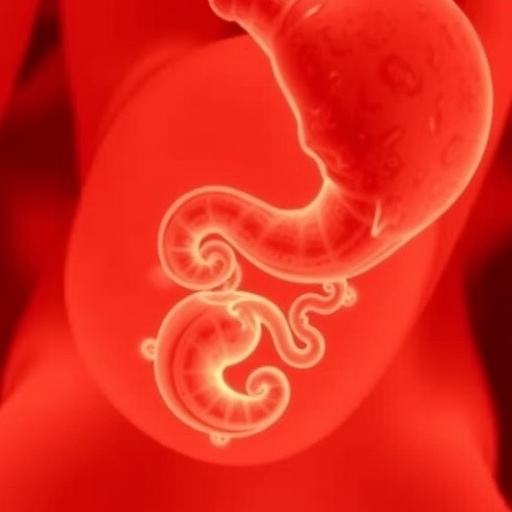
A groundbreaking leap in developmental biology has been achieved with the creation of the most comprehensive spatiotemporal transcriptome atlas of early human embryos to date. Employing the revolutionary Stereo-seq technology, researchers have mapped gene expression profiles in extraordinary spatial and temporal detail across whole human embryos from Carnegie stage 12 to 23. This pioneering work not only elucidates the intricate gene expression patterns underlying human embryogenesis but also sheds unprecedented light on the cellular diversity that orchestrates organ-specific differentiation.
The study harnessed Stereo-seq to analyze 77 sagittal sections spanning 13 embryos, each representing critical windows of early human development, from roughly three to eight weeks post-fertilization. By integrating these spatial profiles with single-nucleus RNA sequencing data, the research team achieved a high-resolution view of gene expression embedded within defined cellular contexts. This integrative approach uniquely captured cellular heterogeneity across organs and their substructures, providing vital clues into the regulatory programs that direct human organogenesis.
One of the most remarkable outcomes is the generation of a detailed regulatory roadmap covering 50 organs and 198 substructures, unprecedented in its anatomical scope. This atlas identifies candidate tissue-identity regulators, offering molecular signatures that distinguish developing tissues such as the heart, brain, lungs, and kidneys. Particularly striking are the discoveries of novel gene functions implicated in cardiac and brain development, which have remained uncharacterized until this study. These insights promise to enhance understanding of congenital abnormalities and may guide future therapeutic strategies.
Delving deeper, the atlas systematically maps allelic gene expression within specific organs at various developmental stages. This nuanced analysis uncovers allele-specific expression patterns that could have profound implications for how genetic variation influences organ development and disease susceptibility. By characterizing these dynamics, the research uncovers layers of regulatory complexity previously inaccessible in human embryonic tissues.
The significance of this compendium extends beyond static snapshots of gene expression. By capturing transcriptional dynamics with spatial fidelity, the atlas contextualizes how cells transition from pluripotency to fate-committed states while forming highly organized tissues. This marks a critical advancement in understanding early human development’s choreography, lending support to and refining prevailing mechanistic models of organogenesis.
Importantly, the study spotlights vulnerabilities in specific organs that may explain their propensity for genetic disorders. Through spatial transcriptomics, the atlas characterizes the molecular milieu during windows of heightened susceptibility, providing a foundation for unraveling origins of developmental anomalies. This could catalyze breakthroughs in prenatal diagnostics and individualized early interventions.
Methodologically, applying Stereo-seq technology at this scale heralds a new era for spatial biology. By enabling genome-wide expression profiling with exquisite spatial resolution, Stereo-seq surmounts limitations of earlier single-cell methods that lacked spatial context. The power to visualize entire embryos’ transcriptomic landscapes in three dimensions provides an invaluable resource for researchers aiming to decode developmental programs.
The interdisciplinary approach—merging advanced sequencing, computational modeling, and embryology—underscores the necessity of integrative frameworks to tackle the complexity inherent in human development. The diverse expertise coordinated in this effort illustrates how technology and biology can synergistically unravel questions that once seemed intractable.
Beyond its foundational contributions to developmental biology, the atlas has profound translational implications. Understanding how gene regulatory networks unfold in situ could accelerate regenerative medicine, improve stem cell differentiation protocols, and inspire biomimetic organ engineering. Moreover, it sets the stage for exploring how environmental factors and genetic perturbations intersect to alter developmental trajectories.
This monumental resource is made accessible with interactive visualization platforms allowing researchers worldwide to explore genome-wide gene expression across spatially defined cell populations. Such accessibility democratizes data use, fostering collaborative exploration and fueling innovation across multiple disciplines including developmental biology, genetics, and medicine.
In sum, this spatiotemporal transcriptome atlas represents a tour de force, illuminating the transcriptional landscapes underlying the earliest stages of human life. Its contributions will resonate profoundly across basic research and clinical fields, advancing knowledge that bridges fundamental science and potential therapeutic breakthroughs. As researchers continue to build upon this map, the mysteries of human embryogenesis may finally be within reach.
The future of understanding developmental disorders and evolutionary biology benefits immeasurably from this study. By providing an unparalleled resource to decipher how genes are regulated in precise spatial and temporal contexts, the atlas moves the field closer to connecting genotype, phenotype, and spatiotemporal gene regulation in human development.
This study redefines how the scientific community conceptualizes the embryonic transcriptome, shifting from fragmented data points to holistic 3D models that reveal how life’s blueprint unfolds within the human body from its earliest moments. It paves a robust path toward unraveling the complexities of human organogenesis and its perturbations with implications that will extend far into the realms of medicine and bioengineering.
Cite Scienmag News
Juliet Wilcox. (May 28, 2026). Mapping Human Embryo Genes Post-Gastrulation. Scienmag. https://scienmag.com/mapping-human-embryo-genes-post-gastrulation/
Juliet Wilcox. "Mapping Human Embryo Genes Post-Gastrulation." Scienmag, 28 May 2026, https://scienmag.com/mapping-human-embryo-genes-post-gastrulation/. Accessed 4 September 2026.
Juliet Wilcox. "Mapping Human Embryo Genes Post-Gastrulation." Scienmag. May 28, 2026. https://scienmag.com/mapping-human-embryo-genes-post-gastrulation/


