


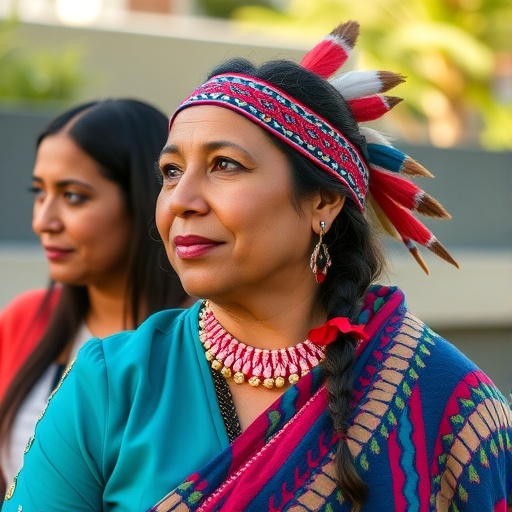
A ground-breaking new study from researchers at the University of Notre Dame offers the first comprehensive molecular characterization of breast cancer in Native American women, uncovering critical genetic and transcriptomic distinctions that could reshape our understanding of this disease in an underserved population. Published in the prestigious journal npj Precision Oncology, this research shines a spotlight on biological variances that might influence therapeutic responses and clinical outcomes for Native American breast cancer patients, a group historically underrepresented in cancer genomics studies.
Breast cancer incidence rates among Native American women are notably lower compared to their white counterparts, yet paradoxically, their mortality rates remain disproportionately high and stagnant over time. This paradox underscores a crucial gap in existing cancer research databases, such as The Cancer Genome Atlas (TCGA), wherein Native American representation is virtually nonexistent—of over a thousand breast cancer cases profiled, only one patient is categorized as Native American. Consequently, current diagnostic and treatment modalities for breast cancer have been developed predominantly based on data from non-Native populations, potentially obscuring population-specific disease dynamics and therapeutic efficacy.
Jun Li, the corresponding author and a professor in the Department of Applied and Computational Mathematics and Statistics at Notre Dame, emphasized the significance of this void in cancer research. “Our study marks a pivotal step in investigating the unique tumor biology in Native American women, an effort that is long overdue,” Li stated. By meticulously comparing 17 breast cancer tumor samples from Native American patients against nearly 700 samples from white women obtained from TCGA, the research team performed an exhaustive molecular profiling that spanned mutational landscapes, gene expression programs, and epigenetic markers.
One of the most striking revelations from this detailed analysis pertained to the immune landscape of the tumors. Tumors from Native American patients exhibited distinct mutational patterns in immune-related genes—a subset of which were exclusively mutated in these patients—implying alterations in how their tumors might evade immune surveillance. This phenomenon of immuno-evasion, a hallmark of cancer progression and therapy resistance, could hold profound implications for immunotherapy approaches tailored for Native American women. Furthermore, the study identified differential mutational burdens in genes responsible for DNA damage repair mechanisms, suggesting variations in genomic stability that may influence therapeutic sensitivity.
Li explained, “We uncovered consistent and pervasive differences across multiple molecular strata. Several critical immune-regulatory genes exhibited higher mutation frequencies in Native American tumor samples compared to those from white patients.” These findings hint at fundamentally different tumor-host immune interactions and raise important questions about the generalizability of immunotherapeutic regimens developed largely with data from other populations. The study underscores the hypothesis that molecular heterogeneity at the population level might translate into differential clinical responses, a concept that has broad implications for precision oncology.
While the current research is exploratory and hypothesis-generating rather than definitive in altering clinical guidelines, it serves as an essential platform for directing future investigations into diverse biological contributors to cancer disparities. Genetic predispositions, environmental exposures, and socioeconomic factors likely interplay in shaping outcomes for Native American breast cancer patients; dissecting these multifactorial influences remains a paramount challenge in the field.
This pioneering investigation is part of a broader initiative by Notre Dame’s Harper Cancer Research Institute, dedicated to expanding biospecimen collections from populations historically marginalized in cancer research. By systematically augmenting tissue repositories with samples from underrepresented groups, including Native American, Panamanian, and Kenyan women, the program aims to enrich the genomic and transcriptomic datasets that underpin cancer biology studies. This initiative not only hopes to fill critical knowledge gaps but also aspires to foster equity in cancer care through more inclusive science.
Sharon Stack, Kleiderer-Pezold Professor of Biochemistry and Director of the Harper Cancer Research Institute, highlighted the impetus behind this research thrust. “While social determinants indisputably impact cancer disparities, our mission is to elucidate whether there are underlying molecular and cellular differences contributing to divergent cancer incidences and outcomes,” she explained. The integration of molecular findings with social and environmental contexts represents a frontier for holistic cancer research.
The biosamples collected through this program undergo custodianship at the Harper Cancer Research Institute’s biosample repository. This repository, which supports tissue banking and distribution services, is a critical resource facilitating collaborative research efforts across South Bend and beyond, enabling scientists and clinicians to access diverse tumor specimens that reflect real-world population heterogeneity.
Jun Li further remarked, “Studying previously overlooked populations frequently uncovers biological insights that challenge prevailing assumptions and enrich our comprehension of cancer.” By capturing the invisible intricacies of tumor biology in Native American women, this research paves the way for more nuanced and effective cancer interventions that transcend one-size-fits-all paradigms.
The study’s lead author, graduate student Fangfang Guo, worked under Li’s guidance to undertake the extensive computational and molecular analyses central to this breakthrough. Co-authorship by Laurie Littlepage, Campbell Family Associate Professor of Cancer Research at Notre Dame, added multidisciplinary expertise to the project, reinforcing the integrative nature of contemporary cancer research.
Funding for this landmark study was provided by the Ryan Gee Excellence Fund for Cancer Research, with additional support from the National Cancer Institute and the Department of Defense Breast Cancer Research Program Breakthrough Award. These investments reflect growing recognition of the critical need to address health disparities through targeted scientific inquiry.
This transformative research underscores a pivotal paradigm shift in oncology: precision medicine must be inclusive medicine. Uncovering the molecular determinants of breast cancer in Native American women is not merely an academic exercise but a vital step toward therapeutic innovation and health equity. As cancer biology continues to be redefined by genomics and advanced bioinformatics, integrating diverse population data will be essential to realizing the full promise of personalized cancer care for all.
News Publication Date: 17-Mar-2026
Web References:
- npj Precision Oncology article: https://www.nature.com/articles/s41698-026-01373-6
- The Cancer Genome Atlas: https://www.cancer.gov/ccg/research/genome-sequencing/tcga
- Harper Cancer Research Institute: https://harpercancer.nd.edu/
References:
10.1038/s41698-026-01373-6
Cite Scienmag News
Nathaniel Bowman. (May 27, 2026). Groundbreaking Study Uncovers Crucial Genetic Differences in Breast Cancer Among Native American Women. Scienmag. https://scienmag.com/groundbreaking-study-uncovers-crucial-genetic-differences-in-breast-cancer-among-native-american-women/
Nathaniel Bowman. "Groundbreaking Study Uncovers Crucial Genetic Differences in Breast Cancer Among Native American Women." Scienmag, 27 May 2026, https://scienmag.com/groundbreaking-study-uncovers-crucial-genetic-differences-in-breast-cancer-among-native-american-women/. Accessed 3 September 2026.
Nathaniel Bowman. "Groundbreaking Study Uncovers Crucial Genetic Differences in Breast Cancer Among Native American Women." Scienmag. May 27, 2026. https://scienmag.com/groundbreaking-study-uncovers-crucial-genetic-differences-in-breast-cancer-among-native-american-women/


