


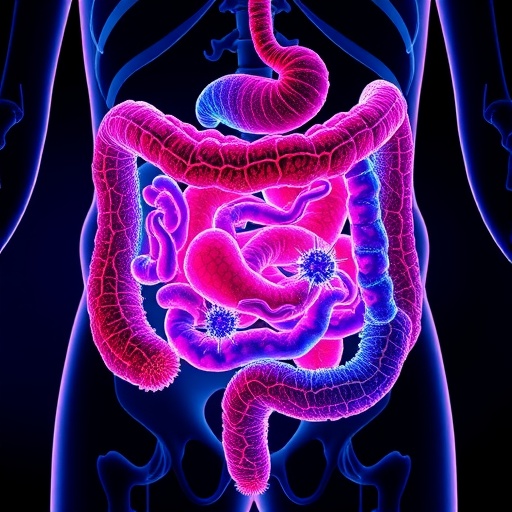
In a groundbreaking study that ventures deep into the interplay between the gut microbiome and colorectal cancer (CRC) risk, researchers at Harvard T.H. Chan School of Public Health have revealed that gut microbial alterations persist for over a decade following the removal of colorectal adenomas—precancerous lesions intimately linked to CRC development. Published on May 27, 2026, in Cell Host & Microbe, this investigation unveils the stubborn resilience of microbial and metabolic changes in the gut ecosystem long after what was previously considered a definitive intervention for CRC prevention.
Colorectal cancer ranks as the second most lethal malignancy globally, and the removal of adenomas has been the frontline defense to stave off progression to invasive disease. However, a perplexing clinical observation has been that even after successful adenoma resection, patients remain at an elevated risk of developing CRC, a phenomenon whose underlying biological mechanisms have eluded elucidation until now. The gut microbiome, a dense and complex community of bacteria, viruses, and other microorganisms inhabiting the gastrointestinal tract, emerges from this study as a critical player in this sustained risk profile.
Employing a rigorously designed observational study, the Harvard-led team leveraged an extraordinary longitudinal cohort—the Nurses’ Health Study II—whose participants provided detailed health information and stool samples over extensive periods. The researchers compared the gut microbiomes and fecal metabolic profiles of 354 women who had undergone adenoma removal with 354 matched control participants free of adenomas. Crucially, their stool samples were collected on average 12 years after adenoma excision, allowing for an unprecedented window into the enduring microbial landscape that accompanies long-term CRC risk.
The analysis revealed that the gut microbiome of individuals with a history of adenoma significantly diverged from that of adenoma-free controls, even after more than a decade of removal. Importantly, the microbial communities in the adenoma-removed group retained signatures that partially mirrored those previously characterized in CRC patients. This remarkable persistence indicates that adenoma excision, though clinically efficacious, does not restore the gut microbial environment to a pre-adenoma or low-risk state.
Beyond merely cataloging the microbial discrepancies, the researchers unearthed intriguing connections between lifestyle factors and microbial composition. Participants with history of adenoma who adhered to less healthy dietary patterns and engaged in lower levels of physical activity hosted a greater abundance of gut microbes commonly associated with both adenoma and CRC. This association underscores a potent influence of lifestyle behaviors on the gut ecology in a high-risk population and suggests an intimate link between diet, exercise, and microbial-mediated carcinogenesis.
Mingyang Song, associate professor of clinical epidemiology and nutrition and corresponding author of the study, commented on the significance of these findings: “Our work demonstrates that the gut microbiome doesn’t simply revert to normal after adenoma is removed. Instead, persistent microbial and metabolic alterations may act as biological mediators of ongoing colorectal cancer risk.” This insight represents a paradigm shift in understanding CRC risk management, advocating attention beyond conventional surgical interventions.
Underlying these observations is a complex biological landscape where microbiota-host interactions orchestrate metabolic activities that can incite inflammation, DNA damage, and oncogenic transformations within colonic tissues. Metabolomic profiling in this study identified distinctive fecal metabolites persisting in adenoma removal patients, some of which have established roles in modulating epithelial cell proliferation and immune responses, further implicating microbial metabolites as facets of the carcinogenic milieu.
Conducting this research in the context of the Nurses’ Health Study II provided a meticulously controlled environment to dissect confounding factors. Subjects were closely matched for age and demographic background, ensuring that observed differences rested predominantly on adenoma history and associated variables. This robust design enhances the credibility of the findings and opens avenues for personalized strategies targeting microbiome modulation as an adjunct in CRC risk reduction.
Methodologically, the study employed high-throughput 16S rRNA gene sequencing and metagenomic analyses, coupled with advanced metabolite profiling techniques. These cutting-edge technologies facilitated comprehensive characterization of microbial community structure and functional potential, enabling the detection of nuanced yet persistent alterations that standard clinical assays might overlook.
While compelling, the study authors emphasize that their findings indicate correlation rather than causation. Further experimental and interventional research is warranted to elucidate whether therapeutic manipulation of diet, exercise, or direct microbiome modification can effectively transform the gut environment and mitigate CRC risk in adenoma-removed individuals. This caveat highlights a fertile ground for future clinical trials and mechanistic studies.
The durability of the microbial alterations discovered challenges the traditional viewpoint that adenoma removal is a conclusive preventive measure. Instead, this research posits that the gut microbiome serves as both a biomarker and a potential therapeutic target in sustaining CRC risk, especially when influenced by modifiable lifestyle factors. Such insights prompt a reevaluation of post-polypectomy surveillance and patient guidance moving forward.
Additionally, this work underscores the dynamic interplay between host lifestyle, microbial ecology, and cancer biology, lending weight to the expanding field of precision medicine. The prospect that dietary modification and physical activity can tangibly influence long-term microbial behavior advances a holistic framework for cancer prevention where microbiome health assumes an integral role.
In summary, this landmark study delineates a critical, previously uncharted dimension of colorectal cancer risk dynamics and signals powerful implications for clinical strategies, patient management, and public health policies. By illuminating the protracted gut microbiome alterations following adenoma removal, it invites a new era of integrative approaches aiming to harness microbial ecology in the fight against one of the world’s deadliest cancers.
News Publication Date: 27-May-2026
Web References: http://dx.doi.org/10.1016/j.chom.2026.05.001
References:
Nogal A, Wang K, Thompson KN, Kim H, Bhosle A, Piccinno G, Maharjan S, Upreti C, Nguyen LH, Segata N, Rimm EB, Garrett WS, Chan AT, Huttenhower C, Song M. Long-lasting gut microbiome and fecal metabolome alterations after colorectal adenoma removal and their relationship to colorectal cancer. Cell Host & Microbe. 2026 May 27. doi: 10.1016/j.chom.2026.05.001.
Cite Scienmag News
Morgan Morrow. (May 27, 2026). Gut Microbiome Alterations Associated with Increased Colorectal Cancer Risk. Scienmag. https://scienmag.com/gut-microbiome-alterations-associated-with-increased-colorectal-cancer-risk/
Morgan Morrow. "Gut Microbiome Alterations Associated with Increased Colorectal Cancer Risk." Scienmag, 27 May 2026, https://scienmag.com/gut-microbiome-alterations-associated-with-increased-colorectal-cancer-risk/. Accessed 7 September 2026.
Morgan Morrow. "Gut Microbiome Alterations Associated with Increased Colorectal Cancer Risk." Scienmag. May 27, 2026. https://scienmag.com/gut-microbiome-alterations-associated-with-increased-colorectal-cancer-risk/


