


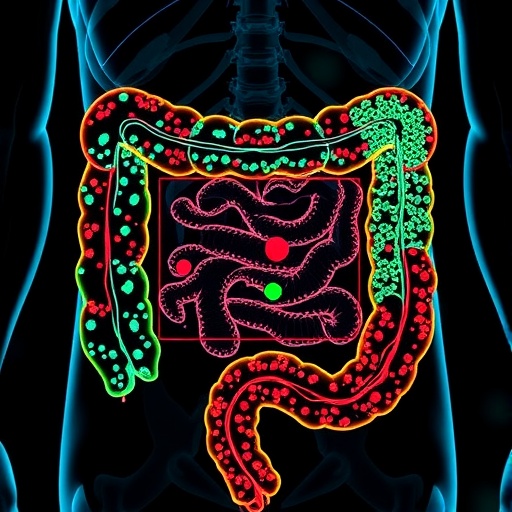
Inflammatory bowel disease (IBD), encompassing Crohn’s disease and ulcerative colitis, represents a complex and chronic inflammatory disorder of the gastrointestinal tract. Characterized by recurrent episodes of inflammation, the disease course exhibits highly heterogeneous clinical outcomes, making prognosis and effective management a persistent challenge for clinicians. Despite significant strides in therapeutic interventions, the capacity to reliably predict disease trajectory and identify patients at heightened risk for severe progression remains limited, prompting the urgent need for novel biomarkers and stratification methods.
A groundbreaking study recently published in the journal Microbiome Research Reports offers a transformative perspective by investigating the ecological architecture of the gut microbiome in IBD patients. Unlike conventional analyses that predominantly focus on the presence or abundance of individual bacterial species, this research emphasizes higher-order microbial community structures, revealing distinct compositional “cluster types” that correlate strongly with disease severity and progression risk. This pioneering approach underscores the gut microbiome not merely as a static assemblage of microbes but as a dynamic, interconnected ecological network whose macro-organization influences clinical outcomes.
The study’s findings highlight that these microbial clusters serve as robust indicators of disease progression regardless of the traditional categorical boundaries of Crohn’s disease or ulcerative colitis. This challenges the established diagnostic paradigm, suggesting that microbiome-based classification transcends conventional disease categories and captures biologically significant variations that remain hidden within clinical labels. Such insights push the frontier of understanding by positioning the microbiome’s community-level organization as a key player in the pathophysiology of IBD.
Utilizing sophisticated computational tools and network analysis, the researchers mapped the complex interactions among gut microbes and identified discrete clusters that define the microbiome’s ecological state in IBD patients. This network-centric methodology revealed that disease-relevant signals emerge from the collective dynamics and structural properties of microbial consortia rather than discrete species-level changes. It points to a systemic alteration in microbial community organization that potentially drives or reflects pathogenic processes in the host gut environment.
From a mechanistic viewpoint, these bacterial clusters likely influence the gut’s immune milieu, epithelial barrier function, and metabolic landscape. The disruption or reorganization of microbial networks may exacerbate inflammatory pathways, thereby accelerating disease progression. Conversely, preservation or restoration of certain cluster configurations could confer resilience against severe outcomes. This ecological framework offers fertile ground for exploring how microbial communities modulate host responses, offering new targets for intervention beyond single-species modulation.
Critically, the study’s approach addresses a fundamental question that has confounded IBD research: why do patients with similar clinical diagnoses exhibit vastly different disease courses? By revealing that community-level microbiome patterns stratify risk independently of standard clinical classification, the research opens avenues for personalized medicine in IBD. Future clinical protocols may incorporate microbiome cluster profiling to tailor therapies and monitor disease progression with unprecedented precision, potentially transforming patient management paradigms.
The implications extend beyond patient stratification. Understanding the ecological underpinnings of the gut microbiome in IBD invites reconsideration of treatment strategies that traditionally target inflammation or individual microbes. Therapeutic designs could shift toward modulating microbial community structures to restore healthy network configurations. Advances in microbiome engineering, including fecal microbiota transplantation and designer probiotic consortia, may benefit from these insights, enhancing efficacy by focusing on ecological community dynamics rather than isolated species.
While these findings are compelling, the authors acknowledge the necessity for extensive validation in larger and more diverse patient cohorts, along with longitudinal studies to track microbiome cluster dynamics over time. Such work will refine the predictive power of microbiome-based stratification and clarify causal relationships between microbial network patterns and disease progression. Integrative multi-omics approaches combining metagenomics, metabolomics, and host immunoprofiling will be instrumental in unraveling the complex host–microbiome interplay.
This study exemplifies a shift in microbiome research toward network ecology as a conceptual and analytical framework in chronic disease contexts. By elucidating the community-level structure-function relationships in the gut microbiome, it advances our understanding of IBD pathogenesis and highlights the intricate microbial ecosystems influencing human health. As microbiome science matures, such innovative perspectives herald a new era of biomarker discovery and personalized healthcare grounded in ecological principles.
In summary, the identification of bacterial clusters linked to severe IBD progression, independent of conventional disease classifications, embodies a significant breakthrough. This ecological network-based lens reveals that disease severity signals emanate not from isolated microbes but from complex, higher-order interactions within the gut microbiota. Embracing this paradigm promises to enhance risk prediction, individualize treatment strategies, and inspire novel microbiome-targeted therapies, propelling the quest to better manage and ultimately ameliorate inflammatory bowel disease.
News Publication Date: 18-Mar-2026
Web References: http://dx.doi.org/10.20517/mrr.2025.96
Cite Scienmag News
Morgan Morrow. (May 26, 2026). Gut Microbiome Clusters Offer New Insights into Predicting Inflammatory Bowel Disease Severity and Progression. Scienmag. https://scienmag.com/gut-microbiome-clusters-offer-new-insights-into-predicting-inflammatory-bowel-disease-severity-and-progression/
Morgan Morrow. "Gut Microbiome Clusters Offer New Insights into Predicting Inflammatory Bowel Disease Severity and Progression." Scienmag, 26 May 2026, https://scienmag.com/gut-microbiome-clusters-offer-new-insights-into-predicting-inflammatory-bowel-disease-severity-and-progression/. Accessed 4 September 2026.
Morgan Morrow. "Gut Microbiome Clusters Offer New Insights into Predicting Inflammatory Bowel Disease Severity and Progression." Scienmag. May 26, 2026. https://scienmag.com/gut-microbiome-clusters-offer-new-insights-into-predicting-inflammatory-bowel-disease-severity-and-progression/


