


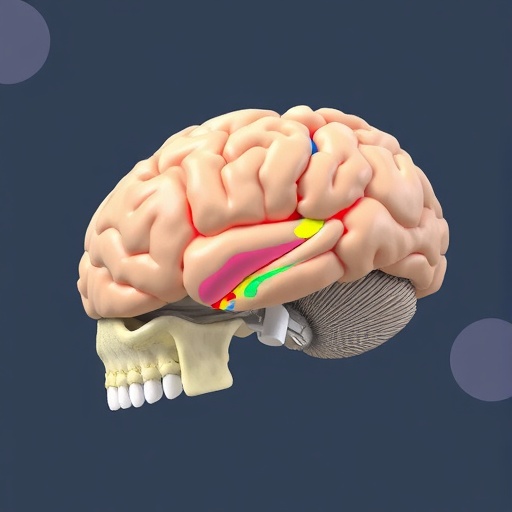
In a groundbreaking study set to reshape our understanding of human physiology and genetics, researchers have unveiled compelling evidence of regional heterogeneity in the phenotypic and genetic relationships between bone and brain tissues. This revelation uncovers a highly nuanced and intricate network of associations that vary spatially across the body, offering profound implications for fields ranging from neurobiology to orthopedics. The research, published in the prestigious journal Nature Communications, charts new territory by characterizing how distinct bone regions are linked to brain structure and function at both phenotypic and genetic levels.
For decades, scientific inquiry into the interplay between the skeletal system and the brain has largely focused on isolated aspects such as calcium metabolism or the impact of brain injuries on bone remodeling. However, this recent investigation takes a fundamentally different approach by employing advanced imaging techniques combined with genomic analysis to explore the heterogeneity of associations. The study’s findings illuminate that bone-brain interactions are not uniform; rather, they exhibit significant regional variation that reflects differential biological processes in various parts of the skeleton and brain.
The research team utilized an extensive dataset integrating high-resolution magnetic resonance imaging (MRI) of brain anatomy with sophisticated three-dimensional imaging of bone structures in a large human cohort. Through computational modeling and statistical genome-wide association studies (GWAS), they were able to detect overlapping genetic signals that influence both bone morphology and brain features such as cortical thickness and subcortical volume. This dual approach allowed the identification of phenotypic correlations grounded in shared genetic determinants, which differed markedly depending on the anatomical regions considered.
One of the most remarkable aspects of the study was the identification of certain genomic loci exhibiting pleiotropic effects, whereby single genetic variants exert influence on traits of both skeletal and neural origin. These genetic variants did not manifest uniform impacts across the skeleton or brain but demonstrated strong region-specific signatures. In particular, the analysis highlighted that bones involved in cranial protection and structural support for the brain exhibited distinct genetic relationships compared to peripheral bones such as those in the limbs. Similarly, brain regions implicated in cognitive functions showed unique association patterns with bone phenotypes, underscoring a complex bidirectional biological dialogue.
The mechanistic underpinnings of these regionally heterogeneous associations are believed to be multifactorial, involving differential gene expression, local microenvironmental cues, and varying developmental trajectories. For example, the close embryological origin of cranial bones and certain brain structures may prime them for shared genetic regulation. Moreover, signaling pathways that govern bone remodeling—such as those involving osteocalcin and Wnt proteins—are increasingly recognized for their neuromodulatory roles. These molecular intersections may explain why alterations in bone physiology can correlate with neurological changes in specific contexts.
In addition to providing fundamental biological insights, the findings bear significant clinical relevance. Understanding how bone and brain regions are interlinked at genetic and phenotypic levels has implications for a range of disorders that manifest comorbidly, such as osteoporosis and neurodegeneration. The study suggests that genetic risk factors for bone diseases might also predispose individuals to brain disorders, or vice versa, but that this relationship is modulated by anatomical locality. Such knowledge could facilitate the development of precision medicine strategies that target these systems concurrently, tailored to the regions most susceptible in individual patients.
The research also opens avenues for novel biomarker discovery. By mapping out the spatially specific genetic interplay between bone and brain, investigators can identify candidate genes and molecular pathways that serve as early indicators of systemic health or disease progression. This is particularly important given the aging global population and the rising burden of conditions like Alzheimer’s disease and fractures related to bone fragility. Early detection and intervention strategies could leverage these biomarkers to improve patient outcomes.
Moreover, the integration of phenotypic data with high-throughput genetic profiling exemplifies the power of interdisciplinary methodologies in contemporary biomedical research. The study employed cutting-edge machine learning algorithms capable of dissecting complex, multidimensional datasets to untangle the intricate patterns of bone-brain associations. This computational sophistication not only enhanced the resolution of the findings but also underscored the potential for artificial intelligence to drive future discoveries in human health.
Notably, the study also addressed sex-specific differences, identifying how male and female genetic architectures influence bone-brain relationships in distinct fashions. While the overall pattern of regional heterogeneity persisted across sexes, subtle divergences in certain loci and phenotypic traits indicated that hormonal and chromosomal factors modulate these interactions. Such findings underscore the importance of considering sex as a biological variable in genetic and phenotypic research, advancing the personalization of therapeutic approaches.
Beyond humans, the research holds evolutionary significance. The regional heterogeneity observed may reflect adaptive pressures shaping the co-development of skeletal and neural systems in response to environmental demands and cognitive complexities. Comparative studies in other species could further elucidate these evolutionary dynamics, linking genotype to phenotype across diverse phylogenetic contexts.
Importantly, the authors acknowledged limitations and emphasized the need for longitudinal studies to track how these regional bone-brain associations evolve over time and in response to environmental factors like diet, physical activity, and stress. This temporal dimension remains largely unexplored but is crucial for understanding causality and the potential for interventions to modify disease trajectories or enhance healthy aging.
The implications for regenerative medicine are equally profound. Insights into the genetic and phenotypic coupling of bone and brain structures suggest that stimulating pathways common to both tissues could facilitate repair processes more holistically. For patients with traumatic brain injuries or bone fractures, therapies that target shared molecular mechanisms might promote recovery more efficiently than tissue-specific approaches alone.
Finally, the study’s revelation that bone and brain are intertwined in a regionally heterogeneous manner challenges conventional compartmentalized views of human biology. It invites a paradigm shift where the body is appreciated as an integrated system with spatially dynamic interconnections, governed by complex genetic networks that transcend traditional organ boundaries. Such a perspective promises to revolutionize biomedical research and clinical practice alike, ushering in an era of systems medicine that fully embraces the intricacies of human biology.
As interest in the nexus of bone and brain health intensifies, this pioneering work stands as a landmark exploration, offering a roadmap for future investigations into the molecular, genetic, and phenotypic landscapes that connect our skeletal frame to cognitive function. With its combination of technical rigor, innovative methodologies, and clinical relevance, the study is poised to spark widespread excitement and further inquiry across multiple scientific disciplines.
Cite Scienmag News
Juliet Wilcox. (May 25, 2026). Bone-Brain Links Show Regional Genetic and Phenotypic Variation. Scienmag. https://scienmag.com/bone-brain-links-show-regional-genetic-and-phenotypic-variation/
Juliet Wilcox. "Bone-Brain Links Show Regional Genetic and Phenotypic Variation." Scienmag, 25 May 2026, https://scienmag.com/bone-brain-links-show-regional-genetic-and-phenotypic-variation/. Accessed 3 September 2026.
Juliet Wilcox. "Bone-Brain Links Show Regional Genetic and Phenotypic Variation." Scienmag. May 25, 2026. https://scienmag.com/bone-brain-links-show-regional-genetic-and-phenotypic-variation/


