


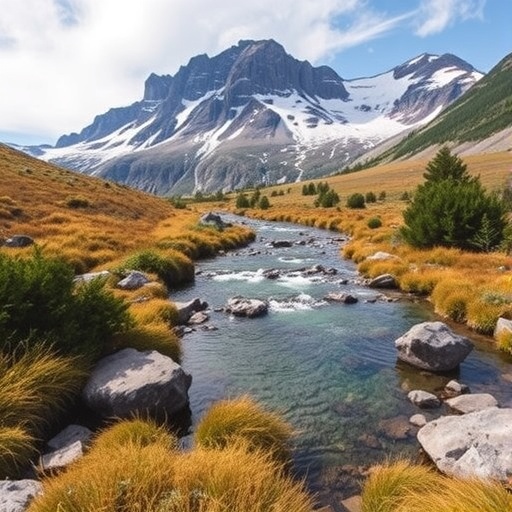
In the face of intensifying climate change and escalating human pressures, the fragile alpine aquatic ecosystems perched high in the world’s mountain ranges are increasingly at risk. A groundbreaking new study published in Communications Earth & Environment demonstrates how nature-based solutions (NBS) can serve as effective buffers against these threats, offering a timely and urgently needed strategy to protect these critical environments. This research sheds light on the complex interplay of climate dynamics and anthropogenic impacts on alpine freshwater systems, highlighting innovative approaches rooted in ecological principles to bolster their resilience.
Alpine aquatic ecosystems, including glacial-fed streams, high-altitude lakes, and wetlands, are among the most vulnerable to global warming and direct human interference. These ecosystems function as freshwater reservoirs, biodiversity hotspots, and climate regulators, but they face drastic transformations from melting glaciers, temperature shifts, and habitat fragmentation driven by infrastructure development and increased tourism. Traditional engineering methods for conserving these ecosystems often fall short due to their high cost, ecological disruption, and limited adaptability. The study by Du and colleagues pivots attention toward nature-based solutions, emphasizing their ecological integrity and multifunctionality.
Nature-based solutions refer to the sustainable management and restoration of natural ecosystems to address socio-environmental challenges. This approach integrates ecological processes to mitigate environmental disturbances rather than solely relying on artificial infrastructures. Du et al.’s work meticulously investigates a spectrum of NBS strategies, including wetland restoration, reforestation of riparian zones, and the reinstatement of natural hydrological regimes that collectively enhance the adaptive capacity of alpine aquatic ecosystems to both climatic extremes and human encroachments.
Addressing climate-induced stressors demands interventions that work with natural cycles. Alpine environments are particularly sensitive to shifts in snowpack, precipitation patterns, and temperature fluctuations which influence water availability and quality downstream. The paper details how targeted restoration of vegetation and soil systems around alpine water bodies can moderate temperature extremes, reduce erosion, and improve nutrient retention. These processes not only support the integrity of aquatic habitats but also contribute to carbon sequestration, thereby creating a positive feedback loop in climate mitigation efforts.
Human activities compound climate vulnerabilities in these regions through land-use changes, pollution, and water diversion. The study underscores the detrimental impact of infrastructure development that alters flow regimes and fragments habitats, disrupting aquatic species connectivity and ecosystem functioning. By deploying nature-based solutions such as bioengineering riverbanks with native plant species and constructing natural wetlands to filter runoff, ecosystem services are enhanced while preserving biodiversity and maintaining hydrological balance.
One of the most compelling aspects of this research lies in quantifying the effectiveness of nature-based interventions. Using advanced modeling that integrates climate projections and ecological parameters, Du et al. were able to demonstrate measurable improvements in water quality, temperature regulation, and habitat connectivity following NBS implementation. These data-driven insights provide critical evidence supporting policy shifts from grey infrastructure towards greener, more adaptive ecosystem management strategies.
Moreover, the article discusses how nature-based solutions align with socioeconomic interests, promoting sustainable practices that support local communities reliant on alpine aquatic resources. By engaging indigenous knowledge and participatory management, NBS foster stewardship and ensure that conservation efforts are culturally and contextually relevant. This collaborative element is vital in securing the long-term success of restoration initiatives and balancing conservation with human livelihoods.
The research also highlights challenges and knowledge gaps in scaling NBS across disparate alpine environments. Variability in climate regimes, hydrological characteristics, and anthropogenic pressures necessitates customized approaches rather than a one-size-fits-all solution. Du and colleagues advocate for transdisciplinary research combining hydrology, ecology, climatology, and social sciences to develop locally optimized strategies that maximize resilience outcomes.
Importantly, the study does not present nature-based solutions as a panacea but rather as integral components of a broader adaptive management framework. Integrated watershed management, enhanced monitoring systems, and policy reforms must accompany ecological restoration to fully address the multifaceted threats confronting alpine aquatic ecosystems. This holistic perspective ensures that interventions remain dynamic in response to evolving climatic and societal conditions.
In addition to regional implications, the findings have global resonance. Alpine watersheds contribute significantly to freshwater supplies for downstream populations and ecosystems worldwide. Protecting these headwaters through nature-based solutions thus supports water security and ecological stability on a continental, if not global, scale. This underlines the urgency for international cooperation and funding mechanisms to prioritize NBS in mountain ecosystem conservation agendas.
Technological advancements underpinning this research include remote sensing tools for vegetation and hydrological mapping, as well as computational models simulating future scenarios under varied NBS interventions. These innovations empower scientists and managers to predict impacts and tailor restoration efforts proactively. Such precision in environmental management marks a significant step forward in the application of nature-based solutions.
The study also delves into the carbon dynamics influenced by alpine aquatic systems. Frozen soils and wetlands function as carbon sinks but are vulnerable to thawing and degradation. By restoring these habitats, nature-based solutions help maintain carbon storage capacities, thereby mitigating greenhouse gas emissions. This climate feedback mechanism underscores the multifaceted benefits of ecosystem-based adaptation strategies.
Furthermore, the aesthetic and recreational values of alpine aquatic environments are recognized as part of human well-being benefits provided by nature-based solutions. Preserving the scenic beauty and ecological richness supports tourism and local economic development while fostering public awareness about environmental stewardship. This social dimension enhances the appeal and viability of NBS initiatives beyond ecological considerations alone.
In sum, Du et al.’s study presents a compelling vision for confronting the dual challenges of climate change and human impact on alpine aquatic ecosystems. By harnessing the restorative power of nature, we can safeguard these vital freshwater habitats for future generations. The integration of science, policy, and community engagement embodied in nature-based solutions offers a hopeful pathway amid growing environmental uncertainty.
As mountain regions continue to experience unprecedented environmental shifts, embracing nature-based solutions could redefine conservation and climate adaptation paradigms. This research provides a robust scientific foundation for actionable strategies that balance ecological integrity with sustainable human use, ensuring the resilience of alpine aquatic ecosystems in a rapidly changing world.
Cite Scienmag News
Gavin Prescott. (May 20, 2026). Nature-Based Solutions Protect Alpine Aquatic Ecosystems. Scienmag. https://scienmag.com/nature-based-solutions-protect-alpine-aquatic-ecosystems/
Gavin Prescott. "Nature-Based Solutions Protect Alpine Aquatic Ecosystems." Scienmag, 20 May 2026, https://scienmag.com/nature-based-solutions-protect-alpine-aquatic-ecosystems/. Accessed 4 September 2026.
Gavin Prescott. "Nature-Based Solutions Protect Alpine Aquatic Ecosystems." Scienmag. May 20, 2026. https://scienmag.com/nature-based-solutions-protect-alpine-aquatic-ecosystems/


