


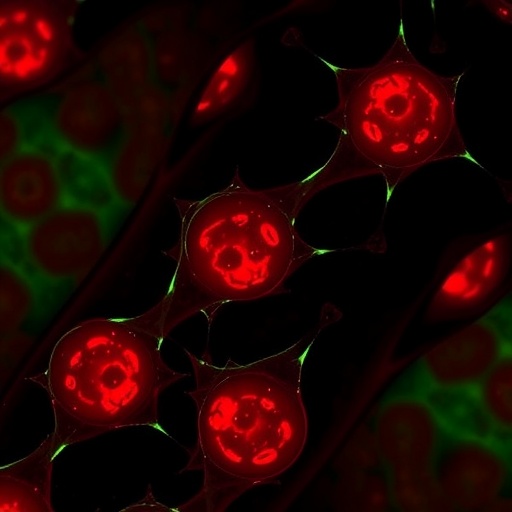
In a groundbreaking advance poised to transform the therapeutic landscape of sepsis-induced acute kidney injury (AKI), researchers have unveiled a potent mechanism through which mesenchymal stem cell-derived small extracellular vesicles (MSC-sEVs) deliver microRNA cargo to suppress pyroptosis, a form of inflammatory programmed cell death. This discovery highlights an innovative avenue for mitigating one of the most devastating complications associated with sepsis, potentially halting the progression of kidney damage and improving patient outcomes.
Sepsis, a life-threatening organ dysfunction caused by a dysregulated host response to infection, frequently results in acute kidney injury, which dramatically increases mortality rates among critically ill patients. Current clinical interventions primarily focus on supportive care, but there remains a critical unmet need for targeted therapies that effectively interrupt the pathological pathways driving sepsis-associated AKI. The study led by Chen and colleagues takes a significant leap in addressing this gap by exploring the role of MSC-sEVs in modulating the cellular death processes implicated in renal injury.
Central to this research is the identification of miR-125a-5p, a microRNA encapsulated within MSC-sEVs, as a key regulatory molecule that mediates the suppression of pyroptosis in renal cells. Pyroptosis, distinct from apoptosis and necrosis, is characterized by inflammasome activation and gasdermin D-mediated cell membrane pore formation, leading to the release of pro-inflammatory cytokines that exacerbate tissue inflammation and injury. By delivering miR-125a-5p, these extracellular vesicles effectively attenuate the activation of pyroptotic pathways, curbing the inflammatory cascade.
The therapeutic potential of MSC-sEVs emerges from their inherent capacity to traverse biological barriers and deliver functional RNA molecules directly into injured renal cells. This capability enables a precision-targeted approach where the exogenous miR-125a-5p can precisely modulate gene expression networks at the post-transcriptional level. The study reveals that miR-125a-5p downregulates critical component genes involved in inflammasome assembly and pyroptotic signaling, such as NLRP3 and caspase-1, thereby preventing the deleterious amplification of local inflammation.
Experimental models of sepsis-induced AKI employed in the study demonstrated remarkable improvements in kidney function following treatment with MSC-sEVs enriched in miR-125a-5p. Biochemical markers indicative of renal injury, including serum creatinine and blood urea nitrogen, showed significant normalization. Histological examination of renal tissue further corroborated these findings, revealing reductions in tubular damage, leukocyte infiltration, and markers of cell death.
The mechanistic insights provided by this investigation extend into the complex interplay between extracellular vesicles and recipient cell signaling pathways. It was observed that the internalization of MSC-sEVs by renal tubular epithelial cells leads to the modulation of NF-κB signaling, a master regulator of inflammation, thereby orchestrating a broad suppression of inflammatory cytokine production beyond just pyroptotic mediators. This multi-faceted effect underscores the versatility of MSC-sEVs as bioengineered nanotherapeutics.
Intriguingly, the study also highlighted the stability and biocompatibility of MSC-sEVs in systemic circulation, positioning them as promising candidates for clinical translation. Unlike synthetic delivery systems, naturally derived extracellular vesicles exhibit low immunogenicity and extended half-life, attributes that are crucial for effective and safe therapeutic application in the context of systemic inflammatory diseases like sepsis.
The translational relevance of these findings is amplified by the adaptability of MSC-sEVs production from autologous or allogeneic sources, which can be standardized for large-scale manufacturing. This opens avenues for personalized regenerative medicine strategies aimed at harnessing the regenerative and immunomodulatory capacities of MSCs through their vesicular secretome. Furthermore, the manipulation of miRNA content within MSC-sEVs offers a toolkit for tailoring interventions to specific molecular targets implicated in diverse pathologies.
Beyond their role in acute kidney injury, the implications of suppressing pyroptosis through MSC-sEVs harbor potential for broader application in other inflammatory and degenerative diseases. Given the central role of pyroptosis in cardiovascular, neurological, and autoimmune disorders, the therapeutic platform established by this research could catalyze a paradigm shift in how inflammatory cell death is modulated pharmaceutically.
This research sheds light on the intricate molecular underpinnings of sepsis-related organ damage and exemplifies the cutting-edge convergence of stem cell biology, RNA therapeutics, and nanomedicine. It establishes a compelling proof-of-concept that MSC-sEV-mediated delivery of miR-125a-5p is not merely cytoprotective but capable of correcting maladaptive immune responses that have long eluded effective clinical management.
Future studies will be crucial to explore the pharmacodynamics, optimal dosing regimens, and long-term safety profiles of MSC-sEV therapies in human subjects. The integration of omics technologies and advanced imaging could further elucidate the biodistribution and functional integration of extracellular vesicles in diseased organs, enhancing our understanding of their mechanism of action at the tissue and cellular levels.
Moreover, unraveling the influence of sepsis severity, timing of intervention, and patient comorbidities on MSC-sEV therapeutic efficacy will refine clinical protocols. Collaborative efforts that integrate clinical, translational, and bioengineering expertise are imperative to accelerate the movement from bench to bedside, ensuring that these promising nano-bio therapeutics reach patients in need with maximal effectiveness.
In conclusion, the demonstration that mesenchymal stem cell-derived small extracellular vesicles can deliver miR-125a-5p to suppress pyroptosis and ameliorate sepsis-induced acute kidney injury heralds a new chapter in regenerative and anti-inflammatory medicine. This innovative strategy not only provides a blueprint for combating kidney injury in sepsis but also establishes a versatile platform for addressing a spectrum of diseases rooted in inflammatory cell death mechanisms, marking a monumental step toward precision nanotherapeutics.
Cite Scienmag News
Drew Townsend. (May 20, 2026). Stem Cell Vesicles Deliver miR-125a-5p to Heal Sepsis Kidney Injury. Scienmag. https://scienmag.com/stem-cell-vesicles-deliver-mir-125a-5p-to-heal-sepsis-kidney-injury/
Drew Townsend. "Stem Cell Vesicles Deliver miR-125a-5p to Heal Sepsis Kidney Injury." Scienmag, 20 May 2026, https://scienmag.com/stem-cell-vesicles-deliver-mir-125a-5p-to-heal-sepsis-kidney-injury/. Accessed 4 September 2026.
Drew Townsend. "Stem Cell Vesicles Deliver miR-125a-5p to Heal Sepsis Kidney Injury." Scienmag. May 20, 2026. https://scienmag.com/stem-cell-vesicles-deliver-mir-125a-5p-to-heal-sepsis-kidney-injury/


