

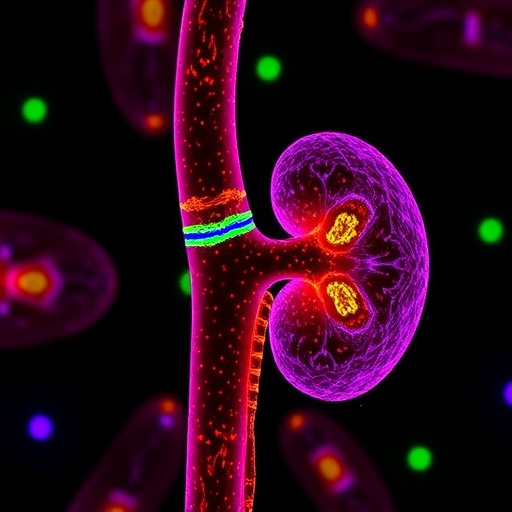
In a groundbreaking study poised to redefine our understanding of acute kidney injury (AKI), researchers have uncovered the pivotal role of ELMO1-dependent efferocytosis in mediating kidney protection against nephrotoxin-induced damage. This discovery, detailed in a recent publication in Cell Death Discovery, illuminates intricate molecular pathways and cellular processes that could pave the way for novel therapeutic strategies to combat one of the most urgent clinical challenges in nephrology.
Acute kidney injury, often precipitated by nephrotoxins—substances toxic to the kidney—poses a dire threat worldwide, especially among patients undergoing chemotherapy, antibiotic treatments, or those with exposure to environmental toxins. The kidney’s inability to effectively recover from injury leads to a cascade of detrimental effects, including chronic kidney disease and eventual renal failure. However, the body’s intrinsic mechanisms to mitigate such damage have remained elusive until now, with ELMO1 emerging as a key player.
Efferocytosis, the cellular process by which apoptotic cells are swiftly and safely cleared by phagocytes, has garnered increasing attention for its role in maintaining tissue homeostasis and limiting inflammation. The recent findings demonstrate that ELMO1, a crucial regulator of efferocytosis, orchestrates the clearance of dying cells within the renal microenvironment, thereby shielding the kidney from the secondary injury often triggered by unresolved cellular debris and ensuing inflammation.
Through meticulous in vivo and in vitro experiments, the research team delineated how ELMO1 facilitates the recognition and engulfment of apoptotic tubular epithelial cells that succumb to nephrotoxic insults. Notably, the enhanced efferocytic activity mediated by ELMO1 curtails the pro-inflammatory milieu within the kidney, mitigating fibrosis and promoting tissue repair. This dual protective mechanism elevates ELMO1 as a molecular sentinel in kidney resilience.
The study took advantage of genetically engineered mouse models deficient in ELMO1 specifically within phagocytic populations. These models exhibited exacerbated renal dysfunction post-nephrotoxin exposure, underscoring the indispensability of ELMO1-driven efferocytosis in renal recovery. Conversely, upregulation of ELMO1 corresponded with improved clearance efficiency and functional outcomes, suggesting that therapeutic modulation of this pathway holds promising potential.
At a molecular level, ELMO1 functions as part of a signaling complex that activates the RAC1 GTPase, a well-known mediator of cytoskeletal remodeling essential for phagocyte engulfment capability. This biochemical cascade allows phagocytes to dynamically respond to apoptotic signals, facilitating the membrane extensions necessary for capturing and internalizing dying cells. The precision of this process is critical in preventing the leakage of intracellular contents that would otherwise ignite damaging inflammatory responses.
Furthermore, the research highlights how impaired efferocytosis can lead to the persistence of apoptotic debris, triggering innate immune activation and perpetuating a cycle of inflammation and cellular injury. This insight provides a mechanistic explanation for the chronic inflammation observed in nephrotoxin-induced AKI, where unresolved apoptotic cells contribute to sustained tissue damage and maladaptive repair.
The clinical implications of these findings are profound. Standard treatment options for AKI remain largely supportive, lacking targeted therapies that can effectively halt or reverse tissue injury. By identifying ELMO1-dependent efferocytosis as a protective mechanism, this study opens avenues for developing pharmacological agents or gene therapies aimed at enhancing efferocytic function in the kidney.
Moreover, the versatility of the efferocytosis pathway extends beyond nephrotoxin-induced injury. Given that efferocytosis is a fundamental biological process across diverse tissues, manipulating ELMO1 activity may also have broader applications in treating other inflammatory and degenerative conditions where apoptotic cell clearance is compromised.
This research also invites a re-examination of patient stratification strategies in AKI treatment trials. Biomarkers related to ELMO1 expression or efferocytic efficiency could serve as predictive indicators of disease progression or therapeutic responsiveness, facilitating personalized medicine approaches in nephrology.
The study’s methodological rigor sets a new benchmark in renal biology research. Combining state-of-the-art imaging techniques, molecular assays, and functional kidney evaluations, the investigators provided compelling, multi-level evidence linking ELMO1 activity to renal health outcomes. Such integrative strategies underscore the importance of cross-disciplinary approaches in unraveling complex pathophysiological processes.
Looking forward, questions remain regarding the regulation of ELMO1 expression under various pathological conditions and how environmental or genetic factors may influence efferocytic capacity in vulnerable patient populations. Future research aimed at dissecting upstream modulators of ELMO1 and downstream effectors of efferocytosis will be essential in translating these findings into tangible clinical interventions.
Equally intriguing is the prospect of combining ELMO1-targeted therapies with other renoprotective strategies, such as anti-inflammatory agents or regenerative medicine approaches, to orchestrate a multifaceted assault on AKI pathogenesis. This multi-pronged approach could amplify therapeutic efficacy and foster kidney repair mechanisms synergistically.
In summary, the elucidation of ELMO1-dependent efferocytosis as a guardian against nephrotoxin-induced acute kidney injury represents a significant stride in nephrology research. By unveiling a novel cellular mechanism that forestalls kidney damage, the study offers renewed hope for millions affected by renal diseases and highlights the intricate balance between cellular clearance and inflammation in organ health.
As the nephrology community grapples with the rising incidence of AKI globally, insights gleaned from this research may catalyze the development of innovative diagnostics and therapeutics, ultimately improving patient outcomes. The notion that harnessing the body’s own efferocytic machinery can shield vital organs from toxic insults underscores the elegant complexity of biological systems and the untapped potential within them.
With ongoing research and clinical validation, ELMO1-centered efferocytosis could emerge as a cornerstone concept in future kidney disease management frameworks. The intersection of cellular biology, molecular medicine, and clinical nephrology embodied in this work exemplifies the transformative power of targeted scientific inquiry.
This pioneering study shines a spotlight on the dynamic interplay between cell death and tissue repair, challenging dogma and inspiring a new era of research aimed at preserving renal function in the face of ever-increasing environmental and pharmaceutical nephrotoxic threats. The path from bench to bedside may be accelerated thanks to these compelling findings, heralding a hopeful chapter for AKI patients worldwide.
Cite Scienmag News
Jerry Hayes. (May 20, 2026). ELMO1 Boosts Kidney Repair After Toxic Injury. Scienmag. https://scienmag.com/elmo1-boosts-kidney-repair-after-toxic-injury/
Jerry Hayes. "ELMO1 Boosts Kidney Repair After Toxic Injury." Scienmag, 20 May 2026, https://scienmag.com/elmo1-boosts-kidney-repair-after-toxic-injury/. Accessed 30 August 2026.
Jerry Hayes. "ELMO1 Boosts Kidney Repair After Toxic Injury." Scienmag. May 20, 2026. https://scienmag.com/elmo1-boosts-kidney-repair-after-toxic-injury/


