


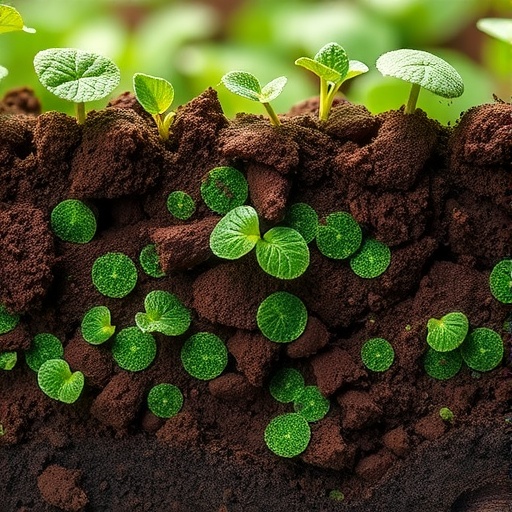
In an era marked by rapid environmental change, the soil beneath our feet is undergoing a profound transformation—one that is intricately tied to the health of ecosystems and the sustainability of global agriculture. A groundbreaking study led by Chen, R., Luo, S., Feng, Y., and colleagues, recently published in Nature Communications (2026), reveals how multiple anthropogenic stressors are reshaping the functional dynamics of soil microbiomes worldwide. This comprehensive investigation into the microbial life within soils elucidates not only shifts in microbial community composition but, more importantly, the restructuring of key ecological functions critical for ecosystem resilience and productivity.
Soil microbiomes are complex assemblages comprising bacteria, fungi, archaea, viruses, and microfauna, all interwoven in networks that regulate nutrient cycling, organic matter decomposition, and plant health. These microbial communities act as the engine of terrestrial ecosystems by mediating essential biogeochemical processes. However, escalating environmental pressures such as climate change, intensive land use, pollution, and habitat disturbance are imposing unprecedented stress on these subterranean networks, driving alterations that could destabilize ecosystem functionality on a global scale.
Chen et al. embarked on a multifaceted global survey integrating metagenomics, metatranscriptomics, and metabolomics to profile soil microbial communities from varied biomes, spanning tropical rainforests, temperate grasslands, arid deserts, and agricultural fields. By harnessing high-throughput sequencing technologies combined with advanced bioinformatics frameworks, the team discerned patterns of microbial functional gene abundance and expression heightened or diminished in response to co-occurring stressors like drought, heavy metal contamination, nitrogen deposition, and increased soil acidity.
One of the most striking findings was that soil microbial communities are not merely altered in species composition but undergo profound functional shifts that transcend taxonomic changes. These functional reorganizations affect critical pathways such as carbon cycling, nitrogen fixation, and stress response mechanisms. For instance, genes associated with nitrification and denitrification processes showed decreased activity in soils subjected to multiple stressors, indicating a compromised capacity for nitrogen turnover. Conversely, pathways linked to oxidative stress tolerance and xenobiotic degradation were upregulated, suggesting heightened microbial efforts to mitigate environmental insults.
The research also highlights the emergence of novel microbial consortia poised to thrive under stress-prone conditions. Certain taxa displaying metabolic versatility and stress-resilient traits became more prevalent, effectively reshaping the entire functional landscape of soil microbiomes. This shift may safeguard some ecosystem processes but could simultaneously compromise others, particularly those integral to soil fertility and plant productivity. The altered microbiome thus represents a double-edged sword, balancing resilience with potential ecosystem dysfunction.
Moreover, the study sheds light on the cascading effects of microbiome restructuring on above-ground biodiversity and ecosystem services. The disruption of nutrient cycling and soil structure integrity threatens plant communities, potentially diminishing crop yields and natural vegetation diversity. The interdependence between plants and their root-associated microbiomes implies that functional shifts below ground reverberate upwards, influencing carbon sequestration capabilities and ecosystem stability in the face of climatic fluctuations.
The methodological innovation in this study lies in the simultaneous assessment of multiple environmental stressors rather than isolated factors, reflecting real-world scenarios where ecosystems seldom face a single challenge. This multi-stressor approach unmasked synergistic and antagonistic interactions between stressors, revealing complex response patterns in microbial functions that single-stressor studies might overlook. Such insights underscore the need for integrated environmental management strategies that consider compound stressor impacts on microbial ecology.
Chen and colleagues’ data integration further delineates biogeographical variability in microbial functional responses, where tropical and temperate soils exhibited distinct patterns of microbiome restructuring. Tropical soils showed a higher degree of functional sensitivity, possibly due to their inherently diverse but finely balanced microbial networks. In contrast, temperate soils displayed more robust functional redundancy, affording some buffering capacity against ecosystem disruption. These geographic nuances have profound implications for conservation prioritization and agricultural adaptation strategies.
In addressing the mechanistic underpinnings, the researchers pinpointed putative molecular pathways facilitating microbial resilience, including enhanced production of extracellular polymeric substances (EPS) and activation of mobile genetic elements that facilitate horizontal gene transfer. These adaptive features likely enable microbiomes to rapidly reconfigure their functional potential, serving as a microbial safeguard amid fluctuating environmental conditions. The elucidation of such mechanisms opens avenues for biotechnological interventions aimed at stabilizing soil health.
The implications of this study are vast and pressing. With soil microbiomes functioning as critical mediators of ecosystem services, their functional reorganization portends shifts in global biogeochemical cycles that could exacerbate climate feedback loops. For instance, the diminished microbial degradation of organic carbon may lead to increased soil carbon storage under some scenarios, but also risk releasing greenhouse gases under others. This ambivalence necessitates nuanced modeling to predict ecosystem trajectories under future global change regimes.
From an agricultural perspective, the findings herald a wake-up call. Modern practices that amplify multiple stressors, such as excessive fertilizer application, pesticide use, and monoculture expansion, may accelerate detrimental microbiome shifts that undermine soil fertility and crop resilience. The study advocates for the incorporation of microbiome-friendly practices, including crop diversification, organic amendments, and reduced chemical inputs, to foster microbial functional stability and sustainable food production.
Synthesizing thousands of soil samples and millions of sequence reads, Chen et al. provide the most detailed and integrative portrait to date of microbial functional adaptation to environmental stress. Their work exemplifies the power of cutting-edge -omics technologies applied at global scales to unravel intricate ecosystem responses and guides policymakers, ecologists, and agronomists toward informed interventions that align with microbiome health.
Yet, many questions remain. The temporal dynamics of microbiome functional restructuring—whether changes are transient or lead to permanent shifts—need longitudinal assessment. Furthermore, the interplay between soil microbiomes and root exudates under stress conditions remains an elusive frontier. Future research will undoubtedly build on this foundation to decode the complexity of soil ecosystems in an increasingly anthropogenic world.
In summary, the study by Chen, R., Luo, S., Feng, Y., and their team reveals a global soil microbiome rapidly adapting to multiple environmental stressors through functional restructuring. This microbial plasticity carries profound consequences for ecosystem sustainability, agricultural productivity, and climate regulation. As humanity confronts accelerating global change, safeguarding the invisible but indispensable microbial stewards within our soils is paramount. This research not only advances our understanding of subterranean microbial ecology but also calls for urgent, multidisciplinary responses to preserve the foundational fabric of life on Earth.
Cite Scienmag News
Morgan Morrow. (May 20, 2026). Global Soil Microbiome Changes Under Multiple Stressors. Scienmag. https://scienmag.com/global-soil-microbiome-changes-under-multiple-stressors/
Morgan Morrow. "Global Soil Microbiome Changes Under Multiple Stressors." Scienmag, 20 May 2026, https://scienmag.com/global-soil-microbiome-changes-under-multiple-stressors/. Accessed 4 September 2026.
Morgan Morrow. "Global Soil Microbiome Changes Under Multiple Stressors." Scienmag. May 20, 2026. https://scienmag.com/global-soil-microbiome-changes-under-multiple-stressors/


