


In a landmark advancement poised to redefine cancer therapy, Davis Joseph’s revolutionary research introduces a universal framework for treating cancer, independent of the organ of origin. His groundbreaking work, recognized with the prestigious 2025 Ciechanover International Biology Award at the Sustainability through Science and Technology Summit (SIPS 2025) in Cebu, Philippines, dismantles centuries-old oncology paradigms and charts a bold new direction for medical science.
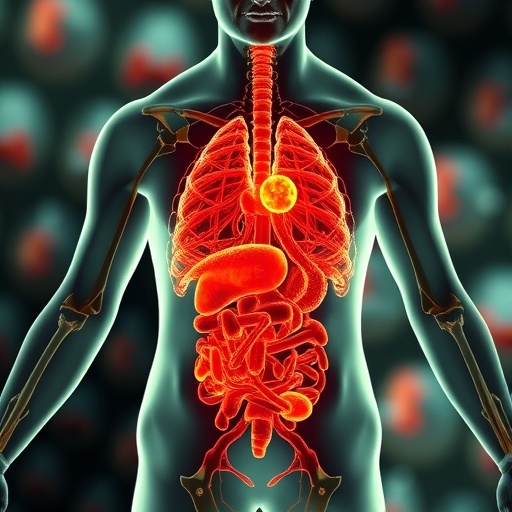
For over two hundred years, cancer treatment protocols have been predicated on an organ-specific paradigm, where therapies are tailored based on the tissue or organ in which cancer develops. This approach overlooks the molecular and biochemical commonalities among diverse cancers. Joseph’s pioneering investigation challenges this entrenched orthodoxy, proposing instead that cancer types can be unified through their molecular underpinnings rather than their anatomical origin. This shift to an organ-agnostic therapeutic strategy has profound implications for how oncologists conceptualize cancer and deploy treatments.
Additionally, the research confronts the isolated pathway paradigm long adhered to in cancer biochemistry. Traditionally, cancer has been studied by dissecting individual biochemical pathways, neglecting the complex network of interactions among proteins and regulatory RNAs that orchestrate cellular behavior in vivo. Joseph addresses this gap by constructing a comprehensive, universal apoptosis network—a complex map encompassing approximately one hundred interrelated pathways, balancing activation and inhibition dynamics. This holistic systems biology approach substantially elevates our understanding of cancer cellular regulation and apoptosis, the programmed cell death mechanism often subverted in malignancies.
Central to Joseph’s unified theory is the classification of cancer into three universal types based on dysfunctions in key regulatory molecules. Type 1 cancers arise from cells deficient in the tumor suppressor functions of p14ARF or p53 genes, critical guardians of genomic integrity. Type 2 cancers involve cells lacking the DINO long non-coding RNA, a regulatory molecule implicated in DNA damage response and cellular stress handling. Type 3 cancers are characterized by aberrantly high activity of the MDM2 protein, an oncoprotein that negatively regulates p53. This tripartite classification transcends organ boundaries, identifying molecular master regulators as central targets for anticancer interventions.
By developing this universal framework, Joseph has laid the groundwork for therapies that could target these master regulatory nodes, drastically simplifying and unifying cancer treatment strategies. This paradigm shift could harmonize therapeutic protocols across cancer types, reducing the need for organ-specific drug development and expediting the clinical translation of novel interventions. The implications extend beyond medicine into economics and environmental sustainability, promising reductions in treatment costs and resource utilization by consolidating diverse cancer therapies into a streamlined, universal approach.
Joseph’s work culminated in the publication of the first universal apoptosis network flowsheet, synthesized from an extensive literature review encompassing 174 scientific studies. This integrative network features approximately 80% pathways that promote apoptosis activation and 20% that inhibit it, reflecting the delicate balance cells maintain in life and death decisions. Such a comprehensive map not only advances theoretical knowledge but also serves as a potent tool for designing and predicting the efficacy of targeted cancer therapies.
This achievement aligns with the principles of Sustainable Medicine as outlined in the FLOGEN Sustainability Framework. It addresses social development by potentially improving patient outcomes and survival rates. Economically, the streamlined treatment design could lead to significant cost savings in cancer care—historically one of the most expensive branches of healthcare. Environmentally, this organ-agnostic approach reduces the demand for manufacturing multiple specialized drugs, minimizing ecological footprints associated with pharmaceutical production.
Acclaimed Nobel Laureate Professor Aaron Ciechanover, after witnessing Joseph’s presentation and reviewing the scientific papers, prophesied that Joseph’s contributions could warrant a Nobel Prize at an unprecedentedly young age, highlighting the transformative nature and high academic caliber of his work.
Joseph’s award was presented in a distinguished ceremony during the SIPS 2025 Gala at the Dusit Thani Mactan Cebu Resort, further propelling his discovery onto the global stage. This recognition encapsulates the growing momentum to foster cross-disciplinary innovations that transcend traditional scientific silos in the pursuit of sustainable global health solutions.
This landmark achievement builds on Joseph’s prolific research trajectory, which includes two other notable breakthroughs within the past eighteen months. His initial discovery elucidated the neurobiological mechanism behind 4E-BP2 protein deamidation localized in axons, the essential nerve cell projections—a study heralded as Nobel-worthy by esteemed laureates Harvey Alter and Gregg Semenza. Following this, he identified a unified master switch mechanism in neurodegenerative diseases, offering new avenues for Alzheimer’s and Parkinson’s treatment development.
Beyond Joseph’s individual accomplishments, his institutional affiliations bolster the scientific rigor of his research. As Director of Biochemistry at FLOGEN Technologies Inc. and Principal Investigator at Gifu University in Japan, his work benefits from robust academic and applied research environments. FLOGEN Technologies, an institute dedicated to sustainable innovation, provides a foundation that synergizes cutting-edge science with environmental and social responsibility.
The wider scientific community has embraced Joseph’s findings, with his recent publication in the Q1 journal Cell Death Discovery achieving a record-breaking number of accesses within weeks. This viral reception underscores the widespread interest and anticipation of a paradigm-shifting approach to cancer therapy.
Davis Joseph’s extraordinary advances herald a future where cancer treatment is unified by common molecular denominators rather than fragmented by organ specificity. His unified therapeutic theory not only promises to revolutionize oncology but also exemplifies the integration of scientific insight with sustainability principles—addressing healthcare’s many challenges through innovative, interdisciplinary strategies. As the world watches, his work may well mark the dawn of a new era in cancer medicine.
News Publication Date: 1-Apr-2026
Web References:
- Nature Portfolio Cell Death Discovery article: https://www.nature.com/articles/s41420-026-03066-2
- SIPS 2025 Summit: https://www.flogen.org/sips2025/
- FLOGEN Technologies: http://www.flogen.com/
- Gifu University: https://www.gifu-u.ac.jp/
- FLOGEN Stars Outreach: http://www.flogen.org/
- FLOGEN Sustainability Framework: https://www.flogen.org/?p=206#toop
References:
- Davis Joseph’s relevant publications in International Journal of Molecular Sciences (IJMS) and Cell Death Discovery.
Cite Scienmag News
Nathaniel Bowman. (May 18, 2026). Breakthrough Cancer Treatment Effective Across All Organ Types. Scienmag. https://scienmag.com/breakthrough-cancer-treatment-effective-across-all-organ-types/
Nathaniel Bowman. "Breakthrough Cancer Treatment Effective Across All Organ Types." Scienmag, 18 May 2026, https://scienmag.com/breakthrough-cancer-treatment-effective-across-all-organ-types/. Accessed 4 September 2026.
Nathaniel Bowman. "Breakthrough Cancer Treatment Effective Across All Organ Types." Scienmag. May 18, 2026. https://scienmag.com/breakthrough-cancer-treatment-effective-across-all-organ-types/


