


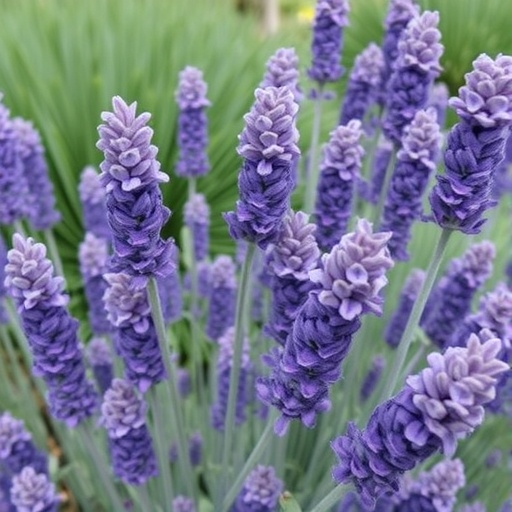
In the ongoing quest to mitigate corrosion in carbon steel, researchers have historically grappled with finding eco-friendly and efficient inhibitors capable of withstanding harsh environmental conditions, such as saline solutions. A groundbreaking study combining experimental methods with advanced computational analyses now unveils a promising hybrid system based on Lavandula angustifolia extract paired with Zn(II) ions. This novel approach showcases remarkable corrosion protection, heralding a new chapter for sustainable material preservation technologies.
Corrosion, the gradual degradation of metals through chemical reactions with their environment, significantly impacts various industries, including maritime, construction, and infrastructure. Carbon steel, widely used for its mechanical strength and cost-efficiency, is particularly vulnerable in saline environments where chloride ions accelerate corrosive processes. Traditional corrosion inhibitors, often synthetic and environmentally hazardous, have prompted the scientific community to explore alternatives derived from natural products.
Lavandula angustifolia, commonly known as lavender, is renowned not only for its aromatic properties but also for its complex phytochemical composition, rich in phenolic compounds, flavonoids, and organic acids. These components are instrumental in forming protective layers on metal surfaces, impeding the contact between corrosive agents and the substrate. Combining this with Zn(II) ions, known for their corrosion-inhibiting ability and metal ion coordination, creates a hybrid system that capitalizes on the synergistic effects of natural extracts and metal ions.
The experimental aspect of this research encompassed electrochemical measurements, such as potentiodynamic polarization and electrochemical impedance spectroscopy, to quantify the protective efficacy of the hybrid system. These techniques revealed a substantial decrease in corrosion current densities and an increase in charge transfer resistance when carbon steel was immersed in saline solutions treated with the Lavandula-Zn(II) complex, compared to untreated samples. The data strongly suggest that the hybrid coating acts as a robust barrier to corrosive species.
Supporting the empirical observations, computational studies were conducted using density functional theory (DFT) simulations to understand the molecular-level interactions at play. By modeling the adsorption behavior of phytochemicals on steel surfaces and their coordination with Zn(II) ions, researchers gained insights into the electronic properties that facilitate inhibitor binding and surface coverage. The calculations confirmed strong adsorption energies, indicative of a stable, protective film formation.
The uniqueness of this hybrid system lies in its ability to leverage natural bioactive molecules to form chelates with Zn(II), effectively enhancing inhibitor efficiency beyond what either component could achieve alone. This complexation improves the film’s compactness and uniformity, significantly reducing the permeability to aggressive chloride ions in saline environments, a critical factor in prolonging the lifespan of carbon steel infrastructures.
Beyond laboratory metrics, the Langmuir adsorption isotherm model applied to this system revealed insights into the inhibitor’s adsorption mechanism, indicating a dominant chemisorption process. This strong, often irreversible bond between the inhibitor molecules and the steel surface suggests excellent durability of the protective layer under operational conditions.
In addition to its protective prowess, the use of Lavandula angustifolia extract also addresses environmental concerns associated with corrosion inhibitors. Derived from a renewable plant source, this green inhibitor reduces the ecological footprint and potential toxicity linked with conventional chemical additives. The merging of natural and inorganic materials in this hybrid model embodies the principles of green chemistry and sustainable engineering.
Industrial application feasibility was also a notable consideration, with the study examining the interaction dynamics under varying salinity levels and temperatures to simulate real-world conditions. Encouragingly, the hybrid system maintained high inhibition efficiency across a range of environmental parameters, signaling its broad robustness and adaptability.
The implications of this research extend into the development of next-generation anti-corrosion coatings tailored for marine and coastal infrastructure, where saline-induced deterioration is rampant. By harnessing both experimental electrochemistry and theoretical computational chemistry, the researchers have charted a comprehensive pathway from molecular design to practical deployment.
Future prospects include refining the formulation for large-scale applications and exploring similar phytochemical-metal ion hybrids with different metallic substrates. The intrinsic versatility of plant extracts combined with targeted metal ions opens a vast landscape for custom corrosion inhibitors with tuned properties and minimal ecological impact.
In the broader context of material science, this study exemplifies the power of interdisciplinary approaches. By bridging chemistry, materials engineering, and computational modeling, it provides a template for rational design of hybrid functional materials that meet both performance and environmental criteria.
Moreover, the successful demonstration of Lavandula angustifolia extract in this capacity prompts a renewed interest in traditional botanical knowledge combined with modern technology. Such convergence ensures that technological advancement does not come at the expense of planetary health, reinforcing a circular economy within the corrosive protection sector.
The promise held by this Lavandula-Zn(II) hybrid system is not merely a theoretical milestone but a tangible advancement towards safer, longer-lasting infrastructure. It highlights a shift from hazardous, short-term fixes towards sustainable, intelligent solutions capable of meeting the demands of future engineering challenges.
As the scientific community continues to validate and expand on these findings, the anticipation of integrating bio-inspired corrosion inhibitors into commercial products grows. This trajectory propels us closer to a future where material degradation woes are mitigated through smart, environmentally harmonious interventions.
Ultimately, the revelation of such a hybrid protective system sets a precedent that could reshape industrial strategies and policy frameworks regarding corrosion mitigation, marking a pivotal point in the stewardship of metal assets worldwide.
Cite Scienmag News
Denise Maddox. (May 17, 2026). Lavandula-Zn(II) Hybrid Shields Steel from Corrosion. Scienmag. https://scienmag.com/lavandula-znii-hybrid-shields-steel-from-corrosion/
Denise Maddox. "Lavandula-Zn(II) Hybrid Shields Steel from Corrosion." Scienmag, 17 May 2026, https://scienmag.com/lavandula-znii-hybrid-shields-steel-from-corrosion/. Accessed 7 September 2026.
Denise Maddox. "Lavandula-Zn(II) Hybrid Shields Steel from Corrosion." Scienmag. May 17, 2026. https://scienmag.com/lavandula-znii-hybrid-shields-steel-from-corrosion/


