


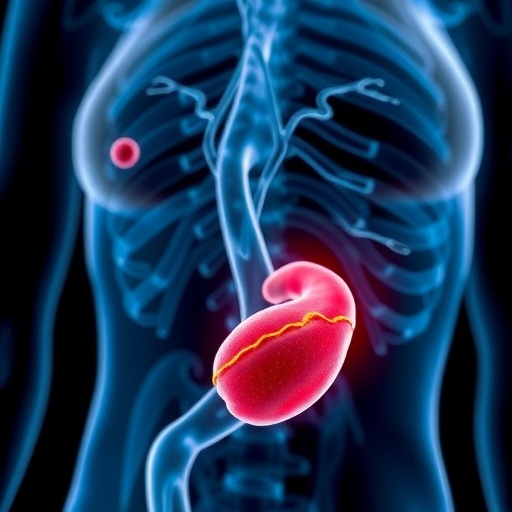
In a groundbreaking advancement poised to revolutionize hypertension treatment, researchers at Penn State have engineered a novel bioelectronic device capable of effectively modulating blood pressure through cardiac nerve stimulation. High blood pressure, clinically termed hypertension, affects nearly half of all adults in the United States, with a considerable subset—approximately 10%—exhibiting drug-resistant hypertension, a condition refractory to conventional pharmacological and lifestyle interventions. This persistent elevation in blood pressure significantly contributes to cardiovascular morbidity and mortality, demanding innovative therapeutic solutions beyond oral medications.
The team at Penn State has unveiled a pioneering 3D-printed bioelectronic system known as CaroFlex, designed to interface seamlessly with the carotid sinus artery. This bioelectronic interface offers a soft, stretchable, and biocompatible solution, markedly different from existing devices composed of rigid metals and plastics. By leveraging 3D printing technology and hydrogel-based materials, CaroFlex circumvents the limitations posed by conventional devices, such as mechanical mismatch, tissue damage, and instability caused by sutures traditionally used for device fixation.
At the core of CaroFlex’s design is the use of conductive hydrogel electrodes integrated with adhesive hydrogel films, which allow gentle yet effective electrical stimulation of baroreceptors located in the carotid sinus—a critical node for blood pressure regulation. Baroreceptors are specialized nerve endings that monitor arterial stretch, activating the baroreflex, a physiological mechanism that constrains or dilates arteries to stabilize blood pressure homeostasis. Through the precise modulation of these receptors via varied electrical frequencies, CaroFlex demonstrates the ability to recalibrate the body’s intrinsic pressure control system without invasive surgery or systemic drug exposure.
The development process involved meticulous characterization of the mechanical and electrical properties of CaroFlex. In vitro testing revealed the device’s extraordinary elasticity, capable of stretching over twice its initial length prior to mechanical failure, ensuring undisrupted function despite the dynamic movements of arterial tissues. Moreover, the adhesive hydrogel maintained robust and consistent adhesion to biological surfaces, even after prolonged storage exceeding six months, highlighting its practical durability for clinical applications.
A critical comparison with traditional platinum-based bioelectrodes underscored CaroFlex’s superior performance. While platinum electrodes often suffer from mechanical rigidity and poor tissue integration, leading to compromised electrical conduction and tissue damage, CaroFlex adhered more intimately to the tissues and ensured a stable, reliable electrical interface. This enhanced adhesion mitigates the need for suturing, a common source of complications in existing bioelectronic implants.
Translational relevance of this technology was evaluated through in vivo experiments in rodent models. Implanting CaroFlex onto the carotid sinus of rats and continuously monitoring their blood pressure revealed that four out of five tested electrical frequencies achieved a significant reduction in active blood pressure, averaging over a 15% decrease during a 10-minute stimulation period. Importantly, no adverse inflammatory or immune responses were detected after two weeks of implantation, attesting to the device’s biocompatibility and safety profile.
This novel approach underscores a paradigm shift in hypertension therapy, from systemic pharmaceutical management towards localized neuromodulation using soft, bioadhesive electronics. By targeting the baroreflex system through the carotid sinus, CaroFlex offers a minimally invasive, precisely controllable, and patient-friendly alternative, particularly for individuals with drug-resistant hypertension who face limited treatment options.
Beyond its therapeutic potential, CaroFlex exemplifies the advantages of 3D printing technology in bioelectronics. The additive manufacturing process allows rapid prototyping, customization, and scalable production while reducing manufacturing costs and material waste. This flexibility accelerates the path from bench to bedside, facilitating iterative optimization, adaptation to various anatomical needs, and potential mass clinical deployment.
The research team, led by Tao Zhou, a rising expert in engineering science and mechanics at Penn State, is actively refining CaroFlex’s stimulation parameters and exploring avenues to scale up the technology for human clinical trials. The vision is to establish CaroFlex as a clinically viable, suture-free, bioadhesive bioelectronic interface that can sustainably regulate blood pressure, improve cardiovascular outcomes, and enhance patients’ quality of life.
This interdisciplinary endeavor unites expertise from biomedical engineering, materials science, neural engineering, and clinical medicine, with contributions from doctoral candidates and faculty across Penn State and the University of Michigan. The work received critical financial support from the National Institutes of Health and the U.S. National Science Foundation, underscoring the federal commitment to fostering cutting-edge medical innovation.
The emergence of CaroFlex not only represents a formidable advance in managing a global health burden but also illuminates the vast potential of biointegrated electronics to address complex physiological disorders. As 3D printing technologies and hydrogel bioelectronics continue to evolve, the horizon expands for new devices that harmonize with the body’s natural systems, heralding a new era in personalized and precision medicine.
News Publication Date: 5-May-2026
Web References:
- DOI: 10.1016/j.device.2026.101150
- Tao Zhou’s Profile: Penn State College of Engineering
- Hypertension Prevalence Data: Million Hearts Initiative
Keywords
Hypertension, Bioelectronics, Baroreflex, Carotid sinus, 3D printing, Hydrogel electrodes, Neuromodulation, Cardiovascular therapy, Drug-resistant hypertension, Biocompatible materials, Biomedical engineering, Neural engineering
Cite Scienmag News
Denise Maddox. (May 15, 2026). Stretchy Implants May Adhere to Arteries to Combat High Blood Pressure. Scienmag. https://scienmag.com/stretchy-implants-may-adhere-to-arteries-to-combat-high-blood-pressure/
Denise Maddox. "Stretchy Implants May Adhere to Arteries to Combat High Blood Pressure." Scienmag, 15 May 2026, https://scienmag.com/stretchy-implants-may-adhere-to-arteries-to-combat-high-blood-pressure/. Accessed 3 September 2026.
Denise Maddox. "Stretchy Implants May Adhere to Arteries to Combat High Blood Pressure." Scienmag. May 15, 2026. https://scienmag.com/stretchy-implants-may-adhere-to-arteries-to-combat-high-blood-pressure/


