


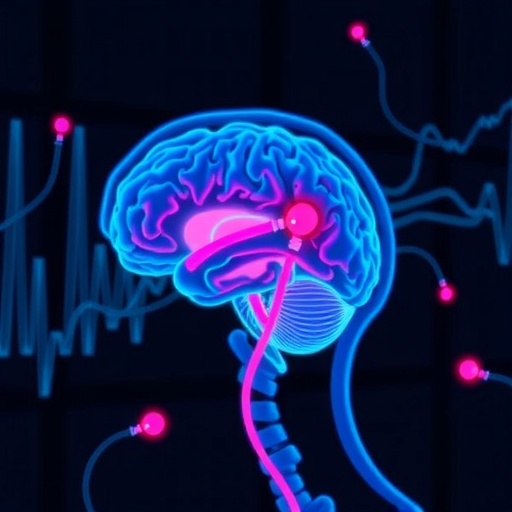
In a groundbreaking study that bridges neurocircuitry and behavioral neuroscience, researchers have uncovered critical neural mechanisms underlying prepulse inhibition (PPI) deficits in a widely used murine model of Parkinson’s disease (PD). The study, published in npj Parkinsons Disease, investigates how the interaction between the insular cortex (IC) and the substantia nigra pars compacta (SNc) contributes to sensory gating impairments following MPTP-induced neurodegeneration. This revelation not only advances our understanding of PD pathophysiology but also opens promising avenues for therapeutic interventions targeting neural circuit dysfunction.
Sensory gating, the brain’s ability to filter out irrelevant stimuli, is often compromised in Parkinson’s disease, leading to cognitive and sensory processing deficits. Prepulse inhibition, a robust operational measure of sensory gating, reflects the neurological capacity to inhibit the response to a startling stimulus when preceded by a weaker prepulse. Deficits in PPI correlate with clinical symptoms in PD patients, including executive dysfunction and hallucinations, underscoring the clinical relevance of this research. By elucidating the IC-SNc circuit’s role, the study provides mechanistic insight into how motor and non-motor symptoms may intertwine at a circuit level.
The authors employed the MPTP-induced PD mouse model, which mimics dopaminergic neuronal loss characteristic of human PD. Male mice were administered MPTP to selectively ablate dopaminergic neurons in the SNc. Behavioral assays confirmed robust PPI deficits, replicating clinical phenotypes observed in early and advanced PD patients. Using a combination of optogenetics, chemogenetics, and in vivo electrophysiology, the team dissected the functional connectivity and causal contributions of the IC-SNc pathway to sensory gating.
Optogenetic manipulation proved pivotal in unraveling the circuit dynamics. Channelrhodopsin-2 was expressed specifically in IC neurons projecting to the SNc, allowing precise photostimulation. Activation of this pathway enhanced PPI responses, rescuing the deficit in MPTP-treated mice, whereas inhibition exacerbated sensory gating impairments. This bidirectional control vividly demonstrates the IC-SNc circuit’s sufficiency and necessity in modulating PPI, endorsing the circuitry as a potential target for neuromodulation therapies.
From a neuroanatomical perspective, the insular cortex is increasingly recognized as a hub integrating sensory, emotional, and cognitive information. Its dense glutamatergic projections to SNc dopaminergic neurons suggest a top-down regulatory mechanism influencing dopaminergic output. The SNc, critically implicated in PD for its dopamine production, drives both motor control and higher-order neural processes. Damage to SNc disrupts not only movement but also sensory information gating, as evidenced by PPI deficits. The study’s findings illuminate this new front in PD neuropathology, revealing IC’s modulatory leverage on SNc dopaminergic neuron excitability.
Electrophysiological recordings from SNc neurons revealed altered firing patterns and synaptic transmission following MPTP treatment. Notably, IC activation normalized these electrophysiological abnormalities, pointing to restored synaptic homeostasis as a basis for recovered sensory gating. These results underscore the plasticity retained in PD-affected circuits and suggest that circuit-level interventions can reverse dysfunctional neural dynamics despite neurodegeneration.
The study also integrated transcriptomic analyses, identifying gene expression changes in IC and SNc neurons correlated with PPI dysfunction. Several synaptic plasticity-related genes were downregulated post-MPTP, hinting at molecular substrates for circuit impairment. Restoration of these genes’ expression profiles through IC stimulation further validated the functional importance of this pathway and opened the door to molecularly targeted treatments aligned with circuit modulation.
Beyond mechanistic insights, these findings bear profound implications for clinical translation. Sensory gating deficits contribute to reduced quality of life and complicate therapeutic management in PD patients. Existing pharmacologic interventions partly alleviate motor symptoms but often fail to address non-motor sensory disruptions. By defining a discrete IC-SNc circuit and demonstrating its manipulability, the research encourages the development of circuit-specific interventions—such as focused neuromodulation or gene therapy—that bypass the limitations of systemic dopamine replacement.
Moreover, this neural circuit-centric approach aligns with the emerging paradigm in neurodegenerative disease research emphasizing connectivity alterations over isolated neuronal death. The IC-SNc circuit exemplifies how distributed networks govern complex behaviors and how their dysregulation precipitates disease symptoms. Interventional strategies aimed at restoring network integrity may ultimately yield more comprehensive and durable therapeutic benefits than symptomatic treatments alone.
Interestingly, the study employed exclusively male mice, acknowledging that sex differences in PD prevalence and symptomatology may impact generalizability. Future research extending these investigations to female models and diverse genetic backgrounds would further validate the circuit’s universality and inform sex-specific therapeutic designs.
Furthermore, the use of MPTP-induced neurotoxicity, while well-established, constitutes an acute model of dopaminergic degeneration, differing from the progressive nature of human PD. Longitudinal studies in chronic models will be essential to ascertain whether IC-SNc circuit repair can arrest or reverse sensory gating decline over disease progression, paving the way for early intervention strategies.
This research also raises intriguing questions about the IC’s broader role in sensory and emotional processing within the context of PD. Given the insular cortex’s involvement in interoception and emotional awareness, disruptions to the IC-SNc axis may underlie not only PPI deficits but also mood disorders commonly comorbid in PD. Multimodal neuroimaging combined with circuit perturbation could elucidate these complex relationships and refine neuropsychiatric symptom management.
In sum, the study by Peng, Cui, Shi, and colleagues advances a sophisticated model whereby dysfunction in the IC-SNc neural circuit mediates prepulse inhibition deficits in Parkinson’s disease. It highlights the intricate crosstalk between cortical and subcortical structures in maintaining sensory gating and how their perturbation drives hallmark neuropsychiatric symptoms. These insights herald a new frontier in PD research focused on circuit-level rescue and functional restoration.
As the field moves forward, integrating knowledge of neural circuitry, molecular biology, and behavioral neuroscience will be pivotal in crafting innovative treatments. The IC-SNc pathway represents not only a biomarker of disease state but also an accessible node for targeted intervention. Harnessing this knowledge, future therapeutic strategies may transcend dopamine replacement, offering multidimensional symptom relief and improved patient outcomes.
The promise of neuromodulatory technologies such as transcranial magnetic stimulation or deep brain stimulation, refined to target cortical-subcortical circuits like IC-SNc, is now more tangible. Combined with gene editing or pharmacological agents enhancing synaptic plasticity within these networks, a transformative leap in PD care appears imminent.
This landmark study exemplifies how precision neuroscience can unravel complex brain-behavior relationships and translate benchside discoveries into clinical realities. By delineating the neural circuit basis of sensory gating deficits in a canonical PD model, it sets the stage for a new era of interventions aimed at restoring neural harmony and functional resilience in neurodegenerative disorders.
Cite Scienmag News
Cassandra Pierce. (May 14, 2026). IC-SNc Circuit Links Prepulse Inhibition Deficits in Parkinson’s. Scienmag. https://scienmag.com/ic-snc-circuit-links-prepulse-inhibition-deficits-in-parkinsons/
Cassandra Pierce. "IC-SNc Circuit Links Prepulse Inhibition Deficits in Parkinson’s." Scienmag, 14 May 2026, https://scienmag.com/ic-snc-circuit-links-prepulse-inhibition-deficits-in-parkinsons/. Accessed 4 September 2026.
Cassandra Pierce. "IC-SNc Circuit Links Prepulse Inhibition Deficits in Parkinson’s." Scienmag. May 14, 2026. https://scienmag.com/ic-snc-circuit-links-prepulse-inhibition-deficits-in-parkinsons/


