


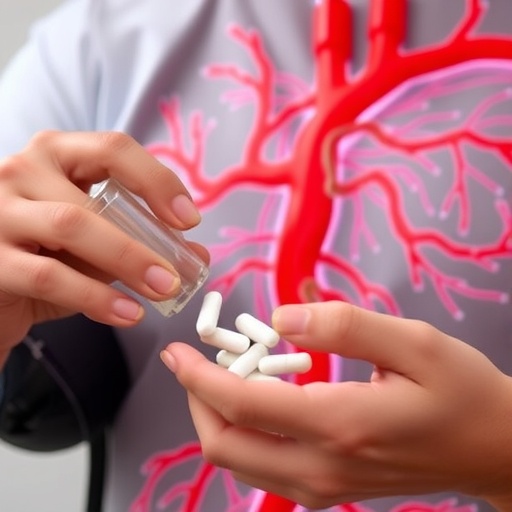
Obesity remains a critical public health challenge worldwide, intricately linked not only to metabolic disorders such as diabetes and hypertension but also to fundamental changes in vascular physiology. One of the less explored but clinically significant consequences of obesity is arterial stiffening—an increase in the rigidity of arterial walls that forces the heart to expend more energy to pump blood, thereby escalating the risk of cardiovascular events, including heart attacks and strokes. This vascular stiffening is a hallmark of cardiovascular dysfunction and an independent predictor of morbidity and mortality. In an innovative clinical investigation, researchers at the University of Missouri School of Medicine have turned their attention to a commonly prescribed antihypertensive drug, amiloride, assessing its capacity to restore arterial elasticity in adults struggling with obesity.
Amiloride, primarily known for its potassium-sparing diuretic properties that aid in managing high blood pressure by reducing sodium reabsorption in the kidneys, is now being studied for its direct vascular effects. The drug acts as an epithelial sodium channel (ENaC) blocker, which is pivotal because ENaC activity has been implicated in mechanisms that stiffen arterial walls through inflammation and endothelial dysfunction. In essence, by modulating sodium transport at the cellular level within the vascular endothelium, amiloride may reverse detrimental changes that compromise arterial compliance. This hypothesis propelled a Phase II randomized controlled clinical trial involving 116 participants, all adults with obesity and insulin resistance, who represent a demographic with elevated cardiovascular vulnerability.
The clinical trial’s results have ignited considerable interest, showcasing that amiloride goes beyond blood pressure control. Participants receiving the drug demonstrated notable improvements in multiple cardiovascular parameters, including reduced arterial stiffness measured via pulse wave velocity and enhanced endothelial function. Interestingly, the treatment was also associated with better regulation of blood glucose levels, suggesting a multidimensional benefit that encompasses improved insulin sensitivity, a crucial factor given the intertwining of diabetes with cardiovascular risk in obesity. These findings underline a potentially transformative therapy operational on several fronts of the metabolic-cardiovascular nexus.
One of the most compelling aspects of the study was the response observed in older adults, a group often disproportionately affected by vascular dysfunction. As described by lead investigator Dr. Camila Manrique-Acevedo, these individuals exhibited more pronounced improvements in key vital signs, likely because their baseline physiological conditions posed more room for amelioration. This age-dependent response highlights the complexity of vascular aging and systemic dysregulation in obesity, pointing to the possibility that ENaC blockade with amiloride could be especially beneficial for elderly patients grappling with the compounded risks of hypertension and arterial stiffening.
At a mechanistic level, the increase in potassium concentration observed during the trial provides a plausible explanation for the drug’s vascular benefits. Potassium, an essential intracellular ion, plays a critical role in modulating smooth muscle relaxation and endothelial function. Enhanced potassium retention, facilitated by amiloride’s inhibition of sodium channels in renal tubules, likely contributes to vasodilation and lowering arterial stiffness. This electrolyte balance may also improve cellular responses to insulin, intertwining hemodynamic and metabolic pathways in a crucial synergy against cardiovascular disease progression.
Despite these promising vascular and metabolic effects, the trial data suggested that arterial improvements were primarily functional rather than structural. That is, while arterial walls became more compliant, there was no evidence of immediate structural remodeling within the short study timeframe. This distinction carries significant implications for clinical translation, as it implies that amiloride’s benefits are attributable to acute changes in vascular tone and endothelial cell behavior rather than long-term anatomical changes—information critical to setting realistic expectations for treatment outcomes.
The safety profile of amiloride in this context is equally encouraging. Already FDA-approved and widely used for hypertension management, the drug caused no severe adverse effects during the study period. This positions amiloride not only as an effective but also a safe therapeutic option, potentially facilitating faster adoption in clinical settings for patients with obesity-related arterial stiffness and hypertension. Its familiarity among clinicians reduces barriers to implementation, making it a pragmatic candidate for improving cardiovascular outcomes in a high-risk population.
The study, recently published in the American Journal of Physiology, represents a collaborative effort, integrating expertise across endocrinology, pharmacology, physiology, and biostatistics. Dr. Camila Manrique-Acevedo, an endocrinologist and distinguished professor at the University of Missouri, emphasizes that these discoveries open new investigative avenues that require further rigorously designed longitudinal studies to confirm long-term benefits and elucidate precise molecular pathways involved in ENaC-mediated vascular regulation.
The broader implications for cardiovascular medicine are profound because addressing arterial stiffness pharmacologically has been a longstanding challenge. Most current treatments focus on symptomatic blood pressure control without necessarily improving the biomechanical properties of arterial walls. Amiloride’s potential to fill this therapeutic gap could significantly alter treatment paradigms, especially for patients with obesity and insulin resistance who often progress to irreversible vascular damage.
Understanding the interplay between electrolyte handling, vascular function, and metabolic control will be critical in advancing this research. Future investigations might explore combinatory therapies pairing amiloride with agents targeting other aspects of vascular pathology or metabolic derangements to achieve synergistic effects. Moreover, identifying biomarkers that predict responsiveness to ENaC blockade could tailor treatments to individual patient profiles, aligning with principles of precision medicine.
This research also raises the question of whether similar sodium channel blockers might confer analogous vascular benefits or if amiloride’s unique pharmacodynamic profile is essential for its observed effects. Comparative studies could elucidate these nuances and optimize drug selection strategies, enriching the therapeutic arsenal against obesity-related cardiovascular disease.
In summary, the University of Missouri’s groundbreaking clinical trial reveals that amiloride, beyond its classical antihypertensive role, possesses the capacity to reduce arterial stiffness and improve blood sugar control in obese adults. These dual benefits highlight the complex interdependencies between vascular health and metabolism, presenting a promising therapeutic strategy. While the findings are preliminary and warrant further exploration, they open the possibility for repurposing an established medication to tackle the multifaceted burden of cardiovascular disease in obesity, a global health priority.
Cite Scienmag News
Ophelia Keating. (May 13, 2026). Blood Pressure Medication Shown to Reduce Arterial Stiffness. Scienmag. https://scienmag.com/blood-pressure-medication-shown-to-reduce-arterial-stiffness/
Ophelia Keating. "Blood Pressure Medication Shown to Reduce Arterial Stiffness." Scienmag, 13 May 2026, https://scienmag.com/blood-pressure-medication-shown-to-reduce-arterial-stiffness/. Accessed 4 September 2026.
Ophelia Keating. "Blood Pressure Medication Shown to Reduce Arterial Stiffness." Scienmag. May 13, 2026. https://scienmag.com/blood-pressure-medication-shown-to-reduce-arterial-stiffness/


