


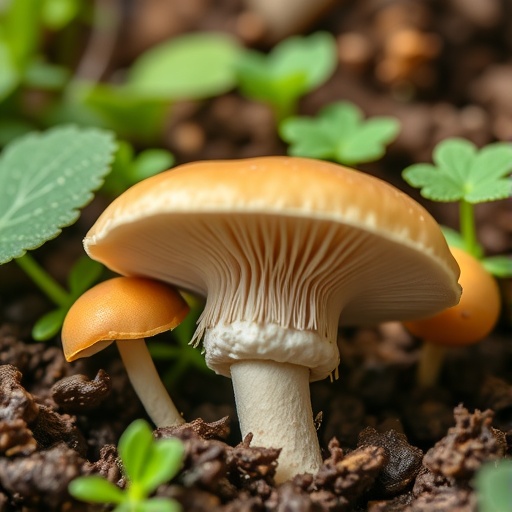
A groundbreaking study from the Hebrew University of Jerusalem unveils a revolutionary, natural method poised to transform modern agriculture. By harnessing an extract derived from the yeast-like fungus Pseudozyma aphidis, researchers have developed a technique that not only boosts crop yields significantly but also enhances the sensory qualities of produce such as tomatoes and melons. This novel approach could pave the way toward sustainable food production, addressing the rising global demand without exacerbating environmental problems commonly associated with synthetic agrochemicals.
The rapid expansion of the global population has relentlessly escalated the pressure on agricultural systems to deliver higher output. Historically, this demand has been met through extensive application of synthetic fertilizers and pesticides. While effective in the short term, these interventions often come with a heavy ecological price—polluting soils and waterways, disrupting ecosystems, and contributing substantially to greenhouse gas emissions. The research by Professor Maggie Levy and her colleagues Anton Fennec and Neta Rotem offers a promising alternative that leverages the intricate biochemical interactions between plants and beneficial microorganisms.
Previous attempts to exploit fungal live cultures for promoting plant growth faced considerable challenges due to the variability in environmental conditions and host compatibility. Live organisms tend to show inconsistent colonization patterns, leading to unreliable agricultural outcomes. To address this, the team strategically focused on isolating the bioactive secretions of Pseudozyma aphidis, developing a stable extract that conveys growth-promoting benefits without the complications associated with maintaining living fungal populations in diverse agricultural climates.
Experimental trials encompassed three major crop families critical to global food supply: cereals such as corn, cucurbits including melons, and solanaceous plants like tomatoes. The application of this fungal extract induced a cascade of beneficial effects throughout the developmental stages of these plants. Notably, tomato seeds treated with the extract exhibited an 18 percent increase in germination rates, while corn and melon seeds demonstrated modest but meaningful improvements near 7 percent, underscoring the broad effectiveness of the treatment.
Beyond germination, the fungal extract accelerated phenological development, inducing flowering up to two weeks earlier compared to untreated controls. This advancement in flowering time can truncate growth cycles and potentially enable multiple harvests within a single growing season, rendering farming operations more efficient and responsive to market demands. Such phenological shifts also suggest underlying biochemical modulation possibly linked to hormone-like activities inherent to the fungal secretions.
Yield enhancement was particularly remarkable; tomato plants subjected to the extract produced over 60 percent additional ripe fruit by weight, while melon counterparts demonstrated yield increases that were fivefold, a staggering improvement by any agricultural standard. These yield gains are not merely quantitative; they reflect a synthesis of enhanced cellular development and fruit maturation, potentially mediated by molecular compounds secreted by the fungus.
The quality of the produce improved concomitantly with yield. Tomatoes from treated plants featured increased firmness and heightened sensory attributes, scoring favorably on sweetness and aroma during taste assessments. Firmness is a critical parameter in post-harvest handling, reducing spoilage and extending shelf life, while enhanced sweetness and aroma are key drivers of consumer preference and market value. These qualitative improvements suggest that the fungal extract can optimize both agronomic performance and end-user satisfaction.
Investigation into the mechanisms underlying these profound effects revealed that the fungal secretions contain auxin-like molecules, a class of natural phytohormones pivotal in regulating plant growth processes such as cell elongation, division, and differentiation. The presence of such molecules provides a plausible biochemical basis for the observed acceleration in growth and flowering phenology. Additionally, the extract includes siderophores—molecules that chelate iron from the environment—facilitating improved micronutrient uptake essential for enzymatic activities and metabolic pathways in plants.
Utilizing microbial secretions rather than live cultures not only stabilizes the treatment’s efficacy but also simplifies agricultural deployment. The extract’s stability across diverse environmental parameters ensures consistent performance, addressing one of the major bottlenecks associated with microbial biofertilizers. This approach mitigates risks linked to microbial establishment failure, making it a scalable and practical solution for large-scale agronomy.
From an environmental standpoint, this innovation aligns with the principles of green agriculture by potentially reducing reliance on synthetic fertilizers and pesticides. By promoting natural growth processes and nutrient uptake through biological means, this strategy may lessen chemical runoff, curb greenhouse emissions, and preserve soil microbiota integrity. Such sustainable intensification is critical for balancing food security imperatives with planetary health.
Professor Maggie Levy outlined the vision behind the research, emphasizing that leveraging natural fungal secretions offers a reliable, eco-friendly tool for farmers worldwide. This natural extract can augment both the quantity and intrinsic quality of agricultural produce, representing a crucial step forward in creating resilient food systems that can adapt to climatic uncertainties while satisfying consumer demand for flavorful, nutritious food.
The research was robustly supported by the Israeli Ministry of Agriculture and Rural Development, highlighting the strategic importance of sustainable agricultural technologies in national and global food policies. Looking forward, the team plans to refine the extraction process further and decipher the specific chemical compounds responsible for the growth-enhancing effects, a move expected to open new vistas in agricultural biotechnology.
This pioneering study published in the journal Plant Physiology not only marks a milestone in agricultural science but also signals a paradigm shift in how we harness microbial resources for crop production. As the agricultural sector faces mounting challenges from climate change and population growth, innovations like these underscore the vital role of interdisciplinary research in charting a sustainable, productive, and tasty future for global food systems.
News Publication Date: 29-Apr-2026
Web References: 10.1093/plphys/kiag079
References: Not provided
Cite Scienmag News
Roger Howard. (May 13, 2026). Fungus-Fueled Farming: Unlocking Sweeter, Hardier Crops with Nature’s Secret Boost. Scienmag. https://scienmag.com/fungus-fueled-farming-unlocking-sweeter-hardier-crops-with-natures-secret-boost/
Roger Howard. "Fungus-Fueled Farming: Unlocking Sweeter, Hardier Crops with Nature’s Secret Boost." Scienmag, 13 May 2026, https://scienmag.com/fungus-fueled-farming-unlocking-sweeter-hardier-crops-with-natures-secret-boost/. Accessed 5 September 2026.
Roger Howard. "Fungus-Fueled Farming: Unlocking Sweeter, Hardier Crops with Nature’s Secret Boost." Scienmag. May 13, 2026. https://scienmag.com/fungus-fueled-farming-unlocking-sweeter-hardier-crops-with-natures-secret-boost/


