


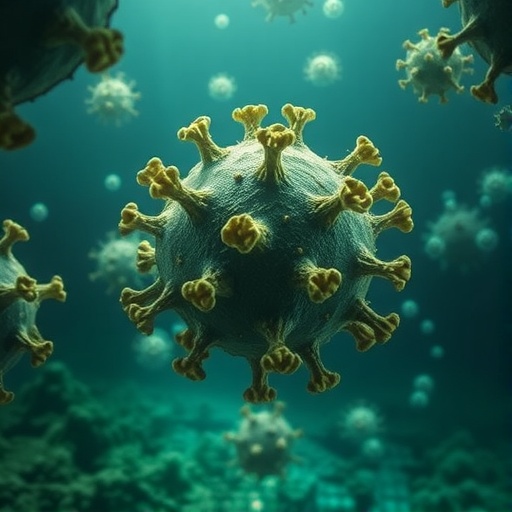
In a groundbreaking study that challenges long-standing assumptions about viral dormancy and inheritance, researchers have uncovered the dynamic activity of latent giant viruses within multicellular algal hosts. Published recently in Nature Microbiology, this discovery highlights an intricate biological interplay where endogenous viral elements, traditionally thought to be inert genomic passengers, actively drive infection dynamics and gene inheritance across algal generations. This paradigm-shifting research not only redefines the biological roles of endogenous viruses but also sheds light on viral evolution within complex multicellular organisms.
For decades, endogenous viruses—viral DNA fragments integrated into host genomes—were regarded primarily as molecular relics, essentially genomic fossils without active biological functions. However, this new research led by Duchêne, Craig, Martinho, and colleagues reveals that in certain multicellular algae, these latent endogenous giant viruses retain the capacity for active infection, disrupting the traditional narrative of viral quiescence. The study meticulously demonstrates that these embedded giant viral sequences can transition from dormancy to a fully active infectious state, implicating them as key players in host-virus interactions that influence algal physiology and evolution.
The organisms studied, multicellular algae, serve crucial ecological roles as primary producers in aquatic ecosystems. Their interactions with viruses have been long acknowledged, predominantly in the context of lytic infections by free-standing viruses. However, the researchers’ discovery that latent endogenous giant viruses embedded within algal genomes can restart active infection cycles provides an unprecedented window into viral behavior that straddles the line between endogenous persistence and exogenous infection. This suggests a much more fluid viral life cycle than previously recognized.
Methodologically, the team employed an integrative suite of genomic, transcriptomic, and microscopic analyses to delineate the lifecycle of these endogenous viruses. By sequencing algal genomes alongside high-resolution imaging and active virus particle isolation, they uncovered compelling evidence of viral particle assembly and release initiated from the otherwise quiescent endogenous viral elements. Such activation was found to be influenced by environmental triggers, indicating that external stimuli can catalyze the switch from genomic latency to viral propagation.
Central to the significance of this work is the characterization of the viruses involved—giant viruses classified under the Nucleocytoviricota phylum, notable for their large genomes and complex architecture. Unlike conventional viruses, these giant viruses harbor vast genetic repertoires capable of manipulating host cellular machinery extensively. The embedded viral genomes examined displayed evolutionary conservation, with clues suggesting a long-standing co-evolutionary relationship between the viruses and their algal hosts, hinting at mutualistic or parasitic dynamics.
One of the most striking implications of this research concerns viral inheritance patterns. Contrary to common viral transmission modes which typically involve horizontal spread between individuals, these endogenous giant viruses are vertically inherited, passed down through algal cell divisions and across generations. This vertical transmission provides a mechanism for sustained viral presence within host populations without necessitating continual external reinfections—a concept that refines our understanding of viral persistence and adaptation within multicellular hosts.
The study further delved into the molecular triggers and regulatory networks governing viral activation, identifying specific host stress responses and epigenetic modifications that appear to unlock viral gene expression. This suggests a finely tuned balance between host regulatory pathways and viral latency, where environmental or physiological stress factors tip the scale toward viral particle production. Unpacking these regulatory circuits holds potential for broader insights into virus-host co-regulation mechanisms that may be pervasive among other host-virus systems.
Beyond immediate ecological and evolutionary insights, the findings also bear relevance for viral metagenomics and biotechnology. Recognizing that endogenous viral elements can reactivate implies that metagenomic surveys must consider latent viruses as active biological agents rather than passive genetic debris. From a biotechnological lens, leveraging these giant viral genomes could inspire novel tools for gene delivery, genome editing, or synthetic biology applications, especially given their size and functional complexity.
The team’s meticulous approach also addressed possible alternative explanations, such as contamination or the presence of free-living viral particles, reinforcing the conclusion that the detected viral activity originates intrinsically from integrated viral genomes. Their multidisciplinary approach paints a cohesive picture of an otherwise elusive viral phenomenon, bridging the gap between molecular biology, evolutionary virology, and algal physiology.
Ecologically, understanding viral dynamics within primary producers like multicellular algae has far-reaching implications. Viral infections control algal population dynamics, nutrient cycling, and carbon sequestration in aquatic systems. The revelation that endogenous giant viruses actively infect and propagate within their algal hosts adds a nuanced layer to these ecological processes, underscoring viruses’ underestimated roles in ecosystem functioning and resilience.
This study also raises intriguing questions about the evolutionary pressures shaping viral genome integration and reactivation capabilities. Why have these giant viruses evolved to maintain latent infectious potential within their hosts rather than adopting strictly lytic or benign endogenized statuses? The authors posit that such latent infectious capacity could confer adaptive advantages, facilitating rapid response to environmental changes or contributing to host fitness through horizontal gene transfer and genome innovation.
Moreover, these findings resonate beyond algal biology, suggesting that similar latent endogenous viral reactivation mechanisms might be widespread across diverse multicellular organisms. The vast genomic “dark matter” littered with endogenous viral elements in many eukaryotic genomes might conceal underappreciated viral reservoirs capable of toggling between dormancy and activity, with profound implications for disease, immunity, and evolution.
In summary, Duchêne and colleagues provide compelling evidence that latent endogenous giant viruses residing within multicellular algal genomes are not mere genomic artifacts but dynamic agents capable of driving active infection cycles and vertical inheritance. Their findings revolutionize our understanding of viral life histories, blurring the lines between latent genome integration and infectious viral propagation. This work opens exciting avenues for exploring endogenous virus biology, host-virus coevolution, and ecological impacts of viral endogenization in complex multicellular systems.
As viral research continues to uncover the pervasive influence of viruses on cellular life, studies like this broaden our perspective on the diversity and complexity of viral strategies. The latent yet infectious nature of these giant viruses underscores their importance not only as epidemiological entities but as integral components shaping the biology and evolution of their hosts. The integration of virology with algal biology exemplified here marks a significant leap toward decoding the sophisticated molecular dialogues that define life’s interconnectedness at the microscopic level.
The implications of these findings will undoubtedly reverberate through multiple disciplines, including evolutionary biology, environmental science, and synthetic biology. By unraveling the active roles latent giant viruses play inside multicellular algae, researchers have placed a new spotlight on the intricate and often hidden viral undercurrents shaping natural ecosystems and the genomic landscapes of their inhabitants.
Cite Scienmag News
Kristina Jarvis. (May 13, 2026). Hidden Giant Viruses Infect and Inherit in Algae. Scienmag. https://scienmag.com/hidden-giant-viruses-infect-and-inherit-in-algae/
Kristina Jarvis. "Hidden Giant Viruses Infect and Inherit in Algae." Scienmag, 13 May 2026, https://scienmag.com/hidden-giant-viruses-infect-and-inherit-in-algae/. Accessed 4 September 2026.
Kristina Jarvis. "Hidden Giant Viruses Infect and Inherit in Algae." Scienmag. May 13, 2026. https://scienmag.com/hidden-giant-viruses-infect-and-inherit-in-algae/


