


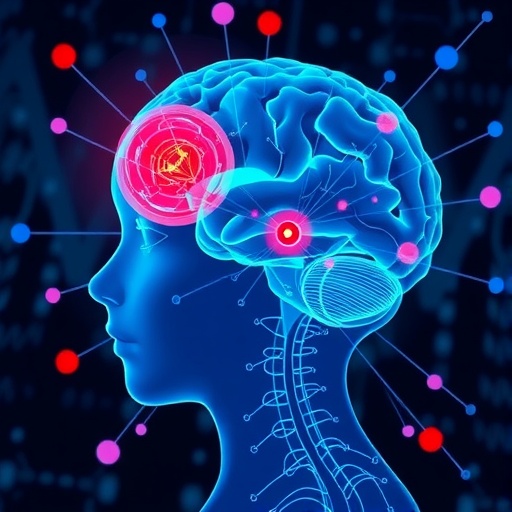
In a groundbreaking study conducted at The Hospital for Sick Children (SickKids), researchers affiliated with one of the world’s premier deep brain stimulation programs have uncovered a novel brain signal that serves as a predictive marker for imminent lapses in attention among children. This discovery not only provides profound insights into the neural mechanisms governing attention but also introduces a pioneering intervention method capable of restoring focus through precisely timed neural stimulation. The research, recently published in Nature Neuroscience, marks a seminal step forward in our understanding of attention regulation and offers promising avenues for therapeutic approaches targeting pediatric populations.
Attention is a fundamental cognitive process that shapes how we perceive, remember, and interact with our environment. Dr. George Ibrahim, a neurosurgeon and senior scientist at SickKids, emphasizes the centrality of attention in human experience and the substantial consequences engendered when this faculty is compromised. Although natural fluctuations in attention are common, children with attention deficit hyperactivity disorder (ADHD) often suffer from pronounced disruptions in attentional flexibility, which adversely affect their behavioral, social, and academic functioning. Traditional pharmacological treatments for ADHD provide limited relief, primarily because the precise neural underpinnings of attentional lapses have remained elusive.
The study’s methodological innovation lay in its utilization of attentional set-shifting tasks administered to a cohort of 30 children diagnosed with epilepsy—a condition strongly correlated with heightened ADHD risk. By employing intracranial recordings that capture electrical activity directly from deep brain structures with millisecond precision, the team monitored neural dynamics in real-time as each participant engaged with cognitively demanding stimuli. The integration of advanced machine learning algorithms enabled researchers to parse these complex datasets and identify distinct patterns of brain activity that preceded episodes of delayed attention, effectively predicting when a child was on the verge of losing focus.
One of the most striking findings of this research is the identification of a neural signature that consistently manifested immediately before slowed attention shifts. Corresponding to this temporal window, the application of targeted, brief electrical stimulation to specific brain regions markedly improved performance on attentional tasks. Remarkably, each child demonstrated enhanced engagement, responding faster and more accurately following stimulation delivered at these critical moments. This temporal specificity was paramount; off-target stimulation, even by seconds, failed to produce benefits and sometimes degraded task performance, underscoring the intricate timing involved in modulating cognitive processes.
Performance metrics were rigorously assessed using multimodal monitoring approaches, which included eye-tracking to gauge focus, reaction time measurements, and accuracy evaluations. These objective markers confirmed that short bursts of electrical stimulation could sustain attention and mitigate cognitive fatigue during tasks lasting between 20 and 30 minutes. Such findings accentuate the potential of brain-responsive neuromodulation to dynamically support attentional control in real-time, representing a paradigm shift from static, dosage-based interventions.
Expanding their inquiry beyond the epilepsy population, the investigators harnessed magnetoencephalography (MEG) to noninvasively interrogate brain activity in 37 typically developing children and 25 children diagnosed with ADHD. MEG provided a similarly sensitive neural reading of attentional fluctuations without breaching the skull, thereby broadening the study’s applicability. By homing in on the neural patterns analogous to those previously identified intracranially, researchers verified their predictive validity across these diverse groups, establishing a robust neural biomarker for imminent attentional decline.
Furthermore, the team introduced noninvasive transcranial magnetic stimulation combined with electroencephalography (TMS-EEG) to administer precisely timed magnetic pulses targeting the identified brain regions. This nonintrusive protocol yielded significant improvements in both reaction time and accuracy during performance tasks, effectively replicating the benefits observed with intracranial stimulation. This advance illuminates the realistic long-term prospects of deploying noninvasive neuromodulatory tools that can be administered in clinical or even home settings to bolster attention selectively and adaptively.
Although this research is in its nascent stage, Dr. Ibrahim articulates the profound implications of these findings for the burgeoning field of precision child health. The ability to decode individual neural signatures of attentional regulation offers a transformative opportunity to devise personalized interventions that address the unique cognitive profiles and challenges of each child. Given that most neuropsychiatric research has historically concentrated on adult populations, this work distinctively prioritizes ethical advancement and tailored therapeutic strategies for children and adolescents.
The identification and modulation of neural circuits underlying attention could revolutionize how we approach conditions like ADHD and other neurodevelopmental disorders characterized by attentional deficits. By targeting the brain’s intrinsic timing mechanisms, such interventions promise to exceed the efficacy of conventional pharmacotherapies while minimizing side effects. This innovative direction harbors the potential to elevate the quality of life for countless children globally, who struggle daily with impaired focus and its cascading consequences across educational and social domains.
Moreover, this research embodies a synergy between cutting-edge neurotechnology and machine learning that harnesses the brain’s dynamic activity rather than relying solely on static biomarkers. The precise characterization and modulation of cognitive states in real-time open the door to future closed-loop systems that could continuously monitor brain function and deliver interventions tailored to fluctuating neural needs.
The study received support from prominent Canadian funding bodies including the Canadian Institutes of Health Research (CIHR) and Brain Canada, among others, reflecting the high priority and collaborative enthusiasm for advancing neuroscience in pediatric health. The research team’s robust interdisciplinary expertise, ranging from neurosurgery and mental health science to computational modeling, has set a new standard for integrative brain research.
As the exploration of neural circuits in pediatric populations progresses, it will be essential to address ethical considerations surrounding invasive and noninvasive neurotechnologies and ensure that emerging therapies align with the best interests of children. Nevertheless, the promise demonstrated by this research heralds a transformative era in which neurological and cognitive disorders in childhood can be addressed with unprecedented precision, ultimately reshaping developmental trajectories.
To conclude, this pioneering work from SickKids spotlights a distinct neural predictive signal for attention lapses in children and validates a temporally precise electrical stimulation approach to sustain focus. The translational leap to noninvasive stimulation techniques amplifies its clinical potential, suggesting a future where adaptive brain modulation therapies become integral to managing attentional disorders. Such advances have the potential not only to improve academic and behavioral outcomes but also to reshape our understanding of attention as a dynamic and malleable neurocognitive process.
Cite Scienmag News
Cassandra Pierce. (May 13, 2026). Using Real-Time Brain Signals to Forecast and Prevent Attention Lapses in Children. Scienmag. https://scienmag.com/using-real-time-brain-signals-to-forecast-and-prevent-attention-lapses-in-children/
Cassandra Pierce. "Using Real-Time Brain Signals to Forecast and Prevent Attention Lapses in Children." Scienmag, 13 May 2026, https://scienmag.com/using-real-time-brain-signals-to-forecast-and-prevent-attention-lapses-in-children/. Accessed 4 September 2026.
Cassandra Pierce. "Using Real-Time Brain Signals to Forecast and Prevent Attention Lapses in Children." Scienmag. May 13, 2026. https://scienmag.com/using-real-time-brain-signals-to-forecast-and-prevent-attention-lapses-in-children/


