

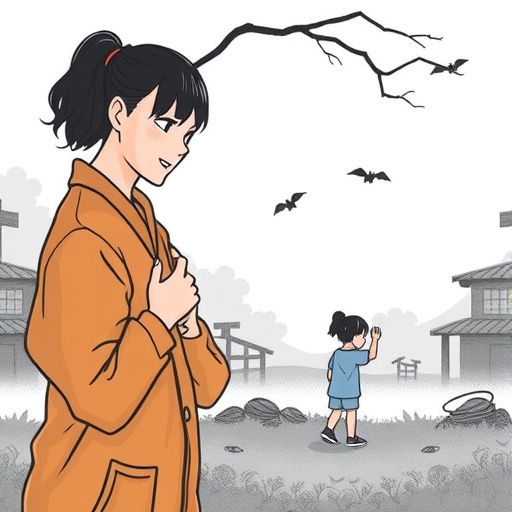
In the face of escalating climate crises, population displacements, and the multifaceted disruptions engendered by natural disasters, the challenge of promoting enduring mental health recovery has emerged as a paramount concern within global disaster psychiatry. Conventional mental health interventions predominantly emphasize acute symptom management, often prioritizing early detection and clinical treatment of psychological distress immediately following disasters. However, a pioneering correspondence from researchers affiliated with Juntendo University in Japan advocates for an expanded paradigm of disaster recovery—one that integrates community-led frameworks to foster long-term psychosocial resilience.
This innovative approach centers on the concept of ibasho, a uniquely Japanese ethos and physical manifestation encompassing spaces of belonging and collective purpose. Ibasho serves as a social infrastructure where displaced and disaster-affected individuals can reestablish continuity in daily routines, regain meaningful social roles, and nurture relational networks critical for psychological stability. The authors propose that embedding ibasho within disaster psychiatry frameworks represents a synergistic strategy aligning clinical care with culturally sensitive community engagement.
Natural disasters impart profound psychosocial trauma, fragmenting social fabric by obliterating homes, severing familial bonds, and disrupting established routines that underpin individual and collective identity. While immediate psychiatric responses aim to alleviate acute distress and prevent the onset of chronic conditions, such approaches may inadequately address the deeper, structural disruptions in community coherence and personal agency. The correspondence illuminates how ibasho’s restorative power lies in its capacity to reforge a sense of place, belonging, and contribution—elements critical to sustained mental well-being.
The empirical foundation of this approach is rooted in extensive observations from disaster-impacted regions in Japan, particularly following the catastrophic 2011 Great East Japan Earthquake and the subsequent Fukushima nuclear accident. Notably, affected areas saw marked increases in dementia-related consultations and behavioral and psychological symptoms of dementia (BPSD) among elderly populations. Conversely, communities that mobilized ibasho-style initiatives, facilitating social engagement and empowering older adults in leadership and participatory roles, demonstrated significantly more robust recovery trajectories. Such findings underscore the interplay between societal roles and neuropsychiatric resilience in post-disaster contexts.
Dr. Hidetaka Tamune, Associate Professor at Juntendo University’s Department of Psychiatry and Behavioral Science and lead author of the correspondence, articulates this nuanced understanding: “Disaster recovery transcends the mitigation of acute psychiatric symptoms; it fundamentally involves restoring social environments that confer stability, dignity, and a sense of purposeful engagement.” This statement encapsulates a shift from deficit-focused interventions to strength-based community rehabilitation models.
The integration of ibasho into established humanitarian guidelines further validates its applicability. Specifically, the Sphere Humanitarian Framework, renowned for its principles of survival with dignity, continuity of care, and coordinated support, resonates profoundly with ibasho’s community-centric philosophy. By providing locally grounded spaces that facilitate social continuity and recovery, ibasho exemplifies a culturally congruent mechanism to safeguard mental health post-disaster, nurturing both individual well-being and collective cohesion.
Distinct from centralized or top-down mental health programs, ibasho initiatives are inherently grassroots, catalyzed by the affected communities themselves. These spaces vary widely—from neighborhood gathering points to shared activity hubs—yet uniformly aim to restore agency and connectedness. The emphasis on routine and role reinstatement addresses critical psychosocial determinants often overlooked in clinical paradigms, such as social identity, usefulness, and reciprocal support.
Moreover, ibasho’s relevance is magnified within Japan’s demographic context as one of the world’s most aged societies, compounded by frequent exposure to natural hazards. The model’s success in supporting older adults with dementia and BPSD illustrates its potential applicability to other aging populations vulnerable to social isolation and cognitive decline, especially in disaster-prone regions globally.
This correspondence calls for a fundamental redefinition of recovery metrics within disaster mental health, advocating for metrics that extend beyond symptom reduction to include restoration of social fabric, cultural customs, and individual narratives of purpose. By embracing community-led, culturally embedded recovery processes, mental health professionals and policymakers can foster a more holistic, resilient response to the aftermath of disasters.
In operationalizing ibasho, key considerations include community empowerment, participatory governance, and sensitivity to local cultural norms. Trauma-informed approaches must adapt to context-specific understandings of dignity and support, where re-engagement in meaningful social roles may precede or complement direct psychological interventions. Such an approach potentially mitigates stigma and enhances uptake by aligning with intrinsic community values.
The adoption of ibasho as a conceptual and practical template has implications beyond Japan. It offers a replicable framework adaptable to diverse cultural milieus—where social connectivity and purposeful engagement are pivotal to mental health recovery. Future research should explore mechanisms of ibasho-based implementation in various sociocultural settings, examining its efficacy, scalability, and integration with existing clinical services.
Ultimately, this community-led model enriches disaster psychiatry by acknowledging that the restoration of meaningful place and social purpose is not ancillary but central to mental health resilience. The intersection of neuroscience, psychiatry, and social science embodied in the ibasho framework signals an evolution toward multidimensional, culturally responsive disaster recovery strategies that honor the complexity of human experience and the indispensability of communal bonds.
Subject of Research: Post-disaster mental health recovery and community-led psychosocial interventions
Article Title: Sound mind, sound place: ibasho and post-disaster mental health
News Publication Date: 11-Apr-2026
Web References:
https://www.thelancet.com/journals/lancet/article/PIIS0140-6736(26)00546-5/fulltext
http://dx.doi.org/10.1016/S0140-6736(26)00546-5
References:
Tamune, H., Igarashi, Y., & Kawashima, Y. (2026). Sound mind, sound place: ibasho and post-disaster mental health. The Lancet, 407(10537). https://doi.org/10.1016/S0140-6736(26)00546-5
Image Credits: Dr. Hidetaka Tamune from Juntendo University Graduate School of Medicine, Japan
Keywords: Mental health, Disaster psychiatry, Community-led recovery, Ibasho, Post-disaster mental health, Dementia, Behavioral and psychological symptoms of dementia (BPSD), Social infrastructure, Trauma-informed care, Cultural competency, Aging populations, Psychosocial resilience


