


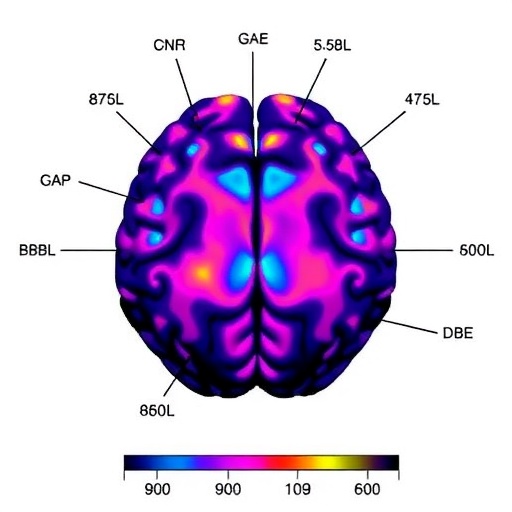
In a groundbreaking study soon to be published in npj Parkinson’s Disease, researchers Muñoz, Marlet, Dreier, and colleagues have unveiled compelling insights into the lipid landscapes of the amygdala in Parkinson’s disease (PD), distinguishing between sporadic cases and those linked to mutations in the glucocerebrosidase (GBA) gene. This pioneering work elegantly integrates advanced lipidomics with neurodegenerative pathology, revealing a complex tapestry of lipid alterations that could reshape our understanding of PD mechanisms and guide novel therapeutic avenues.
The amygdala, a cerebral structure long recognized for its role in emotional regulation and memory processing, has increasingly garnered attention for its involvement in the neuropathology of Parkinson’s disease. While PD has traditionally been characterized by dopaminergic neuron degeneration in the substantia nigra, recent research highlights widespread brain region implications, with the amygdala showing significant neuropathological changes. This study dives deep into the biochemical milieu of this critical brain region, focusing particularly on its lipid constituents which play pivotal roles in membrane dynamics, cell signaling, and neuroinflammation — processes intricately linked to PD progression.
Utilizing state-of-the-art mass spectrometry-based lipidomics, the authors have applied an untargeted approach to comprehensively profile the lipid species present in postmortem amygdala tissue samples. These samples were derived from patients with sporadic PD, GBA-associated PD, and matched controls, allowing for comparative analyses that differentiate between genetic and idiopathic disease forms. By quantifying hundreds of lipid molecules across several classes, the researchers delineated a constellation of shared and distinct lipid perturbations that accompany disease states.
One of the most striking revelations was the shared dysregulation of ceramides and sphingomyelins—key sphingolipid families implicated in cell death and inflammatory signaling—between sporadic and GBA-linked PD. Ceramides have long been known to mediate apoptotic pathways and contribute to lysosomal dysfunction, a hallmark of PD pathology. The consistent alteration of these lipid species across both PD variants underscores a potentially universal mechanism in neurodegenerative progression involving lysosomal impairment and neuroinflammation.
Yet, the study also exposed distinct lipid signatures unique to GBA-associated PD cases. Specifically, patients harboring GBA mutations exhibited elevated levels of glucosylceramides, substrates of the glucocerebrosidase enzyme encoded by the GBA gene. This accumulation reinforces the pathophysiological model wherein GBA mutations induce lysosomal enzyme deficiency, leading to substrate buildup and subsequent cellular stress. Intriguingly, these lipid elevations in the amygdala align closely with previously observed lysosomal abnormalities in substantia nigra neurons, suggesting widespread lysosomal compromise across multiple brain regions in GBA-linked PD.
Beyond sphingolipids, the researchers identified perturbations in glycerophospholipids such as phosphatidylcholines and phosphatidylethanolamines, essential for maintaining membrane integrity and facilitating neurotransmission. Alterations in these membrane lipids could disrupt synaptic function and neuronal communication within the amygdala, potentially contributing to the non-motor symptoms often observed in PD, including emotional and cognitive deficits.
The lipidomic analysis also revealed a dysregulated balance of polyunsaturated fatty acids (PUFAs), which are critical anti-inflammatory mediators and modulators of membrane fluidity. Notably, sporadic PD samples displayed a more profound reduction in PUFA-containing lipids compared to GBA-associated PD, hinting at differential inflammatory and oxidative stress conditions between these disease forms. These findings may have implications for tailored therapeutic strategies aiming to restore lipid homeostasis and attenuate neuroinflammation.
To strengthen causal interpretations, the authors incorporated bioinformatics pathway mapping, linking altered lipid profiles to disrupted metabolic cascades implicating sphingolipid metabolism, glycerophospholipid remodeling, and eicosanoid synthesis—all interconnected processes in neurodegeneration. The integration of lipidomics with pathway analysis not only solidifies mechanistic hypotheses but also pinpoints novel molecular targets for drug development.
Importantly, the research emphasizes the critical role of lysosomes in sustaining lipid equilibrium within neurons. Lysosomal dysfunction has emerged as a central contributor to PD pathogenesis, especially in the context of GBA mutations. By providing a nuanced comparison between sporadic and GBA-related lipid perturbations in the amygdala, this study delineates the extent to which lysosomal impairment may drive region-specific neurodegeneration, highlighting potential biomarkers for early diagnosis and progression monitoring.
Moreover, the findings chart a course toward personalized medicine in Parkinson’s disease. The identification of both common and distinct lipid abnormalities offers a molecular fingerprint that could assist in stratifying patients based on their genetic background and neuropathological profiles. Therapeutic interventions modulating lipid metabolism may thus be customized to target these specific disruptions, potentially enhancing treatment efficacy and reducing adverse effects.
Finally, the study’s extensive lipid dataset serves as a rich resource for the scientific community, encouraging further exploration into the lipidome’s role in neurodegenerative diseases. By pushing the boundaries of lipidomics in brain research, Muñoz and colleagues have opened a promising frontier in understanding Parkinson’s disease beyond protein aggregation and neuronal loss, underscoring the intricate biochemical webs that govern brain health and disease.
This landmark research underscores a paradigm shift in neurodegenerative disease study, where lipids are no longer mere structural components but central players in disease etiology and progression. Their dynamic regulation within brain regions like the amygdala reveals vulnerabilities that may be exploited for diagnosis, monitoring, and intervention in Parkinson’s disease, heralding a future where metabolic signatures inform clinical practice.
As the field advances, integrating lipidomic data with genomics, proteomics, and clinical phenotyping will be paramount to constructing comprehensive models of PD. Such multi-omic approaches promise to unravel the multifactorial nature of neurodegeneration, providing holistic insights that can translate into next-generation precision therapies and biomarkers.
In summary, the investigation by Muñoz et al. represents a critical leap forward in decoding the molecular intricacies of Parkinson’s disease through the lipid lens. Their meticulous characterization of shared and unique lipid perturbations in the amygdala enhances our grasp of disease heterogeneity and lays the groundwork for innovative diagnostic and therapeutic tools targeting lipid metabolism and lysosomal function in PD.
Cite Scienmag News
Cassandra Pierce. (May 11, 2026). Lipid Profiles in Amygdala: Sporadic vs GBA Parkinson’s. Scienmag. https://scienmag.com/lipid-profiles-in-amygdala-sporadic-vs-gba-parkinsons/
Cassandra Pierce. "Lipid Profiles in Amygdala: Sporadic vs GBA Parkinson’s." Scienmag, 11 May 2026, https://scienmag.com/lipid-profiles-in-amygdala-sporadic-vs-gba-parkinsons/. Accessed 3 September 2026.
Cassandra Pierce. "Lipid Profiles in Amygdala: Sporadic vs GBA Parkinson’s." Scienmag. May 11, 2026. https://scienmag.com/lipid-profiles-in-amygdala-sporadic-vs-gba-parkinsons/


