


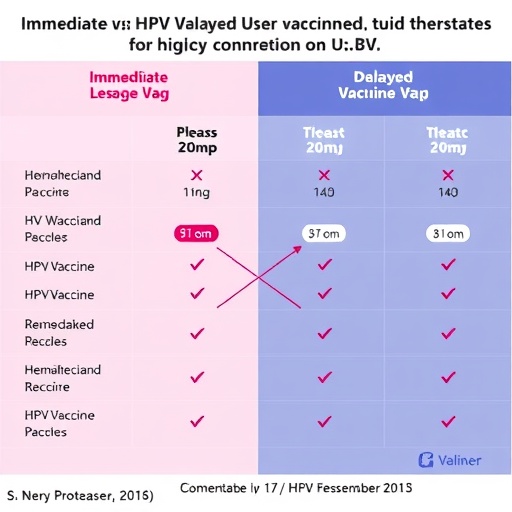
In a groundbreaking clinical trial conducted in Kenya, researchers have unveiled pivotal insights into the effectiveness and longevity of single-dose human papillomavirus (HPV) vaccination strategies. Published in Nature Communications in 2026, the study presents a randomized, blinded, cross-over clinical trial that meticulously compares immediate versus delayed administration of a single-dose HPV vaccine among young women. This research advances the global understanding of HPV vaccination timing, with profound implications for cervical cancer prevention worldwide.
HPV is recognized as a leading cause of cervical cancer, a disease responsible for significant morbidity and mortality among women globally, particularly in low- and middle-income countries. While the advent of HPV vaccines revolutionized preventative measures, logistical challenges and vaccine availability have hindered widespread immunization efforts. Single-dose administration has emerged as a promising solution to enhance coverage and reduce costs, but questions remain about the optimal timing to maximize efficacy and long-term protection.
The trial enrolled young women in Kenya, a region that bears a disproportionate burden of HPV-related diseases, to rigorously examine whether vaccinating immediately at enrollment or delaying a single vaccine dose would influence the persistence of infection with high-risk HPV types. The design employed a cross-over methodology, ensuring participants received vaccinations at different intervals in a blinded fashion, minimizing bias and enhancing the robustness of findings.
Over the course of the study, participants were regularly monitored for persistent HPV infection, defined as the sustained presence of high-risk HPV DNA at multiple time points post-vaccination. This biomarker serves as a surrogate for potential progression to cervical precancer or cancer, thereby providing a meaningful indicator of vaccine performance. The researchers employed advanced molecular techniques for HPV typing, ensuring precise identification of viral persistence and clearance.
Remarkably, findings revealed that immediate administration of a single vaccine dose conferred superior protection against persistent infection compared to delayed dosing. Participants vaccinated promptly exhibited significantly lower rates of persistent high-risk HPV infections over the follow-up period. This suggests that immediate vaccination triggers a more robust and durable immune response capable of preventing the establishment and maintenance of viral infection.
Immunological analyses further illuminated mechanisms underpinning these clinical outcomes. Early vaccination was associated with heightened neutralizing antibody titers and sustained cellular immunity targeting vaccine components. These immune correlates are critical for ongoing protection against HPV acquisition and persistence, highlighting the biological rationale for immediate vaccine deployment in young women at risk.
The durability of protection emerged as a particularly noteworthy finding. Where concerns have persisted regarding the longevity of immunity from single-dose HPV vaccination, this study demonstrates sustained efficacy over extended follow-up intervals. The durability of protection supports the feasibility of simplifying vaccination schedules without sacrificing long-term benefits, a potential game-changer for public health strategies in resource-limited settings.
The trial’s implications extend beyond Kenya, providing data that could universally inform HPV vaccination policies. By validating single-dose strategies with immediate administration, health authorities might reconsider current multi-dose protocols, thereby accelerating vaccination coverage and enhancing cost-effectiveness. This shift could dramatically reduce the incidence of HPV-related cancers globally, particularly in under-resourced regions where vaccination rates remain suboptimal.
Moreover, the blinded, cross-over design of the trial addresses several methodological challenges that have limited prior research in this domain. The rigorous control of confounding variables and participant blinding reduce potential biases, ensuring the credibility and reproducibility of results. This high-quality evidence is likely to resonate strongly with the scientific community and policymakers alike.
The study also highlights the importance of targeted interventions in populations bearing disproportionate HPV-related disease burdens. By focusing on young Kenyan women, the trial acknowledges the urgent need to tailor vaccination strategies according to epidemiological realities and healthcare infrastructures. This approach enhances the relevance and impact of the findings for real-world implementation.
In practical terms, single-dose immediate HPV vaccination could alleviate cold chain and logistical constraints that complicate multi-dose regimens. Simplifying schedules facilitates outreach in remote communities and reduces dropout rates between vaccine doses, thereby improving overall program effectiveness. This streamlining aligns with global health goals of equitable vaccine access and cervical cancer elimination.
However, the study also underscores the need for ongoing surveillance to monitor vaccine impact and potential waning immunity over time, particularly in diverse demographic and geographic contexts. Continuous evaluation will ensure that vaccination programs remain adaptive and responsive to emerging data, sustaining their success long term.
While the focus was on single-dose timelines, the research invites further exploration of combination strategies, including integration with other adolescent vaccines and screening efforts. Such comprehensive approaches might amplify preventive benefits, leveraging synergies within public health initiatives to combat cervical cancer more broadly.
The significance of these findings resonates against the backdrop of evolving HPV vaccination guidelines. Global agencies such as the World Health Organization may integrate this evidence into updated recommendations, catalyzing policy shifts that reflect contemporary scientific understanding and optimize health outcomes.
In summary, this landmark clinical trial conducted in Kenya decisively demonstrates that immediate single-dose HPV vaccination offers more efficacious and durable protection against persistent HPV infection compared to delayed administration. The implications for cervical cancer prevention are profound, heralding a new era in vaccine strategy that prioritizes accessibility, efficacy, and longevity. As this research disseminates through the scientific community and beyond, it is poised to transform public health paradigms, saving countless lives worldwide.
Cite Scienmag News
Kristina Jarvis. (May 11, 2026). Immediate vs. Delayed HPV Vaccine: Efficacy Compared. Scienmag. https://scienmag.com/immediate-vs-delayed-hpv-vaccine-efficacy-compared/
Kristina Jarvis. "Immediate vs. Delayed HPV Vaccine: Efficacy Compared." Scienmag, 11 May 2026, https://scienmag.com/immediate-vs-delayed-hpv-vaccine-efficacy-compared/. Accessed 3 September 2026.
Kristina Jarvis. "Immediate vs. Delayed HPV Vaccine: Efficacy Compared." Scienmag. May 11, 2026. https://scienmag.com/immediate-vs-delayed-hpv-vaccine-efficacy-compared/


