

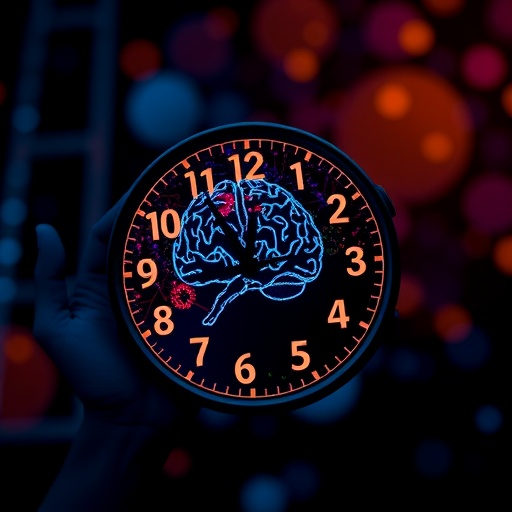
In recent years, the intricate relationship between circadian rhythms and neurodegenerative disorders has captivated the scientific community’s attention, revealing new paradigms in our understanding of disease progression and therapeutic interventions. The study published in npj Parkinson’s Disease by Liu, Ling, Sun, and colleagues in 2026 represents a significant leap forward in elucidating how the biological clock influences Parkinson’s disease (PD), both in its underlying mechanisms and potential chronotherapy applications. Their research not only dissects the complex molecular interplay between the circadian system and the pathophysiology of PD but also paves the way for novel treatment strategies meticulously timed to the biological rhythms of patients.
The concept of the biological clock, or circadian rhythm, is foundational to this investigation. These endogenous, approximately 24-hour cycles govern a plethora of physiological processes, such as hormone secretion, metabolism, and sleep-wake patterns. At the cellular level, circadian rhythms are regulated by clock genes that orchestrate transcriptional-translational feedback loops, thereby maintaining homeostasis. Disruptions in these rhythms have been increasingly implicated in the exacerbation of neurodegenerative diseases, including Parkinson’s disease. Liu and colleagues emphasize that understanding the mechanistic cross-talk between circadian dysfunction and PD pathogenesis not only illuminates the disease’s etiology but also unravels temporal windows for optimized therapeutic intervention.
Parkinson’s disease, characterized primarily by the progressive loss of dopaminergic neurons in the substantia nigra and the aggregation of alpha-synuclein, presents with motor symptoms such as tremor, rigidity, and bradykinesia. However, non-motor symptoms, particularly sleep disturbances, are common and often precede motor deficits by years. The study highlights that these early circadian disruptions are not merely symptoms but may actively contribute to neuronal vulnerability. The authors outline evidence demonstrating altered expression of core clock genes in both animal models and PD patients, suggesting that the circadian machinery’s impairment could exacerbate neurodegeneration through mechanisms involving oxidative stress, mitochondrial dysfunction, and neuroinflammation.
One pivotal revelation of Liu et al. is the bidirectional relationship between circadian dysregulation and dopamine metabolism. Dopamine itself modulates circadian rhythms by influencing clock gene expression within the brain’s master clock located in the suprachiasmatic nucleus, as well as peripheral oscillators. Conversely, a disrupted circadian system can lead to dysregulated dopamine synthesis and release, creating a pathological feedback loop. This interplay, the authors argue, is central to the progression of Parkinsonian symptoms and may explain the variability in symptom severity linked to time-of-day fluctuations observed clinically. Such insights underscore the importance of incorporating temporal dynamics into therapeutic approaches.
Delving deeper into molecular pathways, the research identifies several clock genes, such as BMAL1, PER2, and CLOCK, whose altered expressions correlate with alpha-synuclein pathology and dopaminergic neuronal loss. The dysregulation of these genes affects autophagic processes critical for cellular clearance, thereby promoting toxic protein aggregation. Furthermore, the circadian system’s disruption impairs mitochondrial bioenergetics and augments reactive oxygen species production, which collectively accentuate cellular stress. These mechanistic insights provide a compelling narrative that circadian disturbances are not merely epiphenomena but active drivers of PD pathogenesis.
Beyond mechanistic understanding, the study pioneers comprehensive chronotherapy strategies tailored to the circadian architecture of Parkinson’s patients. Chronotherapy refers to the timing of treatment administration to align with biological rhythms to maximize efficacy and minimize side effects. Liu and colleagues discuss how traditional pharmacological agents, such as levodopa and dopaminergic agonists, exhibit variable therapeutic outcomes contingent on administration timing. By integrating chronobiological principles, adjustment of drug delivery schedules could enhance symptom control and reduce motor fluctuations. This personalized medicine approach represents a paradigm shift in managing a deceptively complex disease.
The potential of non-pharmacological interventions, including light therapy and scheduled exercise, is also examined within the chronotherapeutic framework. Exposure to appropriately timed bright light has demonstrated the capacity to resynchronize disrupted circadian rhythms, improving sleep quality and motor function in PD patients. Similarly, exercise regimens synchronized to patients’ biological time may bolster neuroprotective mechanisms and enhance dopaminergic neuron resilience. The authors advocate for a multifaceted therapeutic model combining pharmacological and lifestyle modifications aligned with circadian timing to achieve optimal disease management.
Intriguingly, the paper explores emerging molecular targets related to circadian regulation that may yield novel therapeutic avenues. For instance, modulation of REV-ERBα and ROR nuclear receptors, integral components of the clock gene network, show promise in mitigating neuroinflammation and oxidative stress—key contributors to PD progression. These targets may allow for the development of drugs that specifically recalibrate circadian rhythms at a fundamental molecular level, offering disease-modifying potential beyond symptomatic relief. This approach heralds a new frontier in PD treatment grounded in chronobiology.
The translational implications of this research extend beyond Parkinson’s disease, underscoring generalizable principles applicable to other neurodegenerative disorders marked by circadian disruptions, such as Alzheimer’s disease and Huntington’s disease. By framing neurodegeneration within a circadian context, Liu and colleagues provide a compelling call to reevaluate clinical trials and therapeutic protocols through the temporal lens. Such a perspective emphasizes that timing is a critical yet underappreciated variable in both disease pathogenesis and treatment response.
Importantly, the authors acknowledge the challenges inherent in translating circadian insights into clinical practice. Individual variability in circadian phenotypes, influenced by genetics, age, and environmental factors, complicates the development of universally applicable chronotherapy regimens. Moreover, accurately assessing and monitoring biological rhythms in patients with advanced neurodegeneration remains a technical hurdle. Despite these obstacles, Liu et al. stress that advances in wearable technologies and circadian biomarker identification provide promising tools to overcome these barriers and personalize treatment strategies effectively.
Furthermore, the study raises critical questions about the role of circadian rhythm disruptions as early biomarkers for Parkinson’s disease diagnosis and progression monitoring. Given that circadian impairments and sleep disturbances frequently manifest before motor symptoms, integrating circadian assessments into routine neurological evaluations could enable earlier detection and intervention. The authors propose leveraging actigraphy, polysomnography, and molecular profiling to develop composite circadian biomarkers, enhancing the predictive power and temporal precision of diagnostic frameworks.
Liu and colleagues also delve into the interplay between circadian rhythms and inflammation in PD, revealing that temporal misalignment exacerbates neuroinflammatory cascades. Microglia, the brain’s resident immune cells, exhibit circadian patterns in their activation states, modulated by clock gene expression. Disruptions in these patterns potentiate chronic inflammation, a well-established driver of neuronal injury in PD. Targeting circadian regulation in immune responses thereby emerges as an innovative angle for therapeutic intervention, integrating neuroimmunology with chronobiology.
The convergence of circadian biology and neurodegeneration extends to the gut-brain axis, a burgeoning area of PD research highlighted in the study. Circadian rhythms govern gastrointestinal motility, microbial composition, and barrier integrity, all of which are disrupted in PD and linked to disease progression. The authors propose that circadian misalignment in the gut may exacerbate systemic inflammation and alpha-synuclein propagation from the periphery to the central nervous system. This insight underscores the potential for chronotherapy approaches aimed at normalizing gut rhythms to mitigate disease severity.
Technological advancements enabling high-throughput chronobiological analyses have facilitated the comprehensive profiling presented in the paper. Utilizing multi-omics approaches, including transcriptomics, proteomics, and metabolomics, allows for a systemic evaluation of circadian perturbations in PD models. Liu and colleagues integrate these datasets to construct temporal disease landscapes, identifying critical nodes and pathways disrupted over the circadian cycle. Such integrative frameworks are instrumental in pinpointing optimal intervention windows and refining therapeutic targets within the temporal dimension.
In conclusion, Liu et al.’s 2026 study in npj Parkinson’s Disease represents a seminal contribution to the field, advancing our understanding of the biological clock’s profound influence on Parkinson’s disease mechanisms and treatment. By illuminating the molecular underpinnings of circadian disruptions and showcasing the potential of chronotherapy, this research charts a transformative path towards temporally optimized, personalized medicine in neurodegeneration. As the scientific community embraces this chronobiological perspective, new horizons emerge for mitigating the burden of Parkinson’s disease and potentially other neurodegenerative disorders through the artful synchronization of therapy with the rhythms of life.
Subject of Research: The interplay between circadian rhythms (biological clock) and Parkinson’s disease, focusing on mechanisms of disease progression and therapeutic strategies through chronotherapy.
Article Title: The biological clock in Parkinson’s disease: mechanisms and chronotherapy.
Article References:
Liu, H., Ling, H., Sun, K. et al. The biological clock in parkinson’s disease: mechanisms and chronotherapy. npj Parkinsons Dis. (2026). https://doi.org/10.1038/s41531-026-01379-8
Image Credits: AI Generated


