


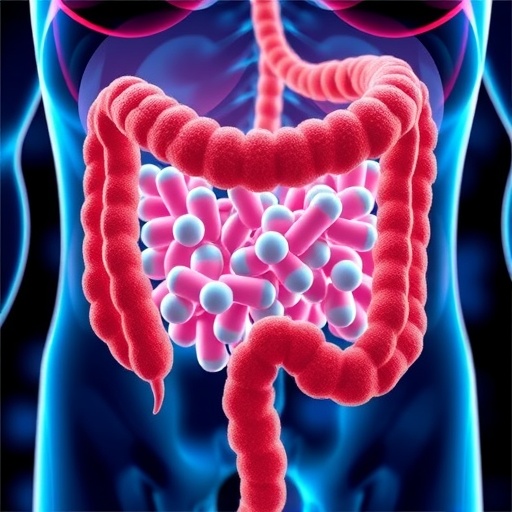
For decades, the understanding of metformin—the world’s most widely prescribed medication for Type 2 diabetes—has centered on its ability to suppress hepatic glucose production. This prevailing view posited that metformin operates primarily in the liver, targeting pathways responsible for glucose synthesis. However, groundbreaking research conducted by Northwestern University challenges this dogma, revealing that metformin’s primary locus of action is not the liver, but the gut. Through a sophisticated array of experiments conducted in a murine model, the study elucidates how metformin modulates glucose metabolism by directly influencing intestinal cells, marking a significant paradigm shift in diabetes pharmacology.
The human body depends heavily on glucose as a rapid and flexible source of energy. Nonetheless, persistent hyperglycemia leads to a cascade of detrimental effects, including insulin resistance and vascular complications, which are hallmarks of diabetes progression. Intriguingly, metformin exerts its therapeutic effect by attenuating mitochondrial energy production within enterocytes—the absorptive cells of the intestinal epithelium. This inhibition of mitochondrial complex I compels these gut cells to increase their glucose uptake and utilization, effectively transforming the intestine into a metabolic sink that lowers systemic blood glucose concentrations.
Navdeep Chandel, professor of biochemistry and molecular genetics at Northwestern University Feinberg School of Medicine and the study’s corresponding author, underscores the importance of the gut in systemic glucose regulation. “Metformin essentially helps the intestine suck the glucose out of the bloodstream,” Chandel explains, highlighting a previously unrecognized role of the intestinal epithelium. This discovery repositions the gut from a passive organ of nutrient absorption to an active participant in glycemic control, expanding our molecular understanding of how metformin exerts its multifaceted effects.
Previous research from Chandel’s laboratory had delineated metformin’s inhibitory action on mitochondrial complex I, a flavoprotein enzyme that initiates electron transport chain activity essential for oxidative phosphorylation. Blocking this complex reduces ATP generation, promoting a metabolic shift that favors glycolysis and increased glucose consumption by the cells. The current study advances those findings by using genetically engineered mice that express NDI1, a yeast-derived mitochondrial enzyme resistant to metformin inhibition, exclusively in their intestinal epithelial cells. This ingenious genetic approach demonstrated that when mitochondrial complex I is shielded in the gut, metformin’s glucose-lowering effects are significantly diminished, firmly establishing the gut mitochondria as a critical therapeutic target.
The implications of this gut-centric mechanism extend far beyond metformin alone. The study also explored parallels with berberine, a plant-derived alkaloid that has gained traction on social media under the moniker “nature’s Ozempic.” Like metformin, berberine appears to inhibit mitochondrial complex I within the intestine, triggering similar metabolic effects. While berberine enjoys popularity as an over-the-counter glucose regulator, Chandel cautions that decades of rigorous clinical trials undergird metformin’s safety and efficacy profile, which supplements like berberine lack. His advice is clear: “If you’re going to use berberine, you may as well use the real deal.”
A host of clinical phenomena observed in metformin-treated patients now find compelling mechanistic explanations through this gut-focused lens. For instance, the drug’s tendency to reduce postprandial blood sugar spikes aligns with the gut’s heightened capacity to sequester glucose post-ingestion. Furthermore, metformin users exhibit decreased circulating levels of citrulline, an amino acid synthesized exclusively by mitochondrial enzymes in enterocytes. This drop mirrors the mitochondrial inhibition taking place in these cells. Additionally, the study connects metformin use to elevated levels of growth differentiation factor 15 (GDF15), a hormone secreted by the gut in response to mitochondrial stress. GDF15 acts on the brain to suppress appetite and promote weight loss, embodying the interconnectedness of gut metabolism and whole-body energy homeostasis.
This novel insight underscores the potency of targeting mitochondrial metabolism as a pharmacological strategy. Mitochondria, as cellular powerhouses, represent nodes of immense regulatory influence. “People have always wondered how one drug can do 10 things,” says Chandel. “Well, it can do that if the drug is hitting a big node in a cell, and hitting mitochondria in a cell is a big node.” By modulating mitochondrial function within intestinal cells, metformin initiates a cascade of systemic metabolic benefits, highlighting the elegance of this molecular intervention.
From a methodological standpoint, the study’s use of NDI1-expressing transgenic mice is particularly noteworthy. This approach allows selective uncoupling of metformin’s action in gut cells while leaving other tissues susceptible. In this system, the resistance of intestinal mitochondria to metformin led to a notable attenuation of the drug’s antihyperglycemic action, cementing the hypothesis that mitochondrial complex I inhibition in the gut is essential for the therapeutic effects observed. This refined perspective invites further exploration into tissue-specific drug targeting to maximize efficacy and minimize off-target effects.
Beyond the fundamental science, the findings stimulate a reevaluation of therapeutic paradigms for Type 2 diabetes. The gut, traditionally overlooked in glucose homeostasis strategies, emerges as a compelling target for next-generation interventions. Whether through pharmacological agents, dietary supplements, or microbiome modulation, harnessing the metabolic machinery within intestinal tissues could revolutionize diabetes management. Such an approach could offer improved glycemic control with potentially fewer systemic side effects.
Furthermore, the study may recalibrate ongoing debates about the role of supplements versus prescription medications in metabolic health. While natural compounds like berberine show promise, their mechanisms, safety profiles, and clinical efficacy warrant rigorous evaluation in the shadow of established drugs like metformin. This research adds a layer of molecular clarity that can guide both clinicians and patients in navigating these choices.
In sum, this study heralds a new era in understanding metformin’s multifactorial actions and underscores the centrality of gut mitochondria in systemic glucose regulation. By challenging entrenched scientific assumptions and employing sophisticated genetic models, the work not only elucidates a critical facet of diabetes pharmacotherapy but also opens avenues for innovative strategies exploiting intestinal metabolism. As the scientific community digests these insights, one thing is clear: the gut should no longer be sidelined in the landscape of diabetes research and therapeutics.
News Publication Date: May 8, 2026.
Web References:
Cite Scienmag News
Courtney Benton. (May 8, 2026). Metformin’s True Strength Lies in the Gut, New Research Reveals. Scienmag. https://scienmag.com/metformins-true-strength-lies-in-the-gut-new-research-reveals/
Courtney Benton. "Metformin’s True Strength Lies in the Gut, New Research Reveals." Scienmag, 8 May 2026, https://scienmag.com/metformins-true-strength-lies-in-the-gut-new-research-reveals/. Accessed 4 September 2026.
Courtney Benton. "Metformin’s True Strength Lies in the Gut, New Research Reveals." Scienmag. May 8, 2026. https://scienmag.com/metformins-true-strength-lies-in-the-gut-new-research-reveals/


