


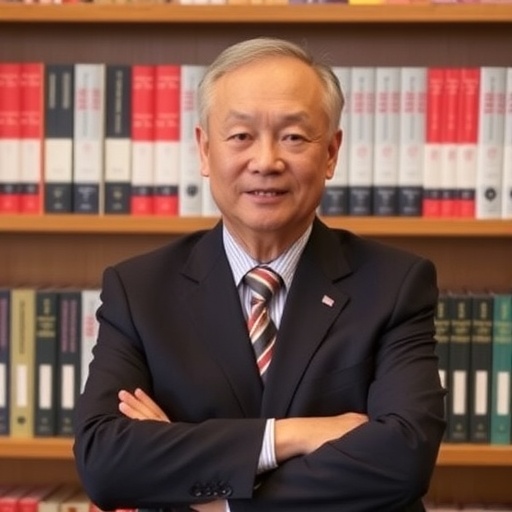
As China accelerates its trajectory toward becoming a global education powerhouse by 2035, academic focus within the field of education research is undergoing a profound transformation. This strategic national goal serves not only as an ambitious vision but also as a litmus test for the relevance and efficacy of educational scholarship. The reality of this mission demands that educational theory evolves beyond abstract models toward frameworks intimately connected with the practical and contextual realities faced by educators and policymakers across the country. Spearheading this intellectual endeavor, Professor Ke Zheng and his research team have introduced the “Education Powerhouse Research Series,” an ambitious collection designed to critically explore and construct pathways for China’s transition from a quantitatively vast education system into one of unparalleled qualitative strength.
At the heart of this research series lies a fundamental challenge to the prevailing academic orthodoxy: the call to root theory in authentic practice. In his editorial introduction, Professor Zheng critiques the prevailing international model of knowledge validation, which often prioritizes global prestige and theoretical novelty over genuine practical applicability. The imperative for China’s education research, he argues, must pivot towards cultivating a distinctly Chinese knowledge system — one that emphasizes utility and grounded relevance in reforming educational structures and improving outcomes at every level. This approach disrupts established epistemic paradigms by demanding that theory be directly derived from and continually informed by empirical realities in Chinese classrooms and institutions.
One of the core tensions highlighted by Professor Zheng is the conspicuous gap between educational researchers and frontline practitioners. Too frequently, academic inquiries are criticized by teachers and school administrators for lacking resonance with the complex, day-to-day challenges they face. Contrary to allegations of excessive abstraction, the issue often lies in the misalignment of research scenarios with authentic educational contexts. Professors and researchers, in many cases, construct theoretical frameworks detached from the lived experience of educators, thereby rendering their findings theoretically elegant yet practically impotent. Zheng proposes a cycle of knowledge extraction that moves from practice to theory and back again—a dynamic feedback loop where empirical knowledge generated within schools is theorized rigorously and then redeployed towards systemic improvement.
The series also confronts a pervasive skepticism within academic circles that real-world educational problems are inherently “shallow” and thus unworthy of deep theoretical engagement. For instance, topics like multi-campus configurations or student workload reduction are sometimes dismissed as administrative or logistical concerns rather than profound educational challenges. However, Professor Zheng challenges this assumption by drawing an analogy with the early development of physics, noting how foundational concepts such as “temperature” once lacked precision and depth until the collective research community committed to rigorous measurement and theoretical maturation. Similarly, educational issues that appear mundane today harbor latent complexities demanding sustained scholarly exploration and methodological innovation to uncover their deeper dynamics.
Structurally, the “Education Powerhouse Research Series” is organized around two pivotal domains: theoretical inquiry and practical reform. The first domain undertakes foundational research to decode the essence of what it means to be an education powerhouse — interrogating historical precedents, socio-political dynamics, and global comparative insights. It asks fundamental questions about the nature and necessity of building education strength amidst China’s unique demographic and development context. The second domain translates these insights into actionable reforms across multiple strands of the educational spectrum, including primary education, tertiary institutions, vocational training, and international educational collaboration. The synergy between these dual domains fosters a systemic and comprehensive understanding essential for China’s ambitious educational transformation.
To maintain the vitality and relevance of this ongoing project, the series adheres to what is termed the “Three Opens” philosophy: openness in topic selection, openness in timeline, and openness in academic authority. By encouraging a broad spectrum of inquiries and welcoming voices from both established experts and emerging scholars, the initiative dismantles traditional gatekeeping mechanisms in academic publishing. This dynamic creates a vibrant intellectual ecosystem that continuously adapts to new challenges and integrates diverse theoretical perspectives and practical insights. Furthermore, the flexible timeline ensures that the research can evolve organically without the constraints of rigid publication deadlines, allowing for deeper and more reflective scholarship.
Institutional endorsement for the series has been robust. It has been recognized as a “Shanghai Education Modernization Key Project” by the Shanghai Municipal Education Commission, affirming its strategic importance at the municipal and national levels. Additionally, key departments within China’s Ministry of Education have taken note of the work, underscoring its alignment with broader governmental priorities related to educational modernization and reform. This official acknowledgment suggests that the series is positioned not just as an academic endeavor but as an influential resource feeding into national policy formulation and implementation, bridging the worlds of scholarship and governance.
Beyond its immediate national context, the series aspires to contribute significantly to global educational governance by offering what Professor Zheng refers to as “Chinese Wisdom.” This term encapsulates a theoretical framework that, while deeply rooted in the socio-cultural and political realities of China, also possesses universal applicability and relevance. By demonstrating how a large, historically complex education system can be reengineered holistically, this research challenges dominant Euro-American paradigms and enriches the global conversation on educational reform. It advances a “locally grounded, globally oriented” epistemic model that other nations grappling with similar challenges might draw upon.
The scholarly rigor embedded in the series is matched by a commitment to practical utility, reflecting Professor Zheng’s insistence that educational research serve as a transformative instrument rather than an academic exercise in isolation. This decision challenges researchers to rethink methodologies, incorporating mixed-methods approaches that emphasize qualitative data derived from classroom observations, teacher interviews, and policy impact analysis alongside quantitative metrics. The outcome is a set of frameworks and models that are both theoretically robust and empirically validated, capable of guiding reforms that respond effectively to China’s educational realities.
Importantly, this initiative seeks to neutralize the traditional divide within Chinese education research between policy-driven and practice-driven inquiry. By cultivating a symbiotic relationship between the two, the series fosters a multidisciplinary dialogue that integrates insights from curriculum design, educational psychology, institutional management, and international benchmarking. This interdisciplinarity reflects the complexity of educational ecosystems and the need for holistic strategies to elevate China’s education system to new heights of excellence and innovation.
In essence, the “Education Powerhouse Research Series” represents more than a mere academic collection; it embodies a strategic intellectual movement. Its emphasis on practical relevance, methodological rigor, openness, and systemic insight positions it as a vanguard initiative shaping not only China’s educational landscape but also broader global perspectives on how education systems can evolve in the face of socio-economic transformation.
The strategic importance of this project aligns with China’s long-term national development goals, recognizing education as the foundational pillar supporting innovation, social equity, and economic vitality. By rigorously interrogating and restructuring the knowledge production mechanisms around education, this series contributes to a new epistemology in educational research—one that harmonizes tradition with innovation, theory with practice, and national priorities with global aspirations.
As this endeavor advances, it promises to generate transformative knowledge capable of reshaping curricula, educator training, institutional governance, and international educational exchanges. For readers and practitioners committed to the future of education, Professor Ke Zheng’s series offers a compelling blueprint grounded in thoughtful scholarship and strategic vision, urging the global academic community to reconsider the relationships between knowledge, practice, and policy in building powerful education systems.
News Publication Date:
Not provided
Web References:
https://mediasvc.eurekalert.org/Api/v1/Multimedia/82d4ac87-e71d-47c3-a9c1-4cf098177c54/Rendition/low-res/Content/Public
Cite Scienmag News
Courtney Benton. (May 7, 2026). Professor Ke Zheng Unveils New Book Series on Developing a Leading Education Powerhouse. Scienmag. https://scienmag.com/professor-ke-zheng-unveils-new-book-series-on-developing-a-leading-education-powerhouse/
Courtney Benton. "Professor Ke Zheng Unveils New Book Series on Developing a Leading Education Powerhouse." Scienmag, 7 May 2026, https://scienmag.com/professor-ke-zheng-unveils-new-book-series-on-developing-a-leading-education-powerhouse/. Accessed 4 September 2026.
Courtney Benton. "Professor Ke Zheng Unveils New Book Series on Developing a Leading Education Powerhouse." Scienmag. May 7, 2026. https://scienmag.com/professor-ke-zheng-unveils-new-book-series-on-developing-a-leading-education-powerhouse/


