


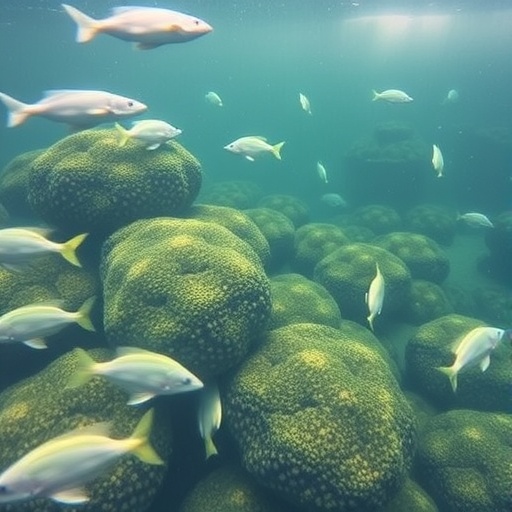
A groundbreaking study conducted by marine ecologists at Swansea University in collaboration with the conservation charity Project Seagrass has unveiled alarming evidence that nitrogen enrichment is profoundly depleting marine biodiversity across the British Isles’ coastal ecosystems. This extensive investigation, recently published in the respected journal Global Ecology and Conservation, underscores the ramifications of nutrient pollution on the intricate balance of life within seagrass meadows—a vital yet vulnerable component of coastal marine habitats.
Eutrophication, a process characterized by excessive nutrient loading primarily through nitrogen and phosphorus compounds, has long been implicated in degrading aquatic environments worldwide. However, this new research provides a rare, large-scale quantification of how such nutrient over-enrichment precisely alters biodiversity at the fine spatial scale of coastal seagrass habitats. Unlike prior studies that often examined nutrient impacts in isolation or within limited regions, this work integrates data from 16 distinct marine environments—from the rough, frigid waters of the Orkney Islands and Firth of Forth to the relatively sheltered Solent and Skomer Island—offering an unprecedented panorama of regional nutrient effects.
The principal drivers of nutrient pollution identified include sewage discharge, agricultural runoff, and inadequate land management practices, which collectively elevate nitrogen concentrations in coastal waters to troubling levels. Notably, the researchers report that incremental increases in nitrogen are tightly correlated with dramatic declines in both the abundance and diversity of seagrass-associated faunal assemblages. Quantitative analysis reveals that elevated nitrogen loads can result in a staggering approximate 90 percent reduction in the biomass of marine organisms per unit area of habitat, pointing toward a severe contraction in ecosystem functionality and complexity.
This correlation carries stark ecological implications, as seagrass meadows serve as foundational species providing food, shelter, and nursery grounds for myriad marine species while facilitating carbon sequestration and sediment stabilization. The disruption of these habitats through nutrient-induced biodiversity loss could cascade through trophic networks, compromising ecosystem resilience and services. The findings confirm that nutrient-driven eutrophication remains one of the most critical challenges facing marine biodiversity conservation efforts in temperate coastal systems.
One of the striking conclusions of this study is the dominant role of nitrogen as a driver of ecological change in these environments, often eclipsing other physical and environmental variables traditionally thought to influence biodiversity. Interestingly, physical features of the seagrass vegetation such as leaf length, density, and biomass were found to have limited predictive power for diversity patterns when juxtaposed against nutrient concentrations. This suggests that nutrient regimes exert a more profound, overriding influence on marine community structure than previously appreciated.
In addition to nitrogen’s pervasive role, the study highlights site-specific sensitivity to nutrient stress. Coastal and lagoon environments manifested the most acute responses, with lagoons particularly vulnerable to phosphorus enrichment, which had devastating effects on local marine life. These distinct responses underscore the complexity of nutrient dynamics where biogeochemical conditions, hydrodynamics, and ecological traits interact to mediate biodiversity outcomes. Some estuarine zones showed tolerance to moderate nutrient inputs, but further enrichment exacerbated biodiversity loss in already stressed areas, indicating non-linear and context-dependent effects.
Through standardized sampling coupled with sophisticated mixed-effects modeling, the team was able to disentangle nutrient impacts from confounding environmental variables, providing robust evidence that simple regional conservation targets may be inadequate. The nuanced and heterogeneous nature of nutrient-driven biodiversity declines necessitates management strategies tailored to the specific ecological and environmental contexts of each site to optimize outcomes.
The implications of these findings extend beyond local conservation efforts: they contribute critical empirical support to the growing recognition that planetary boundaries concerning nitrogen and phosphorus flows have been exceeded globally, threatening marine ecosystem services and resilience on a planetary scale. Effective mitigation of eutrophication will require integrated policies that address nutrient sources holistically—from improving sewage treatment infrastructure to promoting sustainable agricultural practices and land use planning.
The study also challenges existing paradigms emphasizing habitat physical complexity as primary in maintaining biodiversity. Instead, nutrient pollution emerges as an often overlooked but decisive factor undermining coastal marine life, regardless of apparently intact vegetation structures. This recognition calls for a recalibration of monitoring and management frameworks to prioritize nutrient flux controls alongside habitat protection.
As anthropogenic pressures on coastal systems intensify amid climate change, understanding and mitigating nutrient pollution’s impacts will be vital to preserving marine biodiversity and the myriad ecological functions it supports. The research team advocates for enhanced, site-specific nutrient reduction initiatives informed by continuous monitoring to adaptively manage sensitive seagrass habitats and related ecosystems, with the ultimate aim of halting and reversing biodiversity decline in UK waters.
This investigation exemplifies the power of interdisciplinary approaches combining ecological survey techniques with cutting-edge modeling to unravel complex environmental challenges. It also spotlights seagrass meadows’ pivotal role as indicators and integrators of ecosystem health in a changing oceanic environment, calling for their urgent inclusion in conservation priorities and marine spatial planning frameworks.
The new insights generated lay the foundation for informed policy action emphasizing nutrient management as a key lever in marine conservation strategies going forward. As eutrophication continues to threaten not just marine biodiversity but also human livelihoods dependent on healthy coastal ecosystems, studies like this represent an essential step in aligning scientific understanding with effective environmental stewardship.
Such comprehensive evidence-based contributions from Swansea University and Project Seagrass offer a roadmap for other regions grappling with nutrient pollution, emphasizing the global relevance of local-scale biodiversity monitoring and management. The future of coastal marine ecosystems hinges on recognizing and addressing the potent influence of nutrient enrichment documented in this seminal research.
News Publication Date: 10-Apr-2026
Web References:
- https://www.sciencedirect.com/science/article/pii/S2351989426001137
- http://dx.doi.org/10.1016/j.gecco.2026.e04164
References:
Swansea University, Project Seagrass. Increasing nutrients negatively impact seagrass-associated biodiversity. Global Ecology and Conservation, 10-Apr-2026. DOI: 10.1016/j.gecco.2026.e04164
Cite Scienmag News
Margaret Porter. (May 6, 2026). Nitrogen Pollution Drives Major Biodiversity Loss in UK Coastal Waters. Scienmag. https://scienmag.com/nitrogen-pollution-drives-major-biodiversity-loss-in-uk-coastal-waters/
Margaret Porter. "Nitrogen Pollution Drives Major Biodiversity Loss in UK Coastal Waters." Scienmag, 6 May 2026, https://scienmag.com/nitrogen-pollution-drives-major-biodiversity-loss-in-uk-coastal-waters/. Accessed 5 September 2026.
Margaret Porter. "Nitrogen Pollution Drives Major Biodiversity Loss in UK Coastal Waters." Scienmag. May 6, 2026. https://scienmag.com/nitrogen-pollution-drives-major-biodiversity-loss-in-uk-coastal-waters/


