


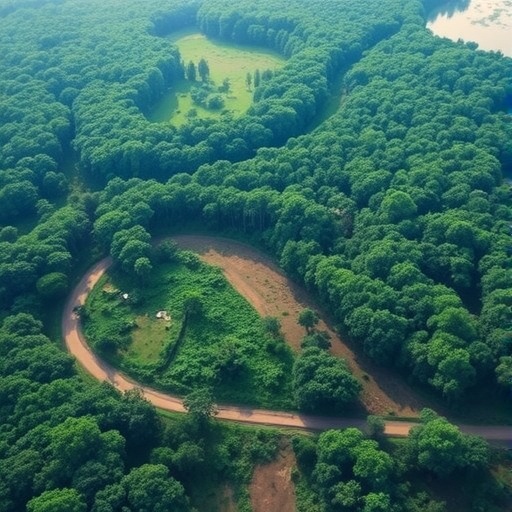
A new illuminating study from the Potsdam Institute for Climate Impact Research (PIK), published recently in the prestigious journal Nature, unveils a stark warning about the future of the Amazon rainforest. Research indicates that if deforestation escalates to between 22 and 28 percent of the forest area, approximately two-thirds of this critical ecosystem could undergo a dramatic shift from thriving rainforest to degraded forest or expansive savannah-like landscapes at global warming levels as low as 1.5 to 1.9 degrees Celsius. This is a substantial acceleration compared to scenarios without further deforestation, where similar transformations might only manifest at much higher temperature thresholds, approximating 3.7 to 4 degrees Celsius.
The implications of this finding are profound, as the Amazon’s ability to sustain itself and maintain its intricate ecological functions faces heightened vulnerability due to the compound pressures of deforestation and rising atmospheric temperatures. The research, led by PIK scientist Nico Wunderling, underscores how deforestation impairs the Amazon’s resilience by disrupting the local hydrological cycle. Specifically, tree loss reduces the forest’s capacity to recycle water through evapotranspiration, effectively drying out the atmosphere and diminishing rainfall generation within the basin.
At present, around 17 to 18 percent of the Amazon rainforest has already been lost to human activities, positioning the ecosystem precariously close to the critical tipping point suggested by this study. This marginal buffer heightens the urgency for conservation and climate action, as even modest increases in global temperature could catalyze far-reaching and cascading ecological consequences.
The investigation employed an innovative integrative approach combining sophisticated computational simulations, hydrological models, and network analyses of atmospheric moisture transport. This method allowed the team to delineate how localized deforestation events can disrupt moisture recycling on a vast scale, producing diminished resilience and heightened drought susceptibility across regions located hundreds or even thousands of kilometers away. Such cascading impacts reveal the interconnected nature of Amazonian rainfall feedback mechanisms.
Arie Staal, an assistant professor at Utrecht University and co-author of the study, elaborated on this dynamic, highlighting that the Amazon’s rainfall is intricately linked through atmospheric moisture transport networks. When deforestation obstructs moisture flux in one area, the entire continent-spanning system experiences compounded drying and drought stress. This interconnected vulnerability accentuates the critical role of forest continuity in sustaining regional precipitation patterns.
The Amazon rainforest uniquely contributes to its own climatic stability by recycling a significant portion of the precipitated water vapor; up to half of its rainfall is generated through this internal moisture cycle. Trees release water vapor into the atmosphere via transpiration, which later condenses and falls as rain across the basin in a self-reinforcing feedback loop essential to ecosystem health. Disruptions in forest cover compromise this vital moisture recycling, thereby weakening drought resistance and exacerbating stresses on remote forest areas.
This weakening increases the likelihood of widespread forest degradation and transition towards savannah-like conditions, which would have massive implications not only locally but globally. The Amazon functions as a crucial carbon sink, sequestering billion of tons of carbon dioxide annually, while also supporting unparalleled biodiversity and regulating atmospheric moisture that influences weather patterns across South America and beyond.
The authors stress the urgency of halting deforestation to preserve this critical feedback mechanism and the overall resilience of the Amazon. Restoration of degraded forest zones combined with robust climate mitigation strategies could significantly bolster the biome’s ability to withstand unavoidable warming and reduce the risk of crossing irreversible thresholds.
Johan Rockström, Director at PIK and co-author, emphasized that while the future of the Amazon is at a critical juncture, the trajectory toward collapse is not irrevocable. Immediate action through aggressive reduction of greenhouse gas emissions and a global commitment to stop forest loss can still protect the forest’s integrity. Ecological restoration and sustainable land management bolster not only biodiversity but also the vital climatic functions of this global ecosystem.
The study remaps our understanding of climate thresholds in tropical forest ecosystems and reaffirms the intertwined nature of anthropogenic pressures and natural processes. By more accurately quantifying the combined effects of deforestation and warming, this research provides a vital foundation for policymaking and conservation strategies aimed at safeguarding Amazonian resilience amid a rapidly changing climate.
Ultimately, the Amazon’s fate encapsulates a broader planetary challenge: balancing human needs with ecological stewardship to maintain the Earth’s life-support systems. This research underlines the fact that human actions today profoundly determine the stability of vast natural systems whose health underpins global climate regulation.
News Publication Date: 6-May-2026
Web References: http://dx.doi.org/10.1038/s41586-026-10456-0
Cite Scienmag News
Russell Cooper. (May 6, 2026). Amazon Degradation Risk Increases Below 2°C Warming Due to Deforestation. Scienmag. https://scienmag.com/amazon-degradation-risk-increases-below-2c-warming-due-to-deforestation/
Russell Cooper. "Amazon Degradation Risk Increases Below 2°C Warming Due to Deforestation." Scienmag, 6 May 2026, https://scienmag.com/amazon-degradation-risk-increases-below-2c-warming-due-to-deforestation/. Accessed 4 September 2026.
Russell Cooper. "Amazon Degradation Risk Increases Below 2°C Warming Due to Deforestation." Scienmag. May 6, 2026. https://scienmag.com/amazon-degradation-risk-increases-below-2c-warming-due-to-deforestation/


