


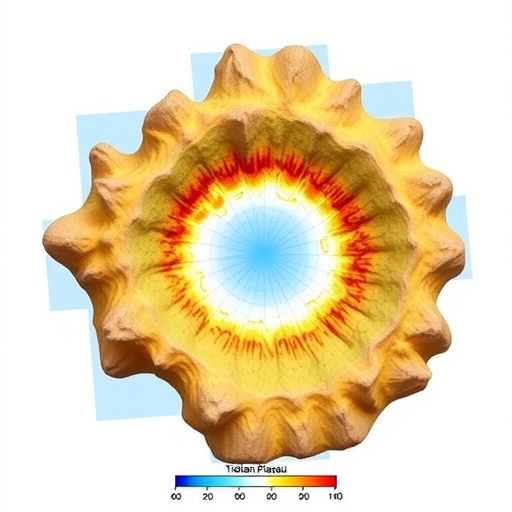
The vast Tibetan Plateau, often referred to as the “Roof of the World,” is a region of immense ecological importance and climatic sensitivity. Recent groundbreaking research has delved deep into the seasonal fluctuations and underlying forces dictating changes in lake-surface areas across this unique high-altitude landscape. Such changes are not only vital indicators of environmental shifts but also hold profound implications for water resources, regional climate systems, and biodiversity.
Lakes on the Tibetan Plateau present a dynamic hydrological system, responding intricately to both natural climatic variability and anthropogenic influences. The plateau, encompassing some of the highest and most extensive freshwater bodies globally, has long intrigued scientists due to its role as a key water source for numerous major Asian rivers. Understanding how these lakes expand and contract seasonally is essential to anticipating broader environmental transformations.
Central to this inquiry is the investigation of the physical drivers behind lake surface area changes, a topic thoroughly analyzed using a combination of satellite remote sensing data, meteorological records, and hydrological modeling. By leveraging multi-temporal datasets, researchers have been able to quantify not only the extent of lake area fluctuations but also correlate these with climatic variables such as temperature, precipitation, and evaporation rates.
One striking revelation from the study is the pronounced seasonality observed in lake surface dynamics. During warmer months, melting snow and glaciers feed into the lakes, causing them to swell. Conversely, in colder periods, reduced inflow coupled with increased evaporation can lead to significant contractions. This cycle is further complicated by inter-annual climate variability, including patterns influenced by the Indian monsoon and westerly atmospheric circulations.
The methodology employed marks a significant advance in glacio-hydrological studies. Utilizing high-resolution optical satellite imagery, the research team mapped lake boundaries with unprecedented precision over multiple years. This remote sensing approach was complemented by in-situ observations and climate data, allowing for a comprehensive understanding of both temporal changes and the physical processes driving them.
Importantly, the study emphasizes the interplay between temperature variations and precipitation patterns, revealing how these factors synergistically influence lake surface areas. Anomalously warm years tend to accelerate glacier melt and increase runoff, intensifying seasonal lake expansion. In contrast, shifts in precipitation timing or intensity can alter inflows, sometimes leading to premature shrinkage or prolonged water retention.
Moreover, the research sheds light on how the Tibetan Plateau’s unique topography modulates these hydrological responses. High elevations experience greater solar radiation but also rapid temperature swings, influencing evaporation dynamics. The geomorphological setting of each lake basin affects water storage capacity and runoff pathways, adding spatial complexity to the observed patterns.
Beyond physical drivers, the study touches on anthropogenic factors such as land use changes and water extraction that may exacerbate or mitigate natural lake fluctuations. While the remote location limits direct human impacts, recent infrastructure developments and livestock grazing in nearby areas could contribute to subtle modifications in hydrological cycles.
This research holds crucial implications for regional water security. As the Tibetan Plateau feeds rivers supporting hundreds of millions downstream, understanding how lake dynamics respond to climate variability is vital for future water resource management. Predicting changes in lake sizes can aid in anticipating alterations in river discharge regimes, flood risks, and ecosystem health.
Furthermore, the seasonality of lake-surface changes has broader ecological consequences. Fluctuating water levels affect wetland habitats, influencing biodiversity and species distribution. Variations in lake extent also impact local microclimates, potentially feeding back into regional atmospheric circulation patterns.
The study’s findings are particularly timely in the context of accelerating climate change. Rising global temperatures are expected to intensify glacier retreat and alter precipitation regimes, potentially driving more extreme seasonal lake area variations. This could amplify hydrological extremes such as droughts and floods, posing challenges for both natural ecosystems and human communities.
In addition, the work highlights the importance of continuous monitoring using advanced satellite technologies. As remote sensing capabilities evolve, real-time data collection can facilitate more responsive environmental management strategies, enabling stakeholders to prepare for and mitigate adverse effects linked to hydrological changes.
By integrating interdisciplinary approaches—spanning glaciology, hydrology, climatology, and remote sensing—the research presents a holistic framework for interpreting high-altitude lake dynamics. This comprehensive perspective is essential for crafting adaptation measures in the face of complex and interacting environmental stressors.
The study also opens avenues for future research, particularly in exploring how predicted climate scenarios may reshape the Tibetan Plateau’s hydrological landscape. Combining modeling efforts with empirical data can refine forecasts, enhancing the accuracy of environmental risk assessments and informing policy decisions.
In sum, this investigation into the seasonal cycles and driving forces of lake surface area change on the Tibetan Plateau stands as a pivotal contribution to contemporary Earth system science. It underscores the delicate balance of natural processes governing water resources in a warming world and the necessity of vigilant observation to safeguard these vital ecosystems.
As climate continues to evolve, the Tibetan Plateau’s lakes will serve as both indicators and influencers of regional environmental health. The insights uncovered through this research provide a vital foundation for understanding these dynamic systems and underscore the urgency of integrated efforts to monitor and protect this fragile high-altitude environment.
Cite Scienmag News
Violet Maxwell. (May 6, 2026). Tibetan Plateau Lake Surface Area: Seasonal Drivers Revealed. Scienmag. https://scienmag.com/tibetan-plateau-lake-surface-area-seasonal-drivers-revealed/
Violet Maxwell. "Tibetan Plateau Lake Surface Area: Seasonal Drivers Revealed." Scienmag, 6 May 2026, https://scienmag.com/tibetan-plateau-lake-surface-area-seasonal-drivers-revealed/. Accessed 3 September 2026.
Violet Maxwell. "Tibetan Plateau Lake Surface Area: Seasonal Drivers Revealed." Scienmag. May 6, 2026. https://scienmag.com/tibetan-plateau-lake-surface-area-seasonal-drivers-revealed/


