


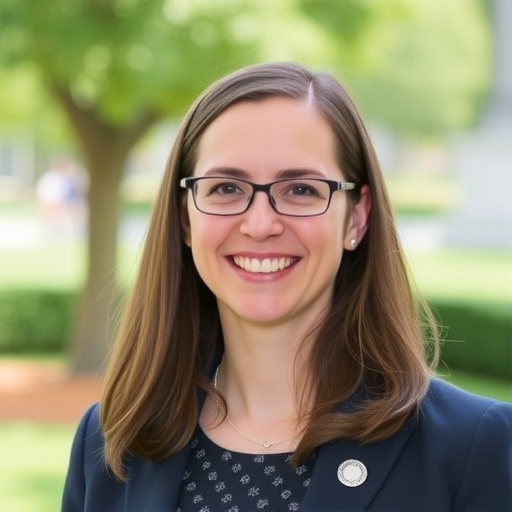
Wayde Marsh, an assistant professor of political science at the University of Tennessee, Knoxville, has been awarded the prestigious 2026 Andrew Carnegie Fellowship, accompanied by a $200,000 stipend to advance his groundbreaking research at the nexus of rhetoric, political psychology, and the role of religious institutions in fostering community resilience following trauma. This fellowship is emblematic of his innovative approach to understanding the interplay of political behavior, psychological insights, and sociocultural dynamics in polarized societies.
The Andrew Carnegie Fellows program is renowned for championing cutting-edge social sciences and humanities research that confronts fundamental challenges in American society. Each year, a meticulous selection process involving a panel of distinguished scholars from leading universities, think tanks, and research institutions combs through over 300 applications to identify exemplary fellows. The 2026 cohort notably reflects continued commitment to addressing political polarization through rigorous, evidence-driven inquiry, highlighting a critical area of scholarly focus with broad societal ramifications.
Marsh’s scholarly trajectory is deeply informed by his interdisciplinary methodology, which integrates political science with psychological frameworks to dissect political behavior and decision-making processes. His work notably emphasizes the experiences of marginalized communities as pivotal to understanding how affected populations negotiate identity, agency, and political engagement in the aftermath of trauma. This unique melding of perspectives positions his forthcoming research to yield valuable theoretical and practical insights into community dynamics.
A pivotal moment shaping Marsh’s intellectual path was his engagement with a Black church in North Carolina, undertaken as part of his graduate studies in race and religion. Mere weeks before the tragic Charleston Mother Emanuel AME Church shooting, this experience provided Marsh with firsthand exposure to faith communities’ responses to trauma and their roles as bastions of hope and reconciliation. He observed that such religious institutions often defy conventional trauma response models, fostering instead a proactive sense of belonging and resilience.
This foundation was further reinforced through Marsh’s professional tenure at a refugee resettlement agency, where he witnessed displaced individuals’ active participation in rebuilding social fabrics and strengthening communal bonds. These observations challenge dominant psychosocial paradigms by illuminating how trauma can catalyze, rather than diminish, communal agency and collective hope. Marsh leverages these empirical insights to interrogate the often-overlooked sociopolitical implications of trauma responses within faith-based contexts.
Over the next two years, Marsh plans to channel his Carnegie Fellowship support into authoring two seminal volumes. The first will scrutinize the political ramifications of leadership rhetoric in the immediate aftermath of collective tragedies—ranging from extreme weather events to mass shootings and arson attacks on religious sites. This work promises to elucidate how political narratives shape public perception, community healing, and polarization trends following trauma, thereby contributing to the discourse on political communication and crisis management.
His second manuscript will conduct a comprehensive historical analysis of attacks on places of worship from the 1950s to the present day. This study will trace the political actors’ responses, the evolving role of religious institutions, and their capacity to mediate and attenuate political discord. By building a robust database cataloging these incidents, Marsh aims to create a valuable resource that aids scholars, journalists, and faith leaders in understanding patterns of violence and resilience within socio-political contexts.
Integral to Marsh’s fellowship experience is the vibrant intellectual community fostered by the Carnegie Fellows program. He emphasizes the collaborative learning and cross-disciplinary exchanges inherent in this network as invaluable assets that enhance the depth and breadth of his research. This communal ethos aligns with the program’s mission to cultivate scholars whose work not only advances academic knowledge but also informs public discourse and policy.
The University of Tennessee’s political science department and College of Arts and Sciences have played a crucial role in nurturing Marsh’s research ambitions. Their institutional backing underscores the university’s commitment to fostering scholarship that bridges academic rigor with societal relevance. Robert Hinde, executive dean and Herbert Family Dean’s Chair, lauded Marsh’s work as a paradigm of impactful, community-centered research that enriches both the local Tennessee context and broader national conversations.
The 2026 Carnegie Fellows cohort is notable for its diversity, comprising 12 scholars from public universities in the United States, 11 from private institutions, and one from a Canadian public university. It features a nearly balanced gender representation with 13 men and 11 women, and includes both tenured and untenured academics, reflecting the program’s inclusive and comprehensive approach to identifying visionary scholars across the academic spectrum.
Wayde Marsh’s research, situated at the confluence of political science, psychology, and religious studies, represents a vital intervention in contemporary scholarship on political polarization and trauma. His exploration of faith communities as agents of social cohesion following trauma challenges entrenched narratives and offers novel pathways toward mitigating discord through inclusive, evidence-based strategies. As the fellowship progresses, his contributions are poised to influence academic thought, policy formulation, and community practices.
The impact of Marsh’s work transcends academia, with implications for policymakers, religious leaders, and grassroots organizers grappling with the complexities of community healing and political division. By illuminating how rhetoric and religious institutions shape sociopolitical landscapes in trauma’s aftermath, this research provides a critical lens to understand and potentially alleviate the forces driving polarization in the United States.
As Marsh embarks on this ambitious endeavor, the broader social sciences community watches with anticipation. His integration of empirical observation, historical analysis, and psychological theory exemplifies the kind of interdisciplinary scholarship necessary to address the pressing societal challenges of the 21st century. The fruits of his labor promise to enrich our understanding of democracy, community, and resilience in times of crisis.
In sum, Wayde Marsh’s designation as a 2026 Andrew Carnegie Fellow marks a significant milestone in his career and a promising advance for social science research on trauma, rhetoric, and political polarization. Bolstered by institutional support and the fellowship’s collaborative milieu, Marsh’s ongoing projects stand to make enduring contributions to academic knowledge and the practical betterment of society.
Cite Scienmag News
Courtney Benton. (May 5, 2026). Political Science Professor Awarded 2026 Andrew Carnegie Fellowship. Scienmag. https://scienmag.com/political-science-professor-awarded-2026-andrew-carnegie-fellowship/
Courtney Benton. "Political Science Professor Awarded 2026 Andrew Carnegie Fellowship." Scienmag, 5 May 2026, https://scienmag.com/political-science-professor-awarded-2026-andrew-carnegie-fellowship/. Accessed 3 September 2026.
Courtney Benton. "Political Science Professor Awarded 2026 Andrew Carnegie Fellowship." Scienmag. May 5, 2026. https://scienmag.com/political-science-professor-awarded-2026-andrew-carnegie-fellowship/


